4 minute read
Jump to section: about the wine || about the pairing || tasting notes & recipe

This week’s wine pick might feel a little out of the blue. Chenin Blanc is not really one of the more popular or well known white grape varieties. Back when I worked in restaurants and wine bars, I don’t think I ever saw a guest sidle up to the bar, scan the menu and ask if we had any Chenin Blanc. Chardonnay? Definitely. Sauvignon Blanc? For sure. Even Riesling on occasion. But never Chenin.
I gotta say, though, I love me some Chenin. So let’s see if we can change that…
I think things might already be starting to shift, especially since Chenin Blanc (pronounced shEHnehn blahnk) is arguably the most flexible white grape. Correct me if I’m wrong, wine friends, but I can’t think of another white grape that can produce really high quality wines in such a wide range of styles. From bone dry to decadently sweet, still to effervescent to fully sparkling, clean as a whistle to funky as all hell, Chenin Blanc is quite the chameleon.
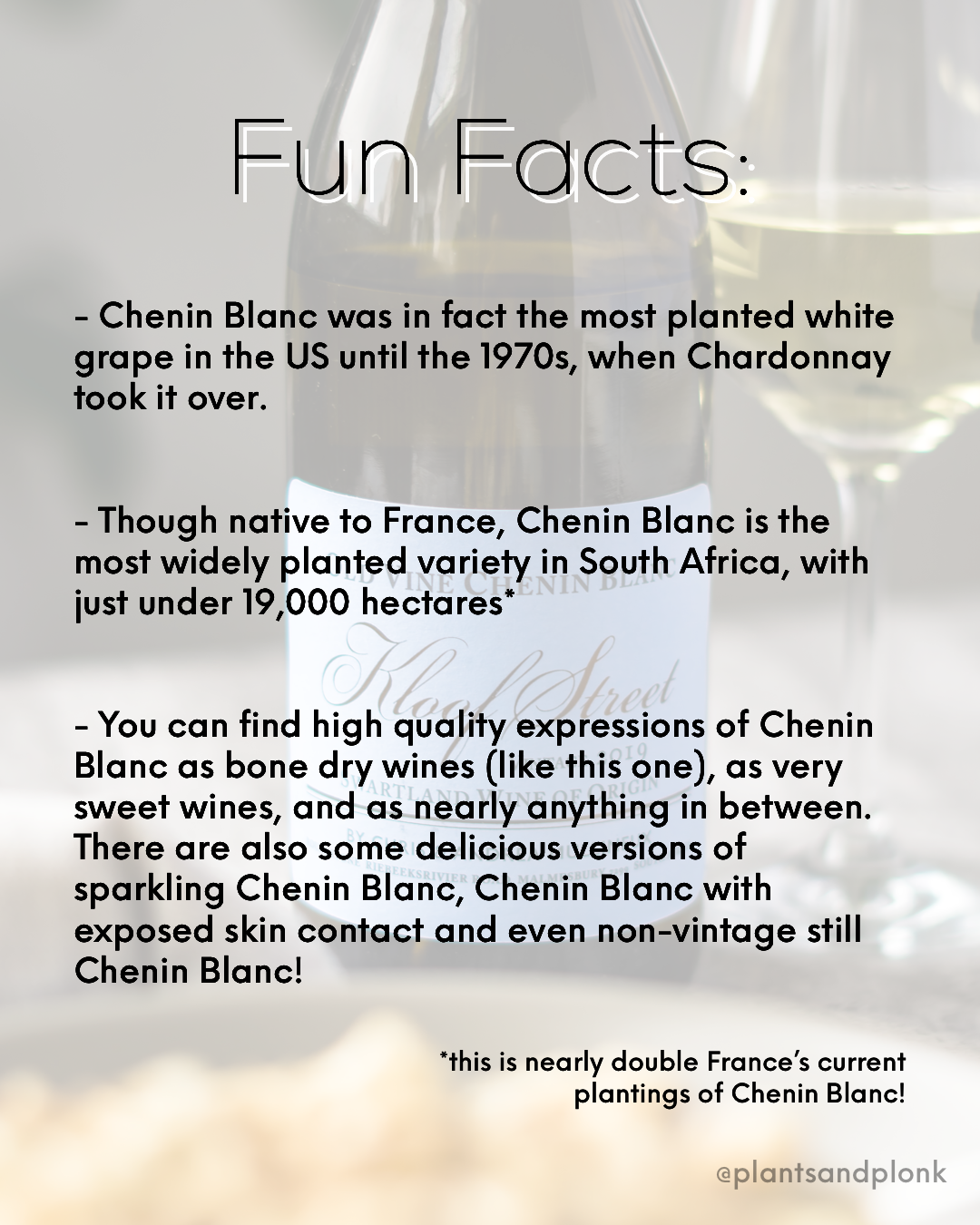
The grape is originally from France, but this Chenin Blanc is from South Africa. There, it’s become the most widely planted variety and is quickly rising to well-deserved fame. Indeed, in 2019, Mullineux Wines, the makers of this week’s wine, were named one of the top 100 Wineries of the year by Wine & Spirits Magazine, a big deal worldwide recognition.
About Kloof Street Chenin Blanc
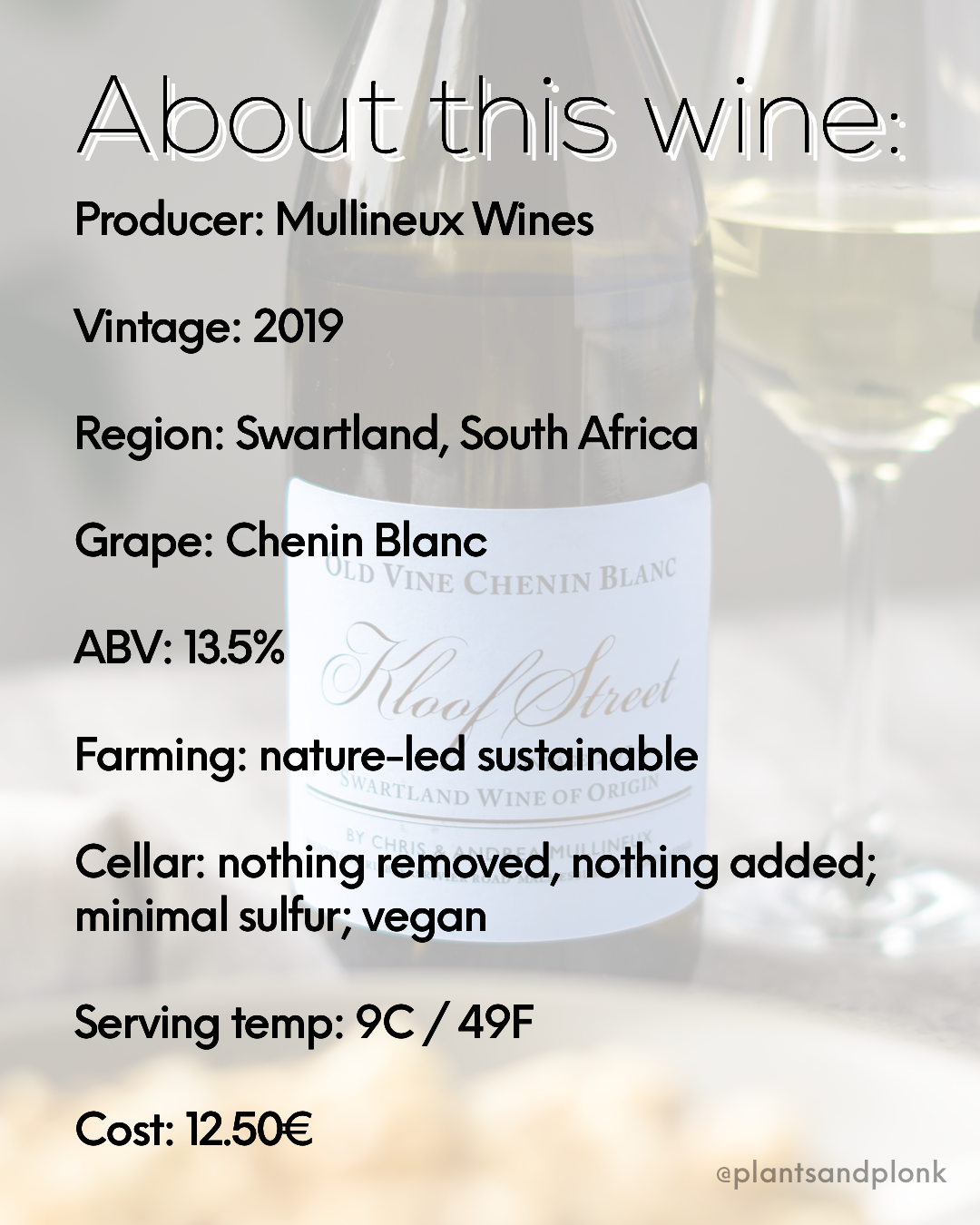
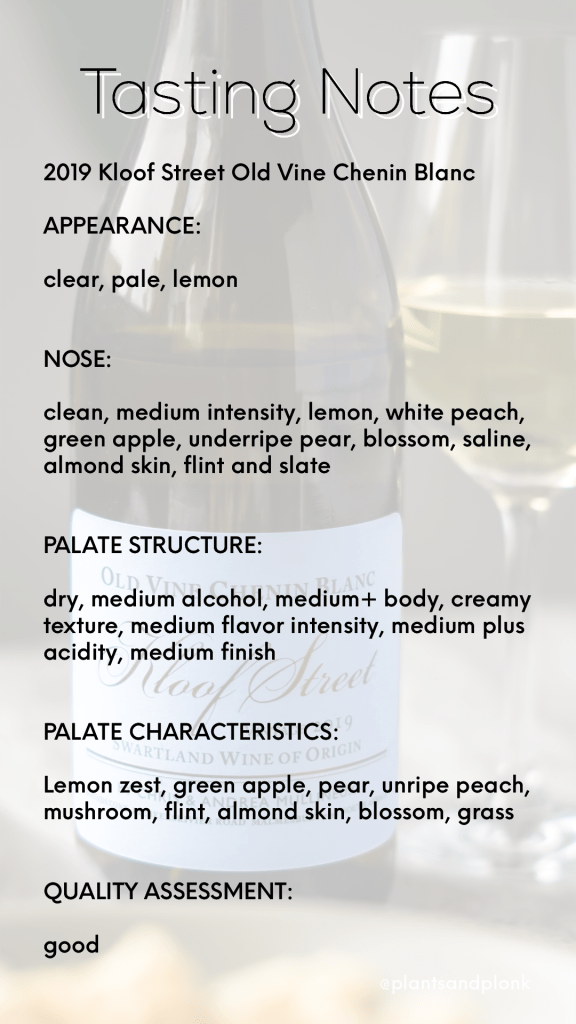
The Kloof Street Chenin (named after the street where the winery is located) shows fresh green apple and white peach fruit with undertones of fresh blossom and almond skin (full tasting notes below). It’s plush body and racy acidity seemed designed to make me want to drink the whole bottle in one sitting (don’t worry, Mom, I didn’t). But at 12.50€ a bottle, I don’t have to feel too bad for polishing off more than I’d like to admit.
My thought process for pairing
I mentioned last week that when it comes to pairing, I like to first think about the four major structural elements of a wine: acidity, tannins, sweetness and body. With no tannins to speak of and the only perceptible sweetness coming from fruit flavors, the most notable aspects of this dry white were its elevated acidity and its plush weight.
With those two elements in mind, I knew I wanted to match this with a slightly weightier dish. I didn’t want the mouthfeel of the wine to overpower more delicate food. Plus, I knew the acidity of the Chenin wouldn’t disappear in a creamy sauce as it might with a lower acid wine. (That is, I knew the acidity would help cleanse the palate of a palate-coating dish.) I also didn’t want anything too umami-rich, which might make an acidic wine taste bitter or astringent.
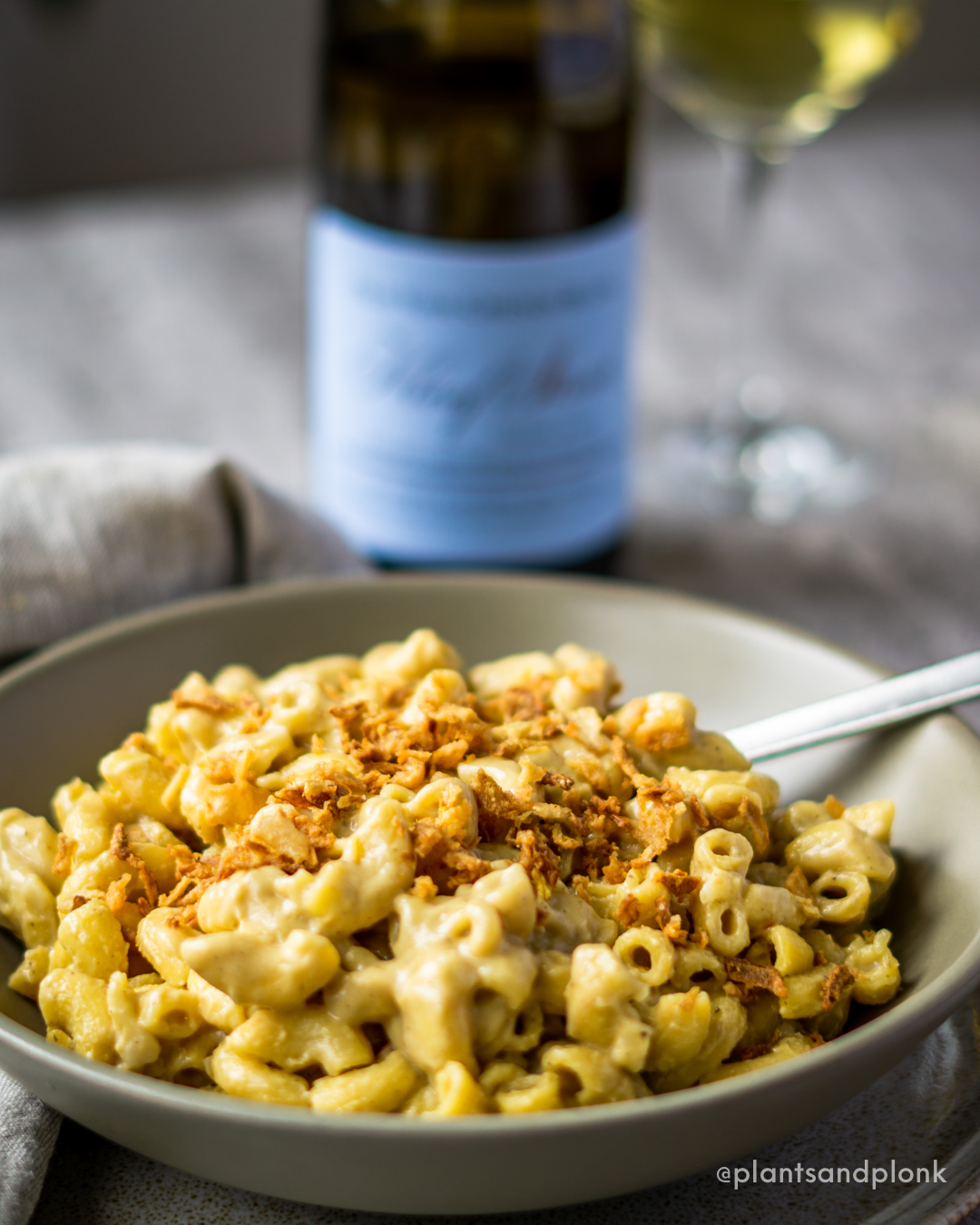
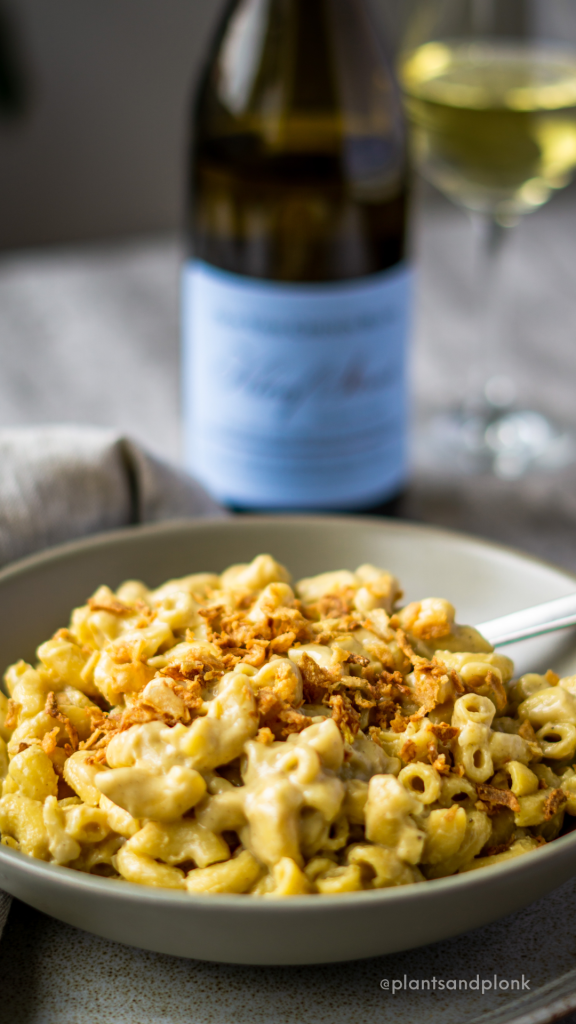
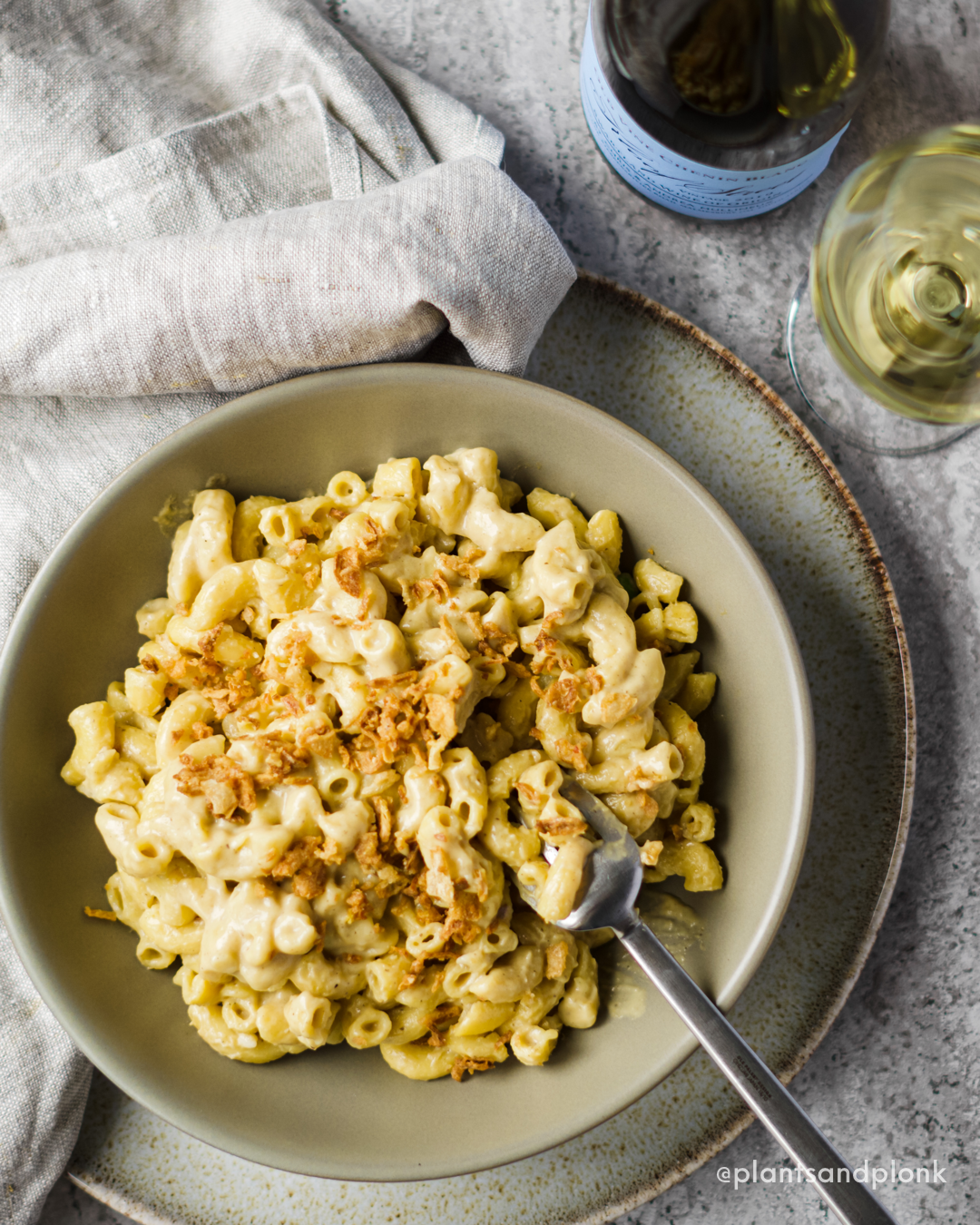
So: creamy, a little weighty and on the neutral side of flavors…mac & cheese it was!
How did it go?
It turns out, this worked great! The creamy on creamy textures dovetailed together really nicely, neither overpowering the other. And the acidity acted like a meal-compatible mouthwash after each mouthful. In fact, the richness of the mac and cheese helped to mute the acidity just enough to let the wine’s fruit and floral flavors really shine. They effortlessly provided an extra layer of complexity to a really homey, comforting dish. What a treat!
It’s worth noting here that neither of these two are high-brow versions of what they are. Pairing doesn’t have to be fancy or exclusive. And it definitely doesn’t have to be expensive. It’s as simple as putting jam on a peanut butter sandwich (I warned you I’m going to keep coming back to that)!
That said, I do add a couple of totally unnecessary steps to my mac & cheese because frankly, I can’t help myself. You can totally just warm your favorite vegan cheese in a pan with a little non-dairy milk and chuck it on whatever pasta you’ve got. You could even (and totally should) try this pairing with a pre-packaged plant-based mac & cheese. But if, like me, you’re interested in over-complicating even the simplest things in life, check out my process below. I dare not call it a recipe, as I don’t really measure, but this way you can be certain to tailor it to your own tastes.
Jump to section: about the wine || about the pairing || tasting notes & recipe
Wine Tasting Notes and Mac & Cheese Process
Ingredients:
For Vegetable Purée base
- 1 medium onion, quartered
- 1 medium carrot, chopped
- 1.5 cup cauliflower florets
- 1 cup potato, peeled and chopped
- 1.5 cup button mushroom, halved
- .5 cup white butter beans, cooked and rinsed
- 1 tsp vegetable bouillion powder (or 1 crumbled cube)
- 5-6 cups water
Melting cheeses*
- vegan cream cheese (I use Oatly brand)
- vegan cheese slices (I use Simply brand)
- vegan shredded mozzarella (I use Simply brand)
- vegan feta cheese (I use Violife brand)
- nutritional yeast (I use Marigold Engevita with B12)
Other ingredients
- pasta of choice (I like Barilla gluten-free elbows)
- dairy free milk (I love Oatly Barista)
- fried onions or other garnish
- salt
Process
- I start out making the vegetable purée very similarly to how I would make a vegetable stock. Chuck all the vegetables (NOT the beans) as well as the bouillon powder in a stock pot with the water and bring to a boil on medium-high heat
- Reduce the heat to low and simmer with the lid half on for at least an hour.
- After an hour, taste the broth. If you would like it more concentrated, continue simmering.
- When finished, I remove 1-2 cups of broth and let it cool before freezing for another use.
- Add the beans to the mix and purée in a high speed blender until very smooth. Add stock if you need to adjust the consistency.
- Return the purée to the stock pot on low heat and season with salt to taste.
- Begin adding nutritional yeast and vegan cheeses and to taste. Stir in non-dairy milk if the mixture becomes too thick.
- When satisfied with the flavor and consistency, prepare your pasta according to package directions.
- Add the pasta to the cheese mixture and top with your favorite garnishes.
- Enjoy alongside a glass of South African Chenin Blanc!
*I purposefully did not include amounts here because vegan cheese availability changes based on location. Also, vegan cheese preference varies quite a bit from person to person. I highly recommend a mix for this recipe, as I’ve found that’s the best way to achieve the most realistic cheese imitation. Vegan cheeses keep well and can be used for a variety of other purposes, so don’t feel the need to use them all in this recipe. That would be overkill, even for me 😉

 celeste radosevich
Ha! I probably did encourage you to drink Chenin – I’m still on that train. I’ll find a good low alcohol sparkler for you next time we see each other!
LikeLike
Your mac and cheese recipe has some great hidden nutrition! Another one I need to try. And I think you were the one to encourage me to try chenin blanc years ago. It was lovely!
LikeLiked by 1 person