5 minute read
Jump to: about the wine | about the pairing | recipe
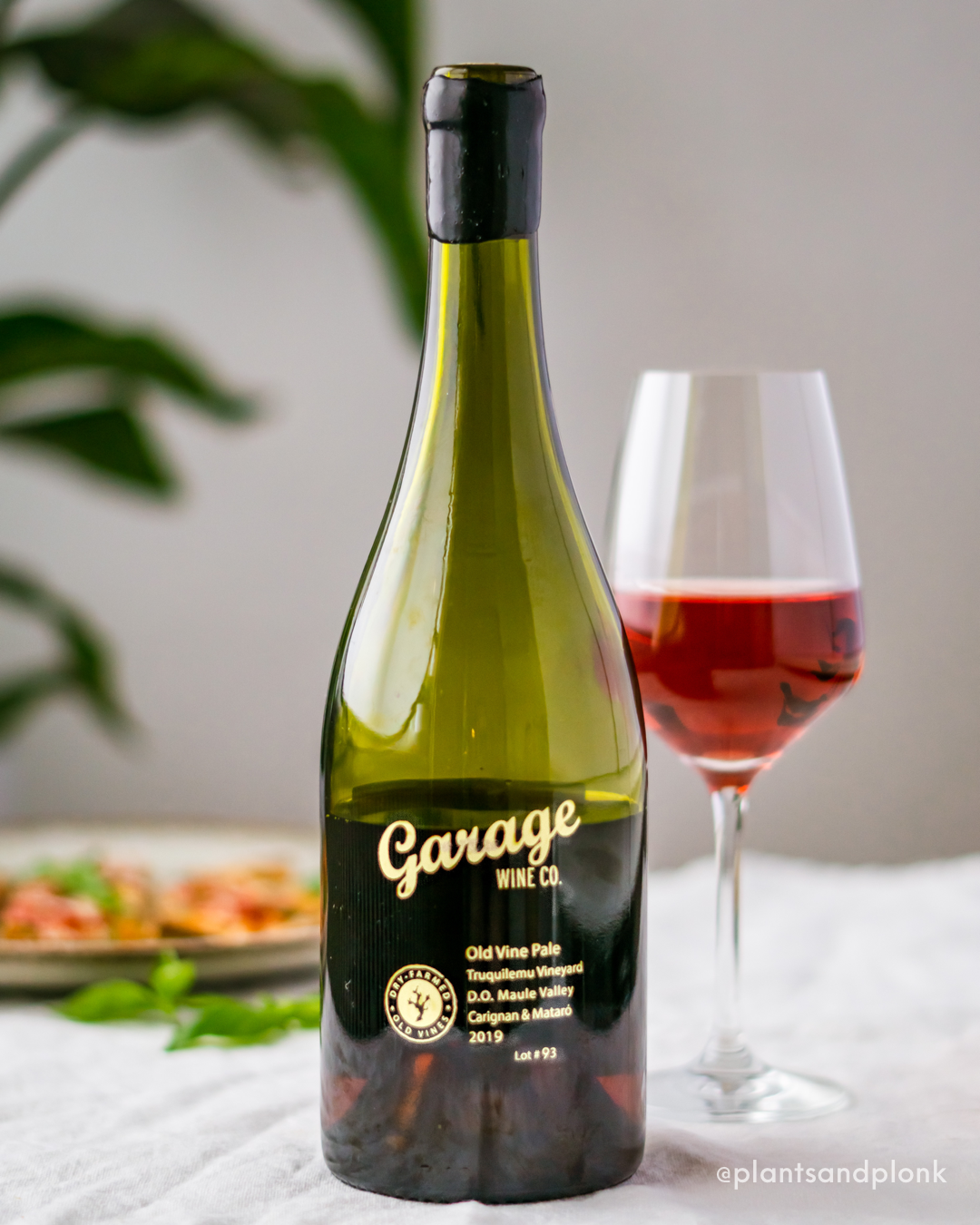
This week’s wine feels lightyears away from the first Chilean wine I had in college. To be fair, though, that late-night-into-early-morning situation involved wine that came in cardboard and cost less than milk.
15 years and plenty of hangovers later, I’ve grown up quite a bit – and so has the Chilean wine scene.
Those super-sized wine makers are still going strong, but there’s a growing cohort of Chilean winemakers proving to the world that there’s another side to Chilean winemaking. The serious side.
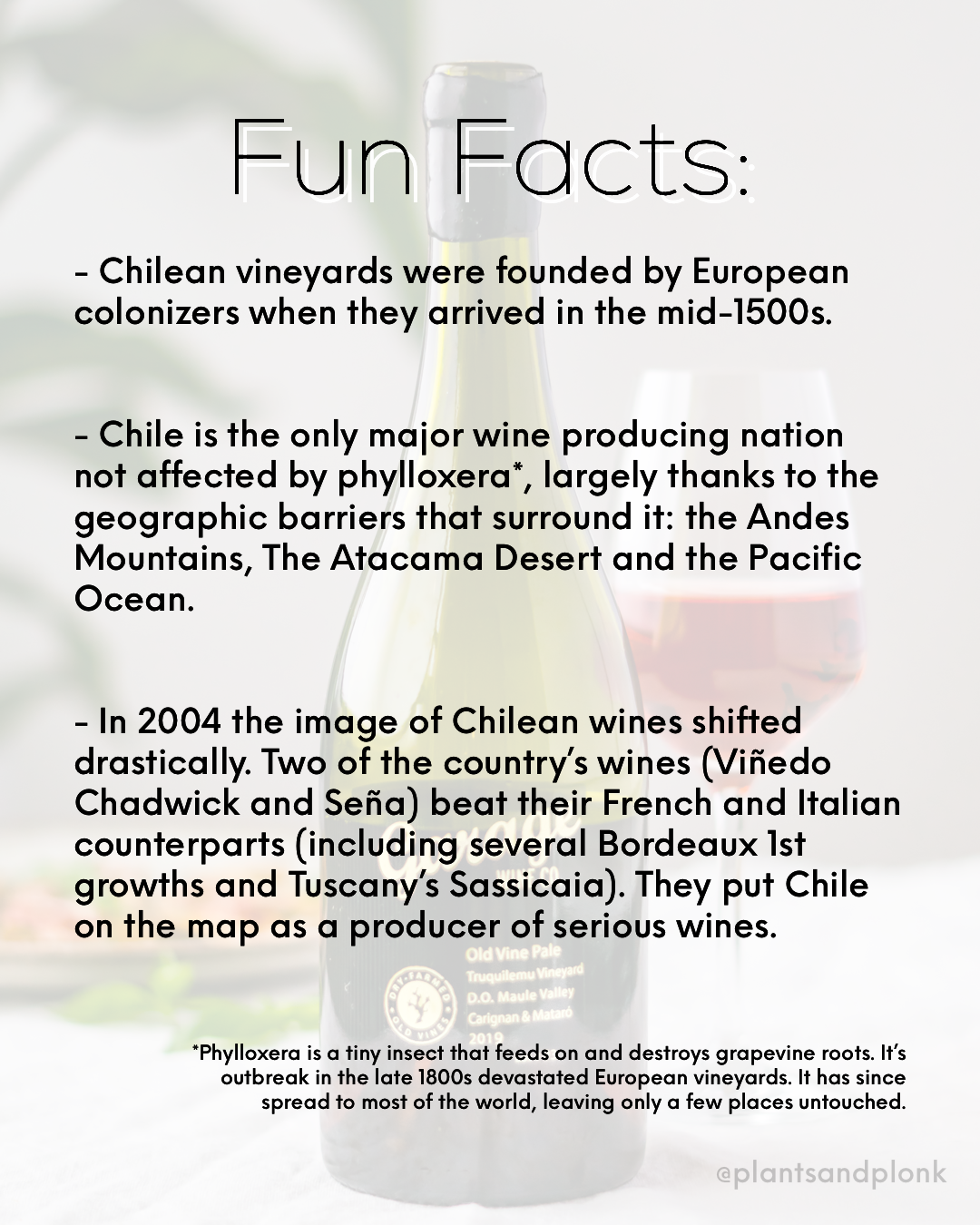
In fact, the country has been making “serious” wine for decades now, but it wasn’t until 2004 that the rest of the world opened their eyes to it.
Jump to: about the wine | about the pairing | recipe
That was the year Chile stunned wine professionals when it swept up the top two ranks for wines in a blind tasting contest in Berlin. Viñedo Chadwick and Seña beat out Bordeaux greats Latour, Lafite-Rothschild and Margaux as well as the Tuscan giant Sassicaia. For a country mostly associated with bottom-shelf, mass-produced wine, this result was a bit shocking to say the least.
These days, a few boutique winemakers are snapping up old vineyards where the terrain is too difficult for large-scale manufacturers to farm. That’s exactly what Garage Wine Co. did. Their first vineyards were grown over and wild with brush. In some cases, the vines were even burnt. But they started clearing things out slowly. They began by making wine in their garage. And slowly, they built up a reputation by just making good wine. Since their first export in 2006, they’ve expanded to new areas and new grapes while using old techniques and treasured methods.
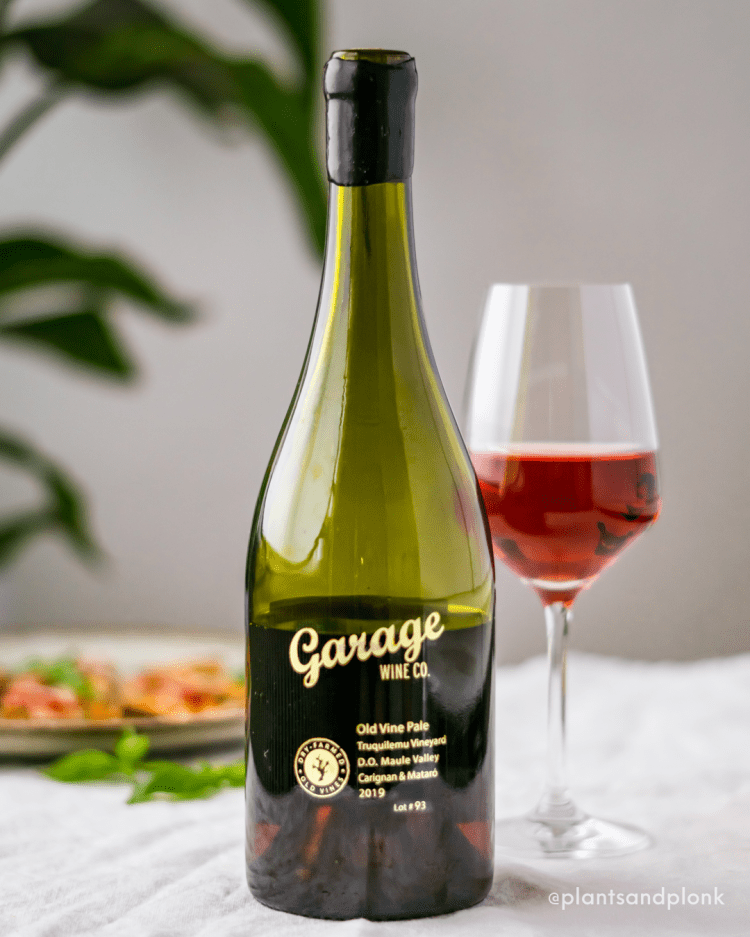
Unsurprisingly, this week’s featured wine, the Garage Wine Co. Rosé, reflects the approach and personality of its winemakers: it’s serious, unusual and really, really good.
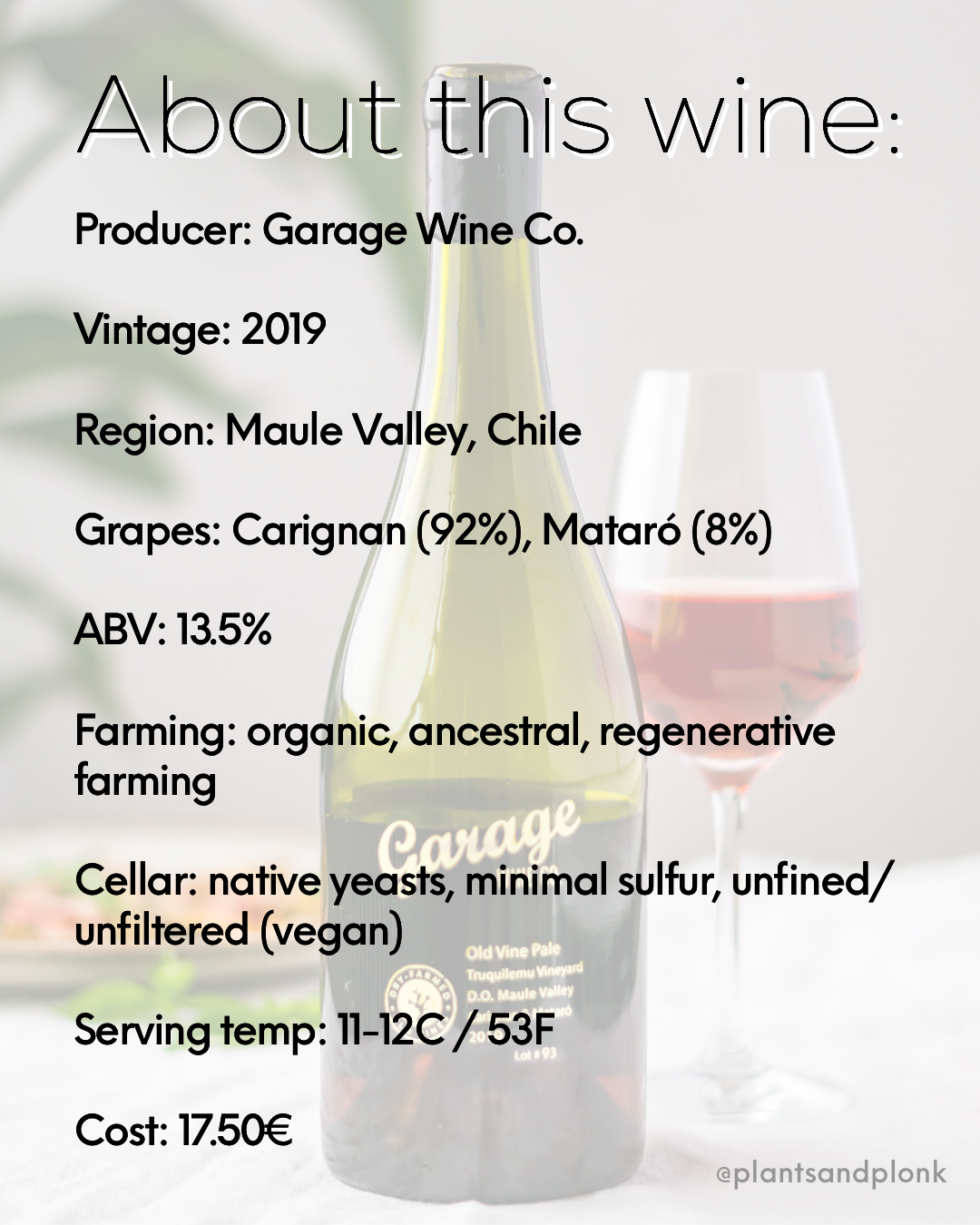
About Garage Wine Co.’s Rosé
In effect, this wine debunks two stereotypes in one fell swoop – not only is it a serious Chilean wine, it’s a serious rosé.
Don’t get me wrong, patio crusher rosés and economically priced pinks can hit the spot on hot summer days. But they seldom leave room on the shelf for more structured, food-friendly rosés. The latter are more often compared to light red wines for precisely that reason – because we don’t really think of rosé as a category of wine beyond the hashtags #roséallday, #brosé or #roséisbae.
This wine is carving out more space for that category. It shows complexity with its juicy red fruit, herbal undertones and mineral-laced earthiness. It’s got a hint of the carignan tannins and a zippy acidity that reflects the high altitude Cascade Mountains where it’s from. (For more tasting notes, see the recipe section below.)
Despite that high altitude, though, these producers have stayed grounded. They practice regenerative, organic farming and invest in marginalized communities by hiring local laborers to work the land traditionally with them. In the cellar, they want the terroir to speak. So they vary winemaking techniques and tailor the production of each individual wine to best reflect its origins. All while keeping everything as natural and low intervention as possible. Talk about a labor of love!
Jump to: about the wine | about the pairing | recipe

What to Pair with Garage Wine Co. Rosé?
I started with the basics again here. This is a right down the middle medium bodied wine with medium(plus) flavor intensity. And that’s really what I wanted to focus on. I didn’t want to wander into any extremes: too light or too heavy; too simple or too complicated.
That said, though, I couldn’t ignore the wine’s slight tannins. or it’s elevated acidity. With that combination, I knew I could add a bit of protein or fat to the dish to balance things out.
In the end, I just wanted the food to be as satisfying as this wine! (Also, I think I was probably craving pizza).
How did it go?

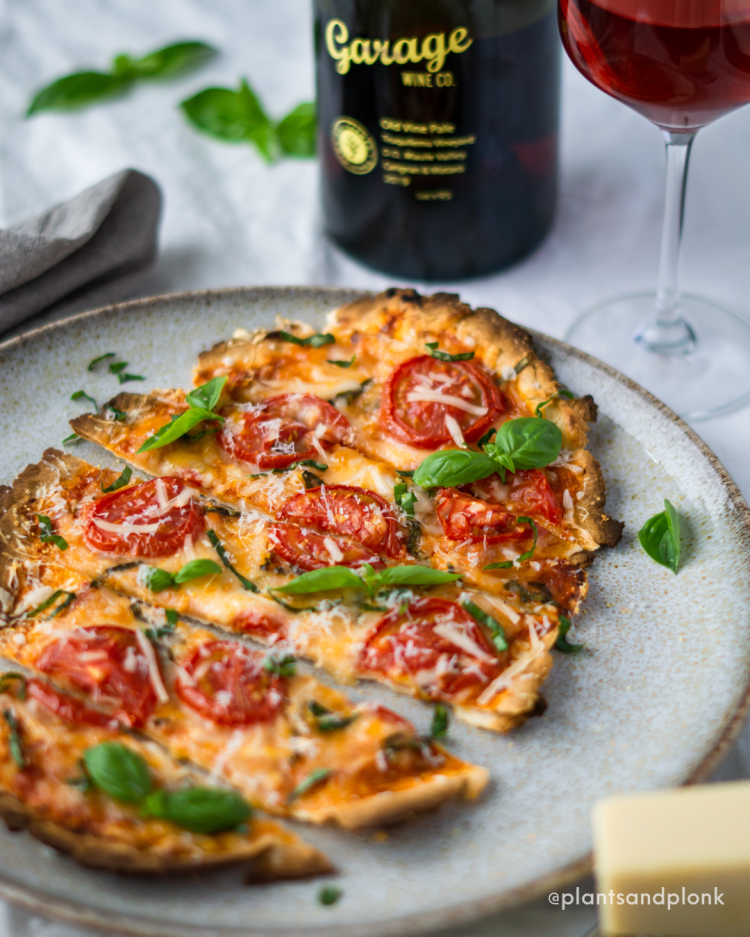
This pairing was so friggin’ good! The structural elements (medium body, elevated acidity, barely-there tannins) played well against this pizza’s simple, fresh ingredients.
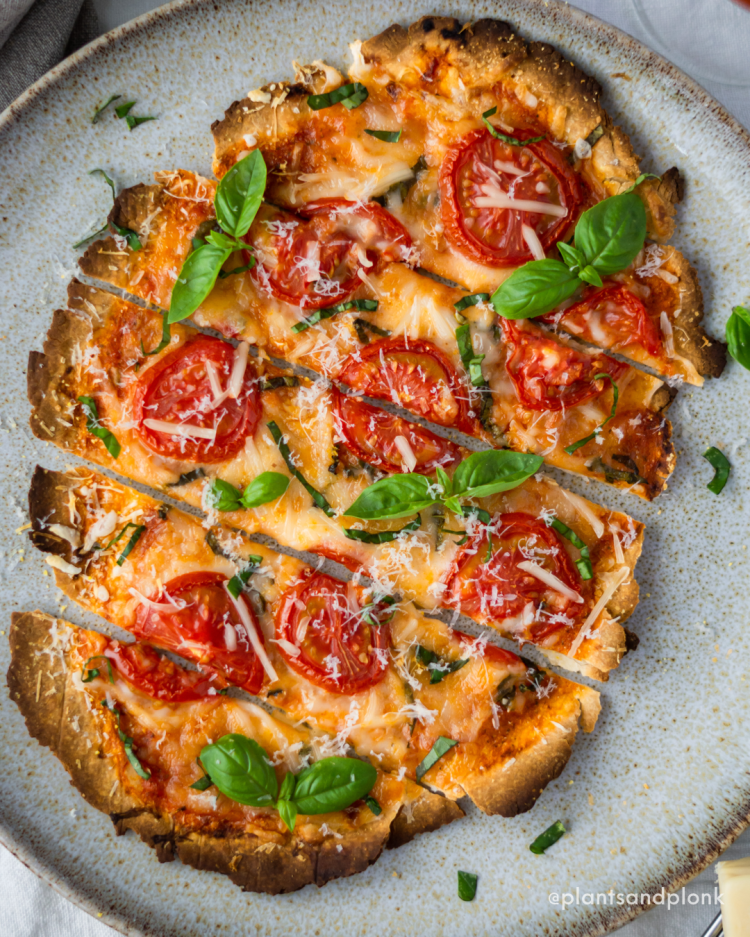
I fought all my instincts and made sure not to over-do it on the cheese, which really softened the impact of the acidity and banished the tannins. That meant the flavors of the wine came out screaming (in the best way possible) – the fruit flavors combined beautifully with the cherry tomatoes and sauce. The basil accentuated the rosé’s herbaceous undertones. Even the crispy char of the crust ended up pulling out the earthy flavors in the wine.
Unlike last week’s food pairing, I was glad I managed to keep things simple here. And – wonder of wonders – it was pretty perfect. Crazy how that works out, huh?
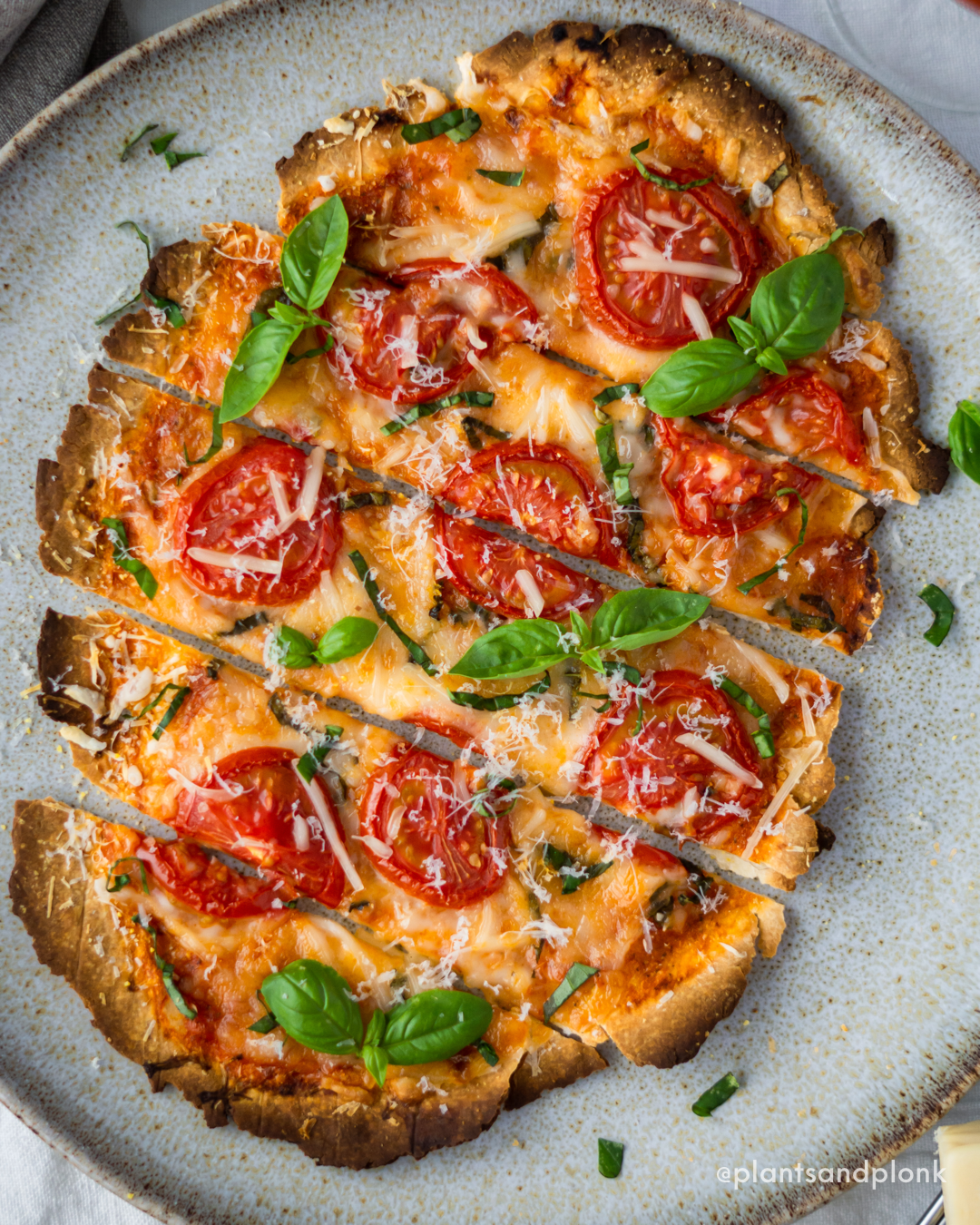
Pizza Margherita
I put off making my own pizza for a long time, but after a while, the cravings got the best of me and I caved. My sweet mother-in-law, supportive as ever, gifted us a proper pizza stone, and this came together in a matter of minutes. (Thanks mum!)
The best tip here is to not blow off a few things: 1st, include the stone in the preheated oven. It can be a struggle to slide the uncooked pizza on and off a scorching hot stone, but it’s totally worth it. 2nd, roll your dough paper thin. Pizza margherita is supposed to have a thin, crisp crust. I cheated and used store-bought, but still rolled it out to make 2 small pizzas. 3rd, spring for the fresh basil. It makes a world of difference, and it paired excellently with the wine.
Jump to: about the wine | about the pairing | recipe
Tasting Notes and Recipe

Ingredients
For the sauce
- 1 440g /14 oz can good quality crushed tomatoes
- handful of basil, finely chopped
- ½ medium size onion, diced
- 1 tbsp olive oil
- 1 tsp dried oregano
For the toppings
- 1-2 cups vegan shredded mozzarella (I use Simply brand)
- ½ cup cubed vegan feta cheese (I use Violife brand)
- ¼ cup grated vegan parmesan cheese (I use Violife brand)
- ¼ cup nutritional yeast (I use Marigold Engevita with B12)
- 5-10 small or medium sized cherry tomatoes, sliced
- 5-10 basil leaves, julienned
Other ingredients
- 1 vegan store-bought (or homemade) pizza dough
- more vegan parmesan cheese (to garnish)
- more fresh basil (to garnish)
Recipe
Place a pizza stone or cookie sheet in the center of your oven and preheat on the highest possible setting (or 550F / 260C)
In a non-stick pan over medium-high heat, warm the olive oil.
Sauté the onions until translucent, then add the crushed tomatoes, basil and oregano and simmer for 10 minutes.
Meanwhile, roll out your dough until it’s almost transparent. For my dough, I cut it in half first and then rolled out each piece. (See tip below.)
When the sauce is done, purée in a high speed blender until very smooth.
Spread a thin layer of sauce on your dough and sprinkle the mozzarella shreds, grated parmesan and nutritional yeast sparingly over the top. (Optionally add some extra julienned basil, too.)
Place the sliced tomatoes on top of the cheese layer, making sure not to use too many.
Gently slide the pizza onto the hot stone in the oven. (See the tip below.)
Lastly, place cubes of the feta cheese in the spaces between tomatoes. Again, be sure not to overdo it!
Cook for 5-7 minutes, until the cheese is melted and the edges are browned. (Watch carefully the first time.)
Remove carefully, slide the pizza onto a cutting board, slice and serve immediately
Garnish with parmesan cheese and/or more basil
Dough Tips:
- When rolling out the dough, layer it between two pieces of parchment paper.
- After rolling, removed the top layer and sprinkle with flour or corn meal. Sprinkle some on the plate, peel or board you’re using to transfer the pizza to the stone
- Using the bottom layer, gently lay the dough topside down on the plate, peel or board you’ll use to transfer to the oven. This is where you’ll add and toppings.
- When transferring to the oven, the dough can still stick to the plate, peel or board. We sometimes need to use two people – one to hold the board and one to carefully transfer the pizza to the stone with a spatula or pair of tongs.
- When removing from the oven, I use oven mitts and remove the stone and all. Then I transfer the pizza to a cutting board.
- I then return the hot stone immediately to the oven and repeat the process with the second pizza

 celeste radosevich
Thanks! The pizza is deceptively easy – to make and eat! Next time I’ll have to plan to make more 🙂
LikeLike
This pizza looks marvelous! And I’m sure the wine is delicious. Well done Celeste. Looks like a weekend winner.
LikeLiked by 1 person