6 minute read
Jump to section: about the wine || about the pairing || recipe
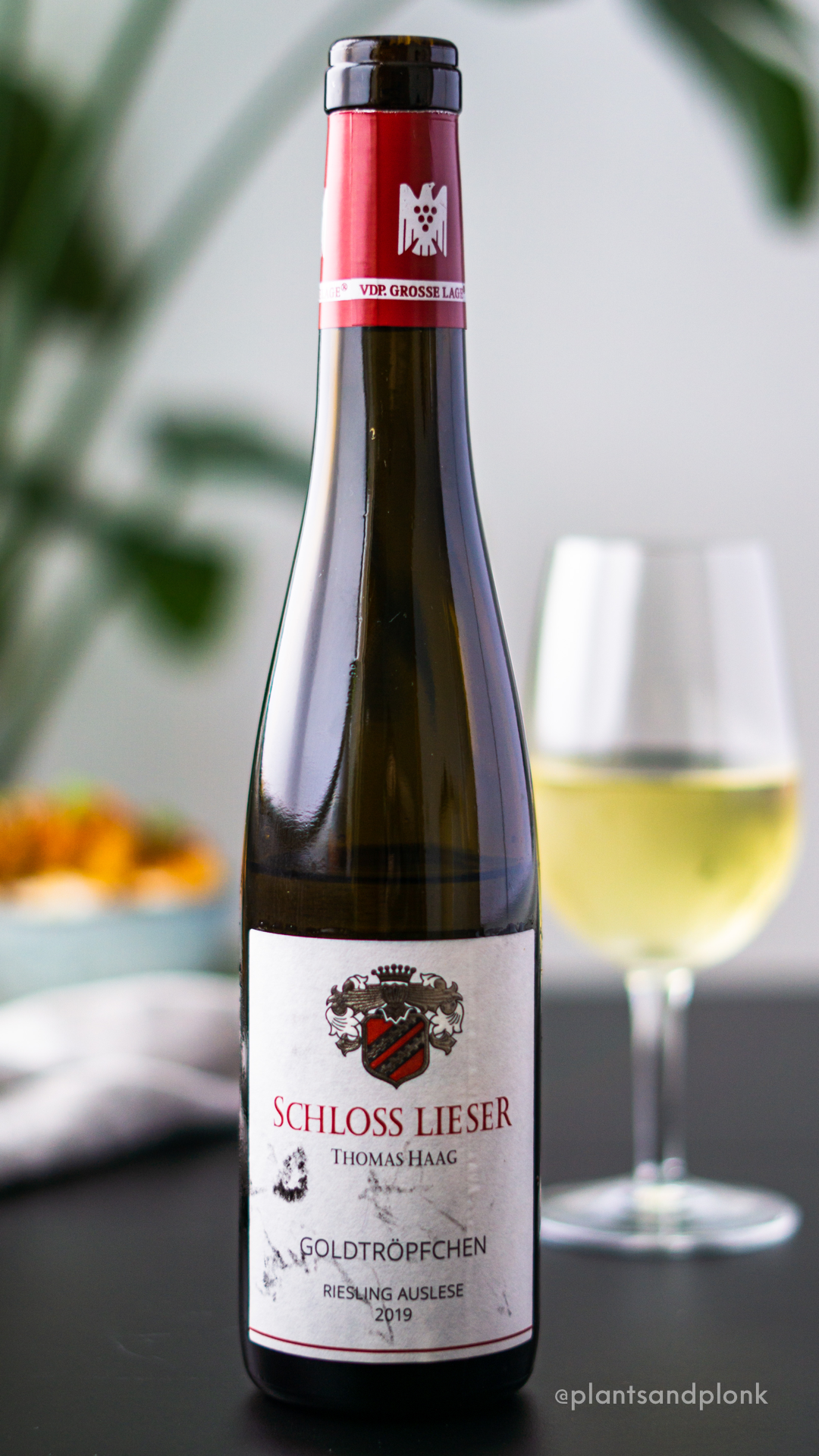
This is the 4th pairing of Plants and Plonk and I figured I’ve waited long enough to break out my new home country’s signature grape. Riesling wine manages to have some of the most polarizing reactions I’ve seen among consumers – deeply loved and revered or positively avoided and loathed. Here in Germany, it seems to be embraced writ large for its glorious versatility, both in the bottle and as a companion to food.
Why doesn’t everyone love Riesling?
Unfortunately, Riesling gained the reputation of making cheap, sickly sweet wines after World War II. The damage to German wineries and vineyards was severe – both economically and physically. So, many needed to rebuild and fast. While some invested in more prized vineyards, many needed to generate a quick income. So they sold affordable, lesser quality, sweeter wines that could be made in bulk. And the countries where the war’s rationing had left consumers craving sweets were happy to buy. At least for a while.
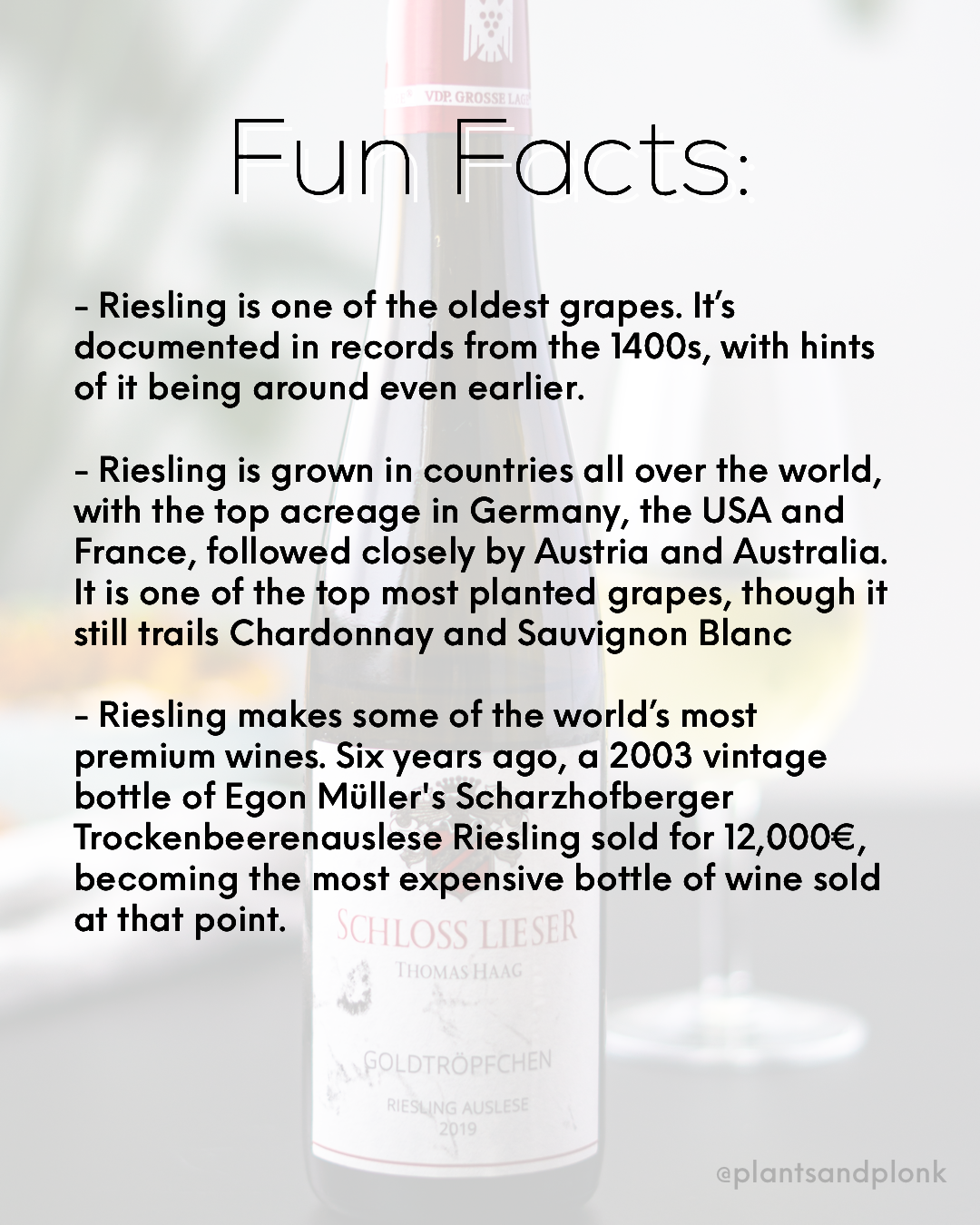
These days, more and more people are coming ’round to the idea of dry Rieslings and to more premium German wines. But that history and the more recent trend of exclusively drinking dry wines means bottles with a little extra residual sugar (including this Auslese) are all too often left on the shelf.
Jump to section: about the wine || about the pairing || recipe
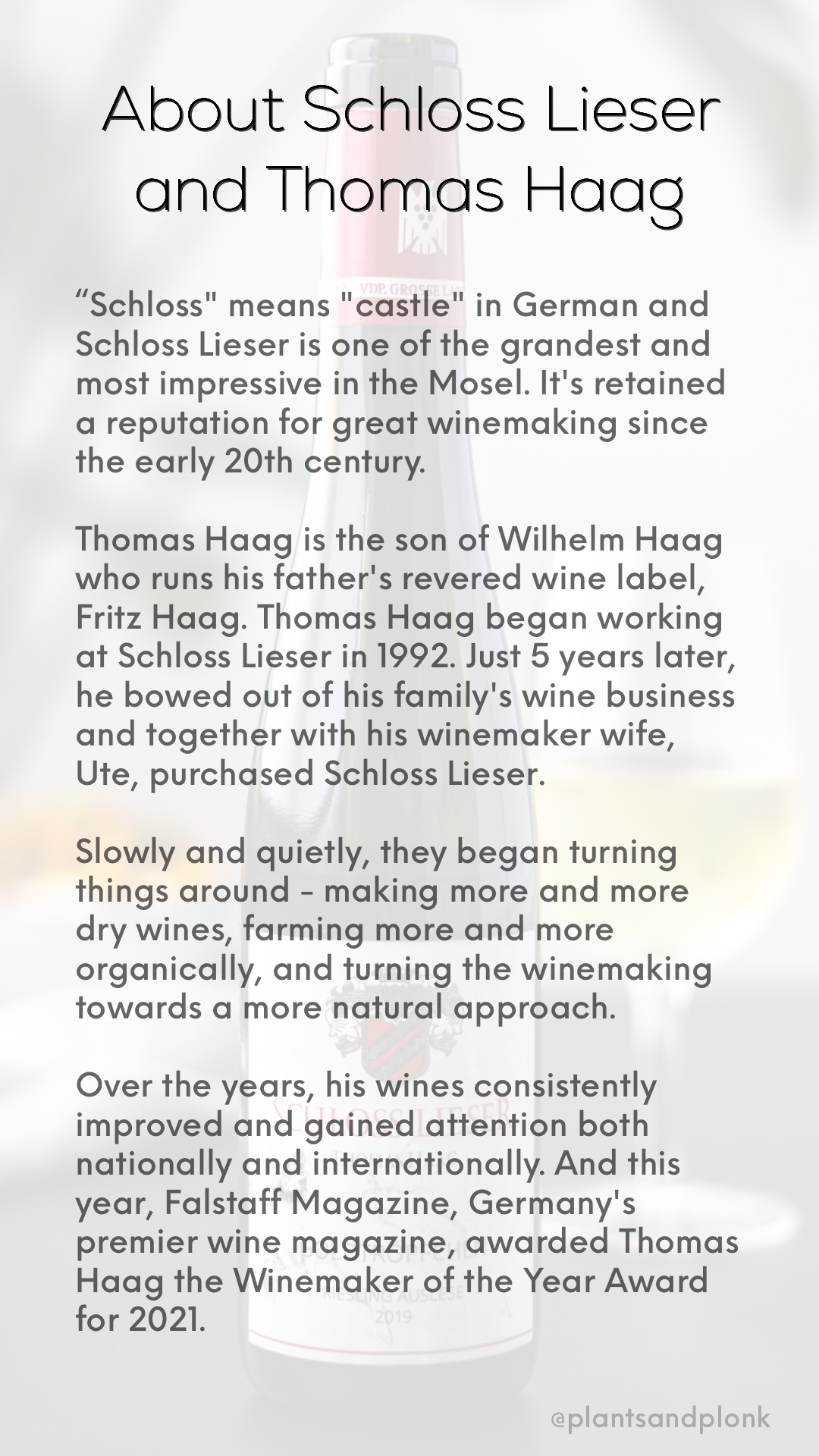
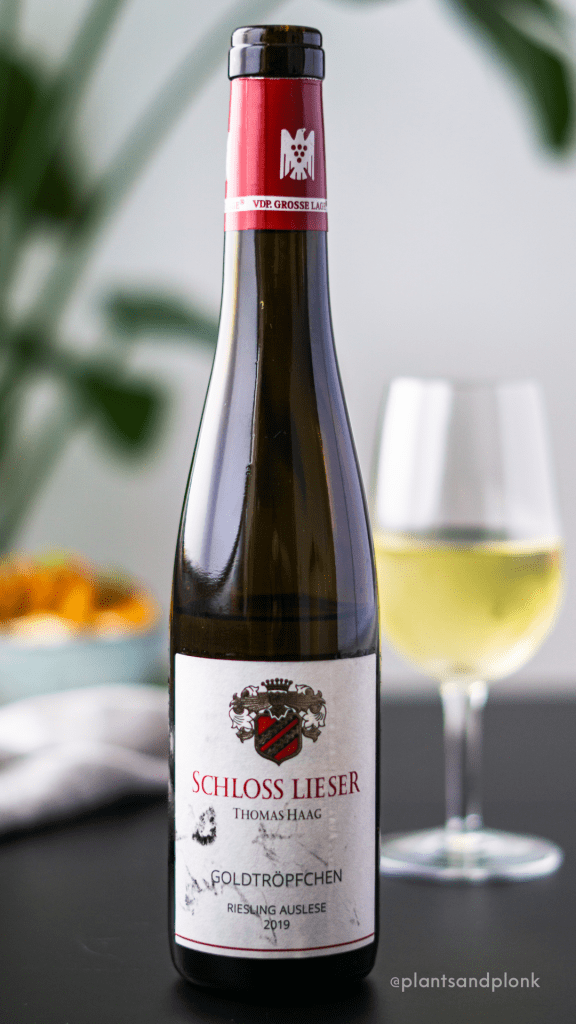
2019 Schloss Lieser / Thomas Haag Riesling Auslese “Piesporter Goldtröpfchen”
I’m confident that if we can coax wines like this into more hands, things will start to change. At 16 euros for 375ml, it’s an absolute steal. It shows lots of stone and citrus fruit complexity with a hint of honey, mineral undertones and the trademark note of petrol (see full tasting notes below). Its medium-dry sweetness comes entirely from letting the grapes concentrate on the vine for a later harvest – but that sweetness comes well-balanced by a bright, palate-cleansing acidity.
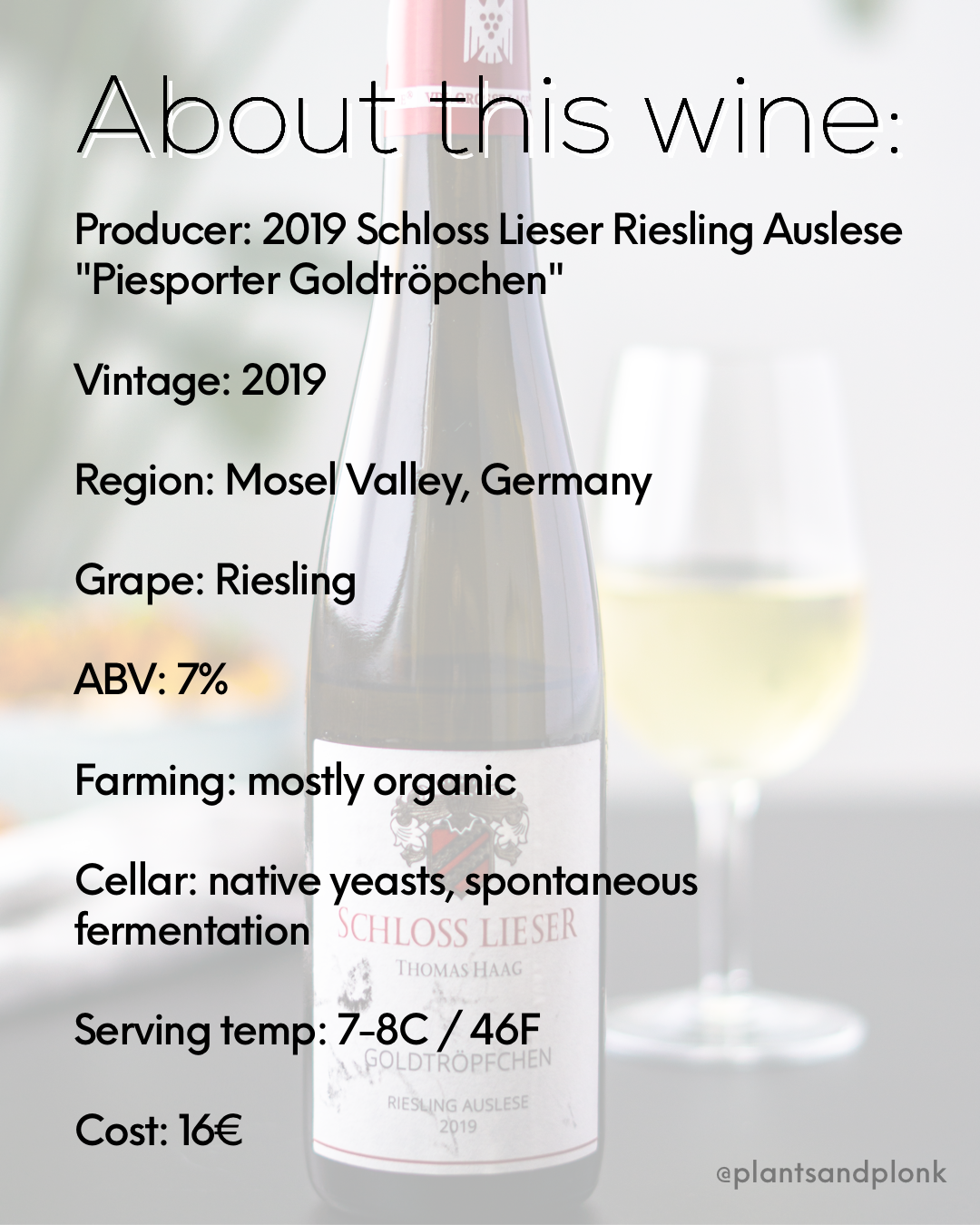
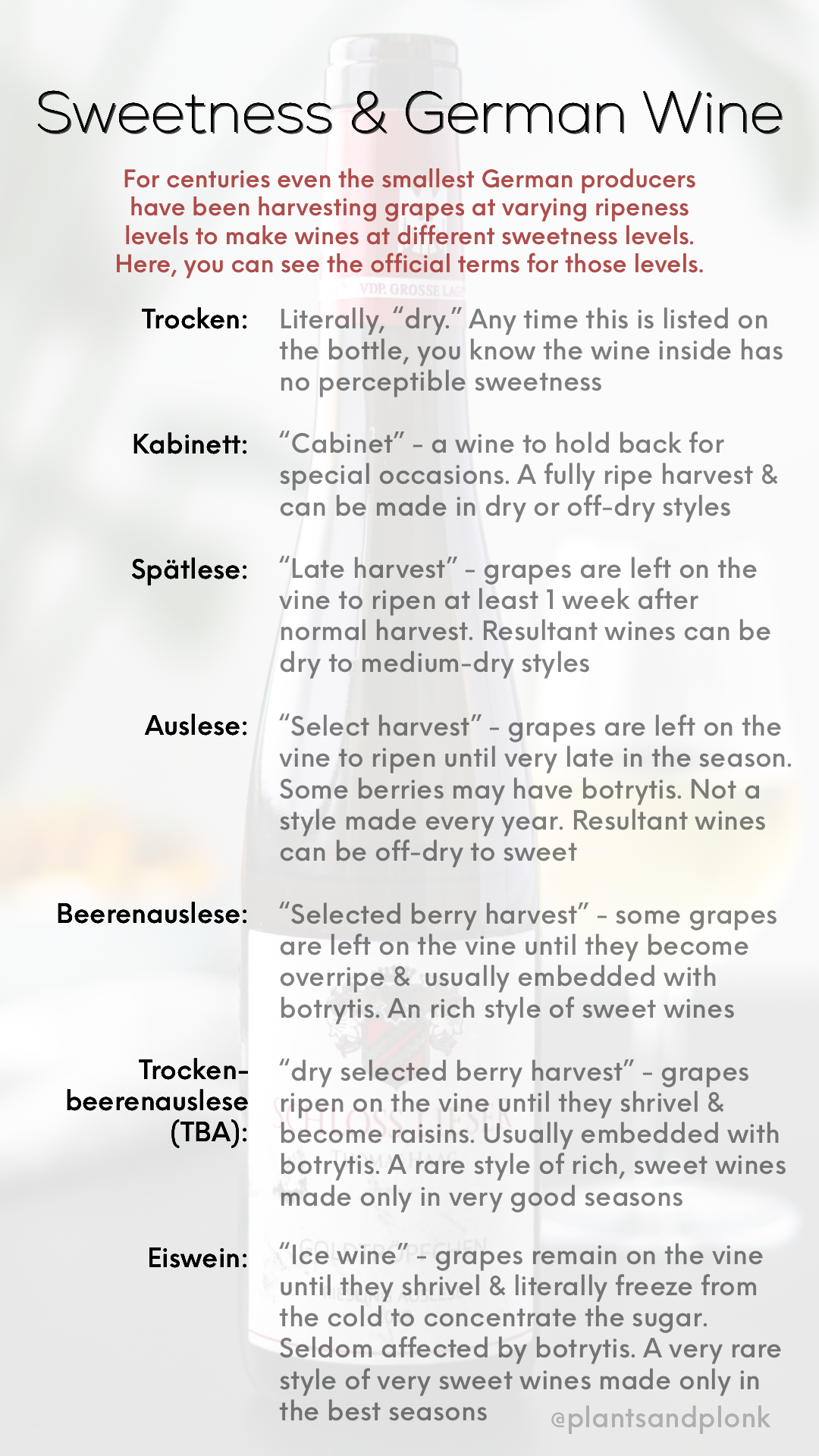
German wine labels and wine regulations are notorious for being difficult to decipher. Even after living here over a year, I don’t understand everything! Auslese is the third degree of ripeness in the German Prädikat wine qualification system (see the note below on sweetness in German wine for more information). Remember, the longer grapes are left on the vine, the riper they get and the more sugar they have. When yeasts ferment sweeter grape juice, they often die off before consuming all of the grape sugar. Thus more of that fruit sugar is left in the final wine (and is known as “residual sugar”).
This wine was made with those overripe grapes – and Thomas Haag knocked it out of the park. Sweeter wines can be difficult to make because the more sugar that accumulates in the grape through ripening, the less acidity it will have. So, sweet wines are naturally less acidic, and therefore at risk of being saccharine or cloyingly sweet. But careful winemakers like Thomas Haag work hard in the vineyard and in the cellar to ensure their wines have the right balance. Read more about this talented producer in the note below.
Jump to section: about the wine || about the pairing || recipe
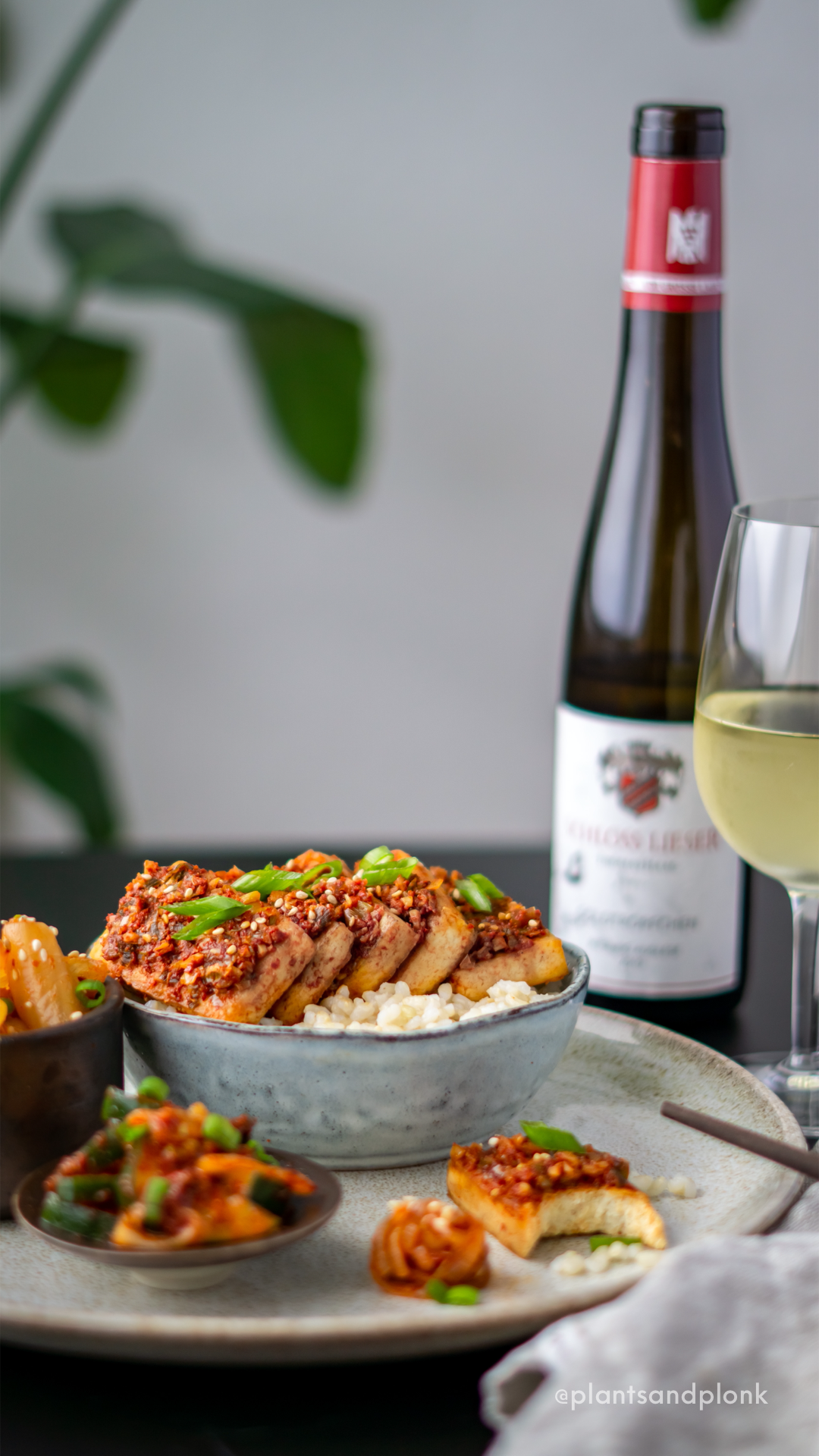
What to pair with Riesling Auslese?
I have loved Korean food for years, ever since I dated a first generation Korean American in college. While that relationship went south, the food I remember his sweet mother making fortunately stayed with me. And now, there are more and more instances of veganized Korean cuisine; for some of the most drool-worthy examples, check out greats Seonkyoung Longest and Joanne Molinaro of The Korean Vegan.
Unfortunately, in my limited experience I’ve seldom (if ever) seen Korean food paired with wine. That may be because I just haven’t heard of restaurants doing it or perhaps it’s just the best kept culinary secret ever. Whatever the case, the seeming dearth of pairing with this rich cuisine makes me want to experiment with it even more.
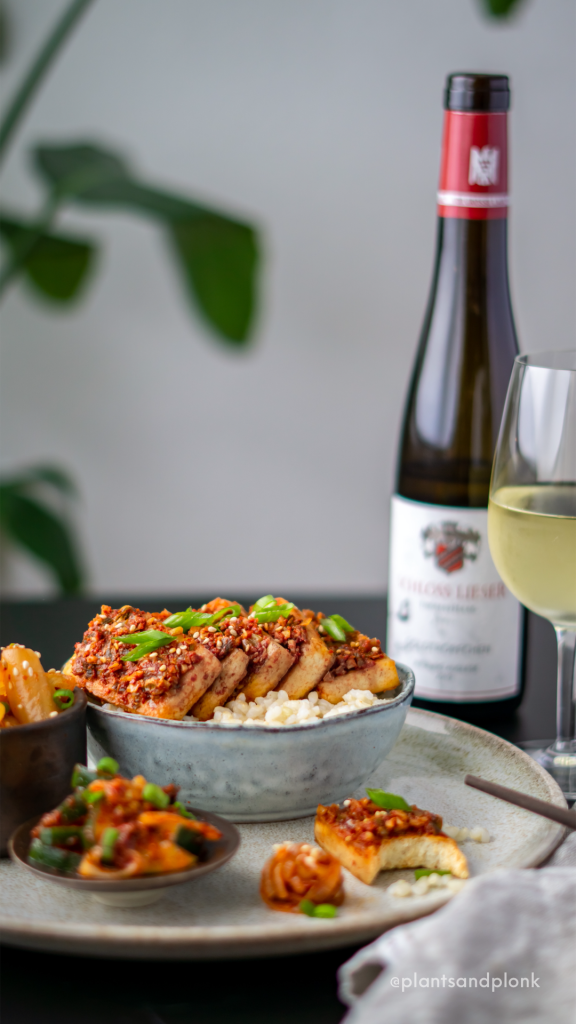
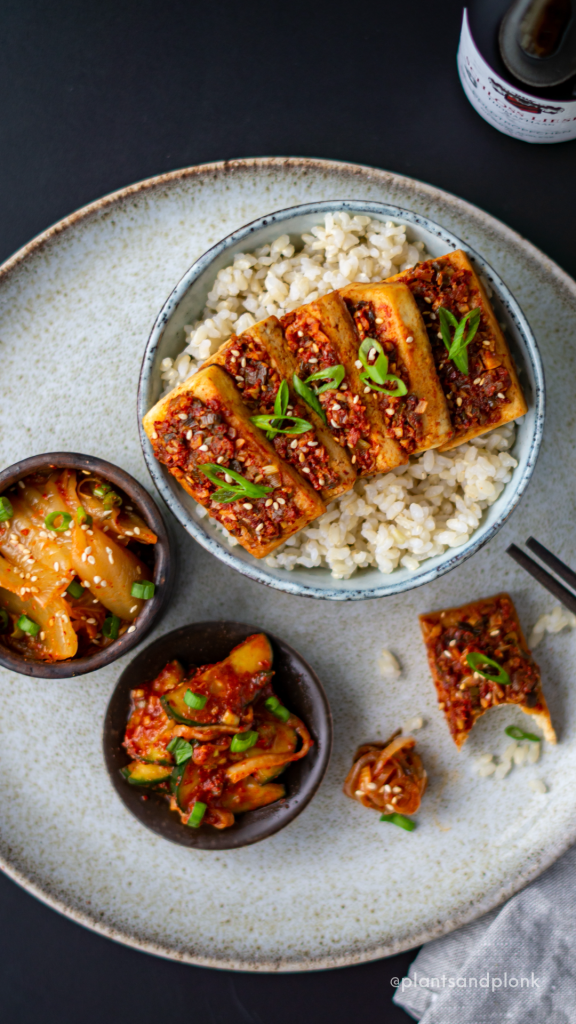
So even before I got my hands on this Auslese, I was already thinking “what Korean dish would this work with?” And I couldn’t stop my mind from wandering to my all-time favorite tofu recipe: dubu jorim (traditionally a banchan side dish, but I made it the star). See more about banchan at the end of this post.
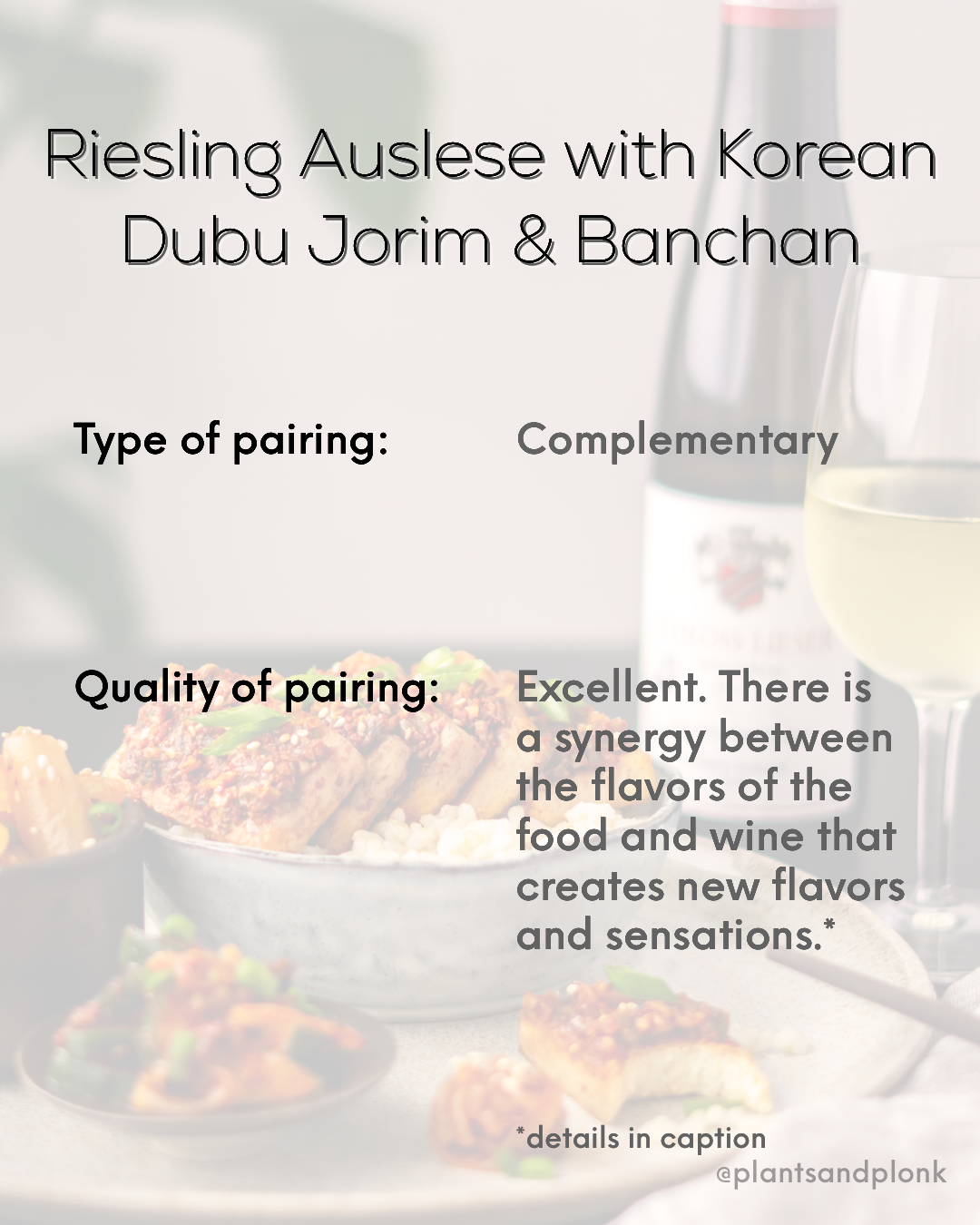
How did it go?
I honestly wasn’t sure the wine would work with this umami charged dish and it’s vinegary accompaniments (definitely don’t leave out the kimchi or oi muchim). But oh. my. god. It turned out to be a veritable playground for flavor basics in both wine and food.
The sweetness of the wine is offset by the food’s slight spiciness so that you just taste the Riesling’s ripe stone and citrus fruit. And the bright fruit flavors take on all new characteristics next to the deep earthy, braised flavors of the dish. The umami also enhances the sense of acidity in the wine, making it even more of a palate cleanser while lightening up those intense flavors. Happily, the tendency of umami to increase the percieved heat from alcohol didn’t have much of an impact here, given this wine’s low 7% ABV.
Altogether, the wine not only compliments this food, but the flavors of fruit and umami, of warming spice and bright acidity, combined to create flavors and sensations that weren’t there to begin with. This pairing is definitely greater than the sum of its parts.
Jump to section: about the wine || about the pairing || recipe
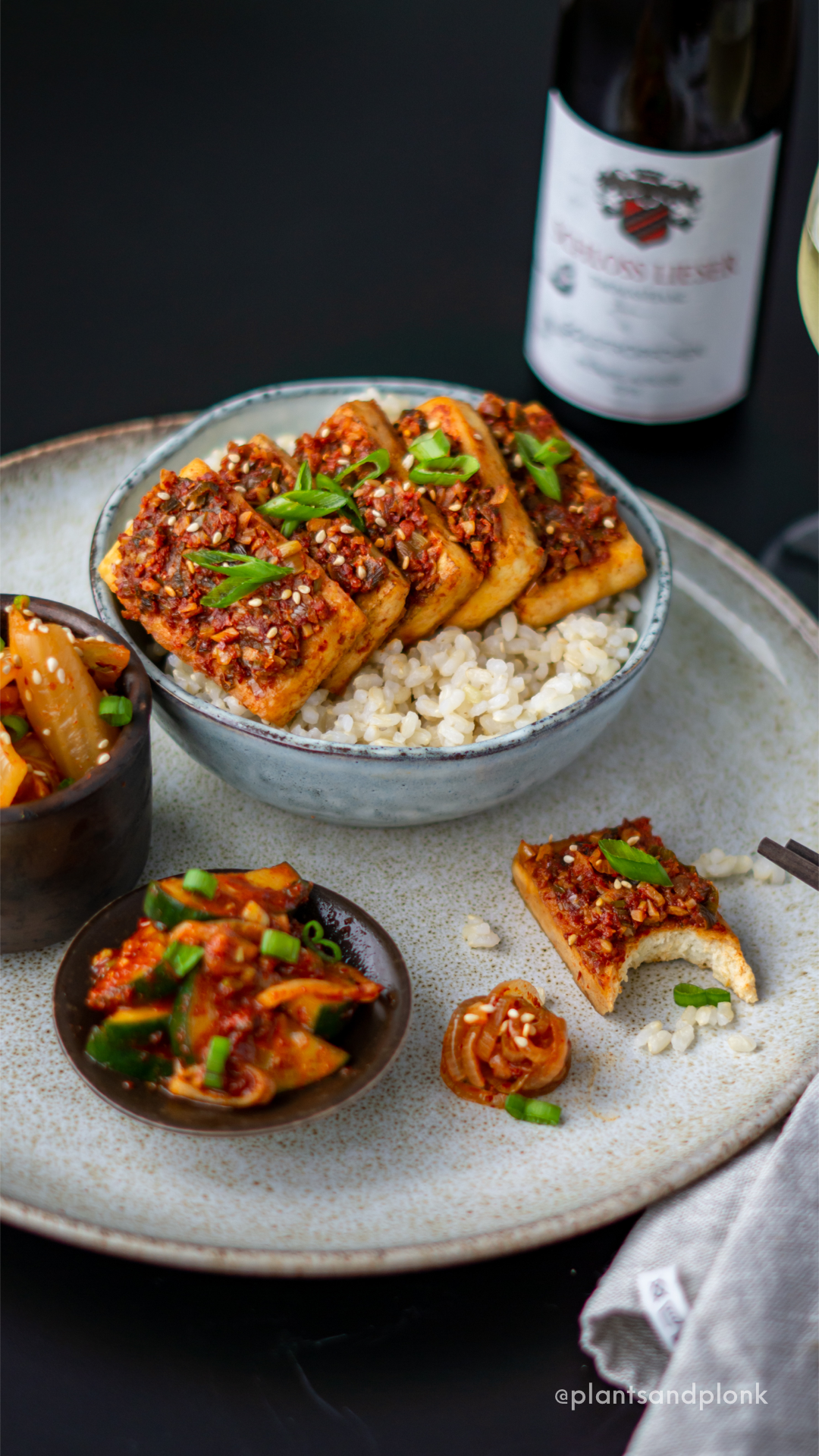
Dubu Jorim and Banchan
I wish I could say I remembered all of these recipes from cursory experiences over 15 years ago while watching my ex-boyfriend’s Korean mother make dinner. But that would be an outright lie. What I remembered were the depth of flavors and the careful processes. I had to look up the details.
Thank goodness for Seonkyoung Longest. I was a fan of her YouTube channel even before she went plant-based and after that, I launched into full on superfan. The dubu jorim recipe is hers (well actually, her mom’s) and I follow it exactly every time I make it. Her recipe is not quite as saucy as other versions and I’m obsessed with it. If you prefer to watch a video of Seonkyoung and her mother making it in action, check out the youtube video: “Korean Tofu Jorim Spicy Braised Tofu.”
(Seonkyoung also has an older recipe for vegan kimchi, which I keep promising my husband I’m going to try making, but the one pictured here is store bought.)
The oi muchim (cucumber salad banchan) is something I do remember from all those years ago. Over time, I’ve refined my recipe, but it’s very similar to the others I’ve seen. It’s so customizable that my husband and I each prefer our own respective versions so much that we always make both whenever we serve it! The full recipe of my permutation is below.
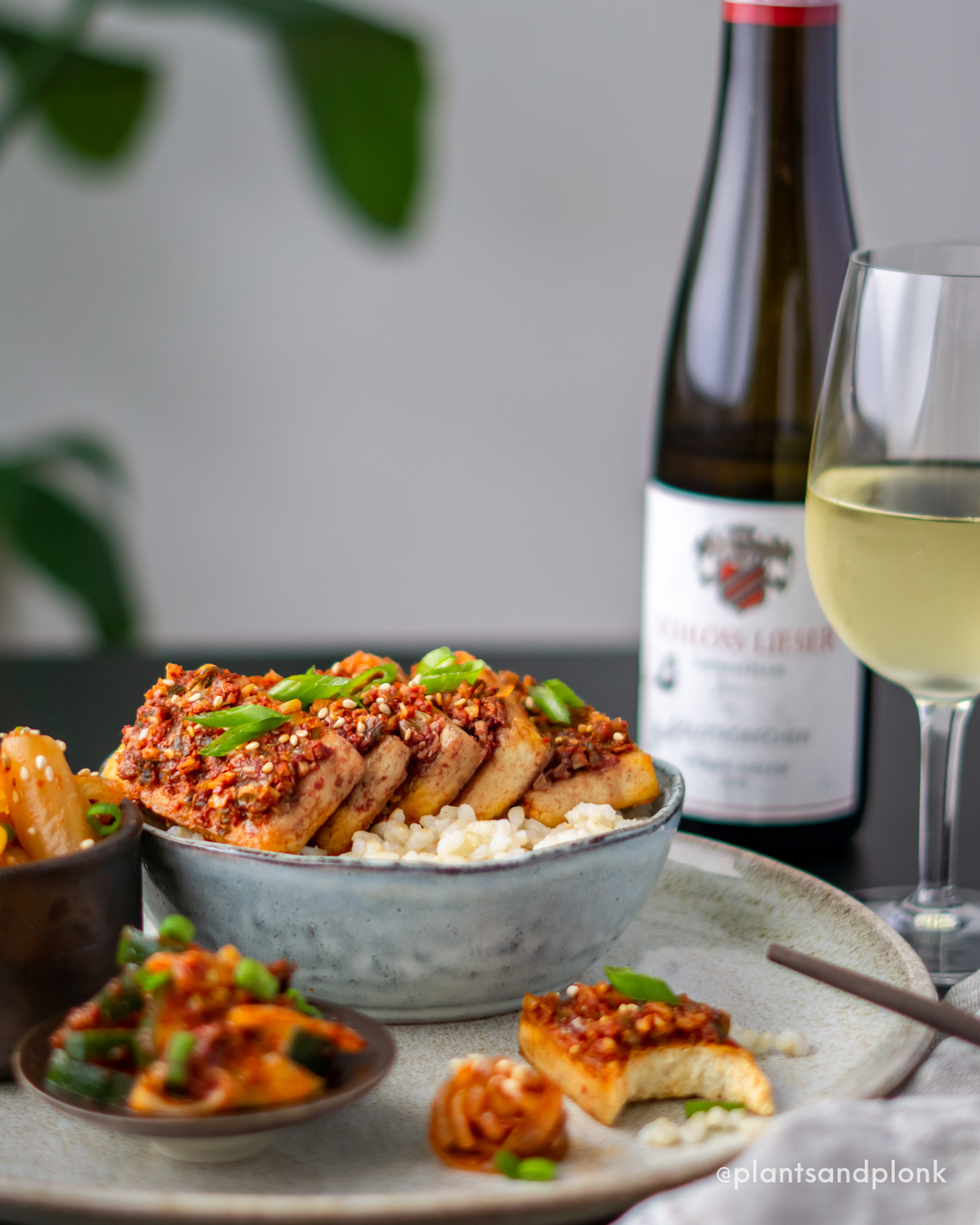
Tasting and other Notes
click on a photo below to see it full screen


Jump to section: about the wine || about the pairing || recipe
Oi Muchim (Korean Cucumber Salad) Recipe
Recipe
For Seonkyoung Longest’s dubu jorim recipe, see her food blog or YouTube video
Ingredients
- 1 cucumber – the skinnier, the better
- ¼ onion sliced paper thin (use the rest of it for the tofu)
- 3-4 scallions/green onions
- 2 cloves garlic
- 3 tbs gochugaru (see note below)*
- 5 tbs tamari or soy sauce
- 1.5 tbs maple syrup
- 2 tbs rice vinegar
- 1 tbs sesame oil
- 1 tbs sesame seeds (plus more to garnish)
Instructions
Prep all the remaining vegetables: slice the cucumber in half lengthwise, then in quarter inch (6mm) half-rounds, finely chop the scallions, and mince the garlic cloves
Combine the cucumber, onion, scallions and garlic in a medium sized serving bowl
In a small mixing bowl, combine all remaining ingredients and mix well
Important: be sure to taste the dressing and adjust before adding it to the cucumbers!
Dress the cucumber and onion mixture with with spicy tamari sauce
Garnish with additional sesame seeds if desired
Serve immediately alongside warm short grain rice, dubu jorim, kimchi, and a glass of German Riesling Auslese
* Gochugaru are korean red pepper flakes. They can be found at nearly any asian grocery store or online. I strongly recommend using these over general red pepper flakes as they are not as spicy and have a deeper, slightly sweeter flavor. They keep well, can be used in a variety of dishes

 celeste radosevich
Awww thanks! Riesling gets such a bag rap, it was time for a little justice 😉 glad you enjoyed it! The Korean food is so delicious, I’m already planning on making this again next week 🙈
LikeLike
This is so interesting Celeste! What an education you’ve provided. There’s so much more to wine pairing than just “red vs white!” The photography is exquisite; the Korean dish looks luscious. Amazing post here!
LikeLiked by 1 person