6 minute read
Jump to section: about wine pairings || about pairing with plant-based food || about vegan wine

Last month we delved into the science of wine. This month, we’re digging bravely into the mechanics of plant-based wine pairings.
Learning wine pairing principles can be intimidating – not unlike learning to cook without a recipe. I remember feeling completely out of my league early on in my wine career whenever guests asked me to choose a wine to accompany their food. Over the years, I learned a lot from my wine directors and colleagues, but I also remember quite a bit of unhelpful advice.
Many beginners (myself included) are handed wine pairing adages when they start out like the beloved “what grows together goes together.” With all due respect to my amazing mentors, I’ve come to the unpopular opinion that expressions like this are not only unhelpful in many cases, but they’re actually crippling in the long run.
Here’s why:
- They don’t teach any of the reasons behind the pairing, so, although this maxim might work some of the time, it doesn’t offer any guidance beyond very limited boundaries. Sort of the wine version of the “teach a man to fish” proverb.
- Precepts like this are embarrassingly Euro-centric and simply can’t be applied to wine-friendly cuisines that developed far away from vineyards and vitners.
- Due to market trends as well as global climate change (and despite regulations and traditions), wine-making is changing all over the world. That means, two neighboring producers can make wines that are drastically different. So these “rules of thumb” that vaguely identify a location as the best pairing for a dish are becoming more and more unreliable.
Jump to section: about wine pairings || about pairing with plant-based food || about vegan wine
Wine and Food Pairing 101
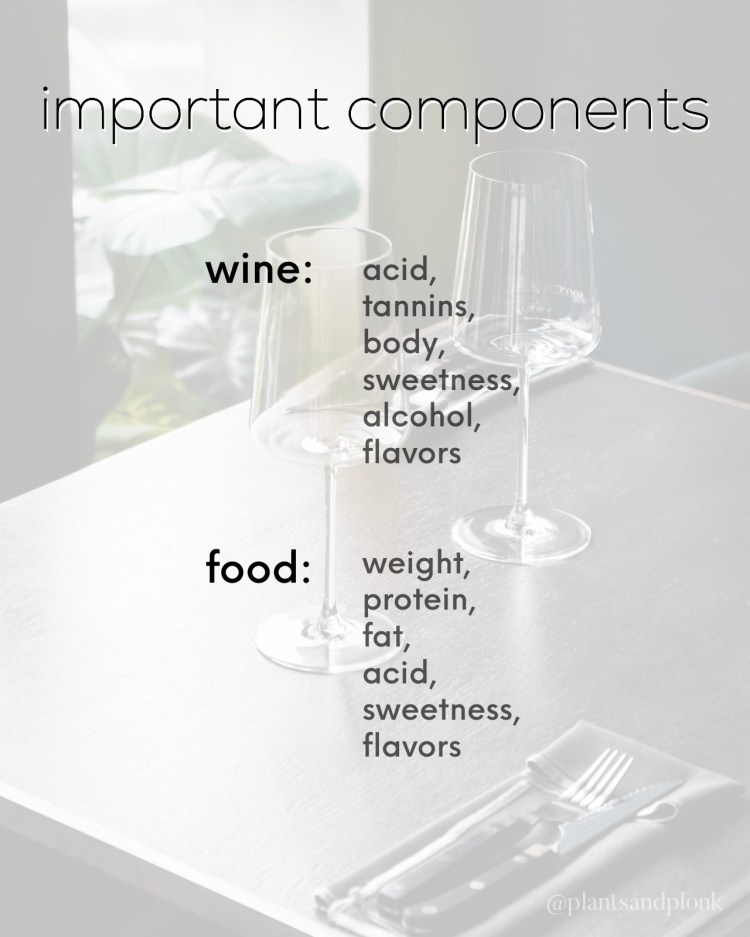
I’m confident the principles of wine pairing are straight forward enough to shrug off outdated precepts and oversimplified clichés. So, for the rest of this month (well, really for the rest of this year!) we’ll dig into some pairings and try to understand why the structures, textures and flavors of the food and wines work by coinciding or contrasting with one another.



Jump to section: about wine pairings || about pairing with plant-based food || about vegan wine
What changes when pairing wines with plant-based cuisine?
Not much, really. With the basics in hand, pairing wine with plant-based food isn’t really different from pairing wine with any other food, but there are a few considerations to keep in mind for getting wine pairings just right:
Protein
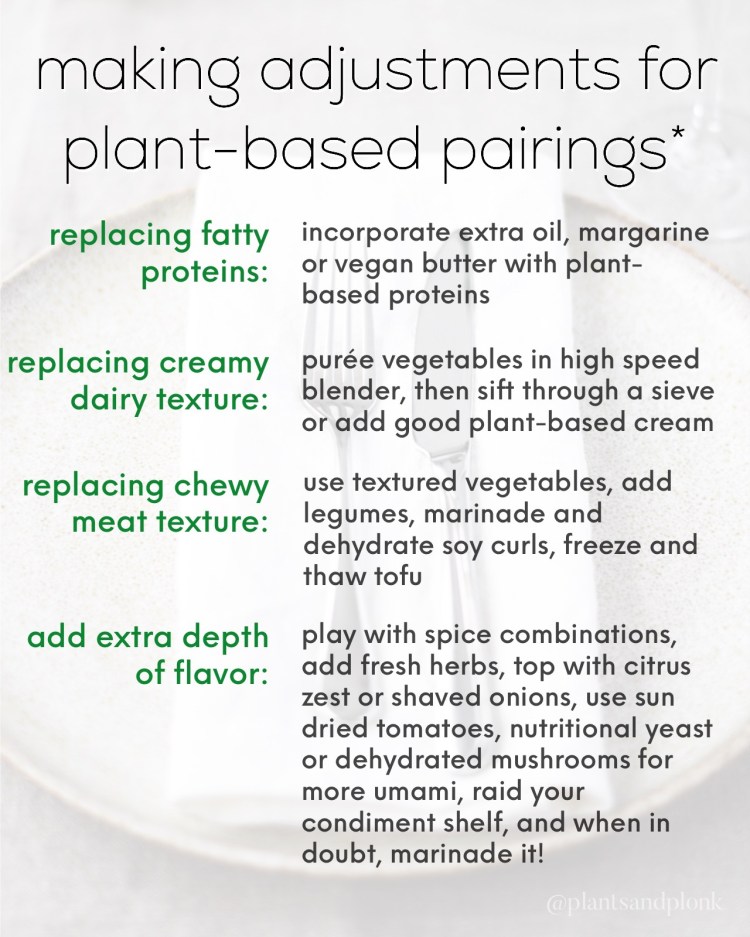
Few plant-based eaters are worried about getting enough protein, but we do know that most of our proteins are significantly lower in fat-content than their meaty counterparts. This can, of course, affect pairings with tannic or fuller bodied wines as well as some wines with high acidity or alcohol. To compensate, you can add a bit more plant-based butter or oil to your meal.
Texture
Though options are loads better these days, it used to be a struggle to replicate the smooth creaminess of dairy for soups and sauces. A good quality plant-based creamer (love you, Oatly) can work wonders. And I have become nearly dependent on our super high-speed blender and sieve to make the smoothest of soups.
For a chewier texture, I’ve adjusted the kinds of vegetables in a dish or added legumes on occasion (for a perfect example, check out last week’s lentil stew). But for the best results, I’ve marinated and then slightly dehydrated soy curls or frozen and thawed tofu. These extra steps give a surprisingly toothsome meaty texture.
Depth of Flavor
For more complex wines, we want to make sure we’ve got enough complexity in plant-based food to “stand-up” to the wine. This is a veritable play ground – I love throwing in fresh herbs and spices, topping a dish with citrus zest or shaved onions, and adding umami with sundried tomatoes, dehydrated mushrooms, or nutritional yeast. But I also don’t shy away from using condiments: tamari, vegan mayo, vinegars and mustards are just a few staples in our home. And when in doubt, marinade the sh*t out of whatever you’re making.
These are just the beginnings. There’s a whole world to explore with plant-based pairings. And they aren’t difficult to make, you just need the right tools in your pocket (and in your kitchen).

Jump to section: about wine pairings || about pairing with plant-based food || about vegan wine
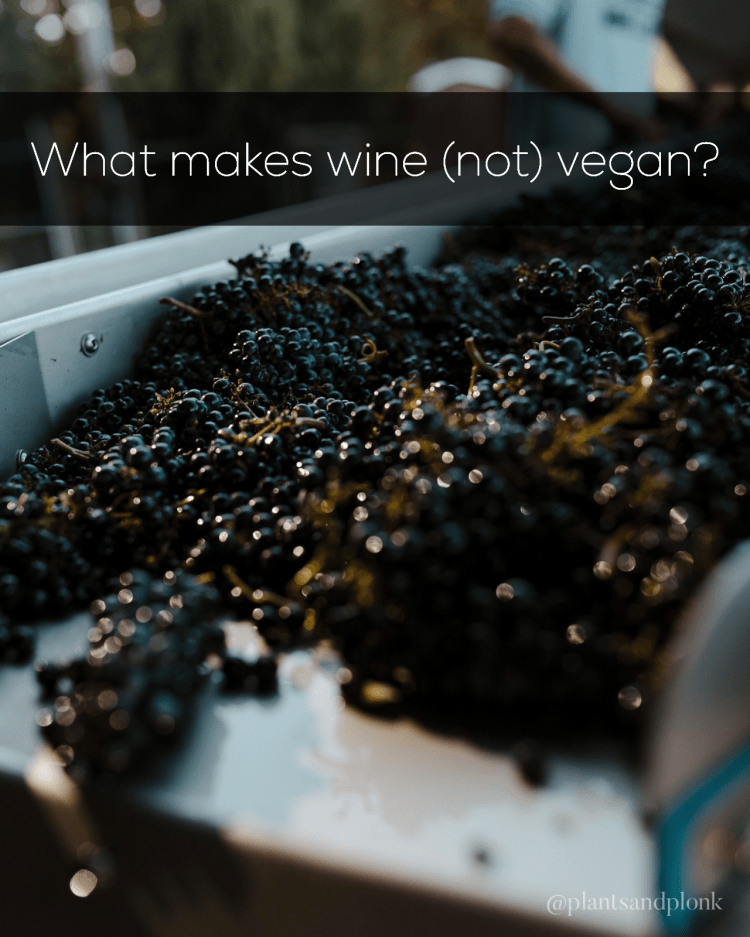
What makes wine (not) vegan?
We can’t have a discussion about plant-based wine pairings without talking about vegan wine.
[Pause for the inevitable “But wait, isn’t wine just made of grapes? How is it not vegan?”]
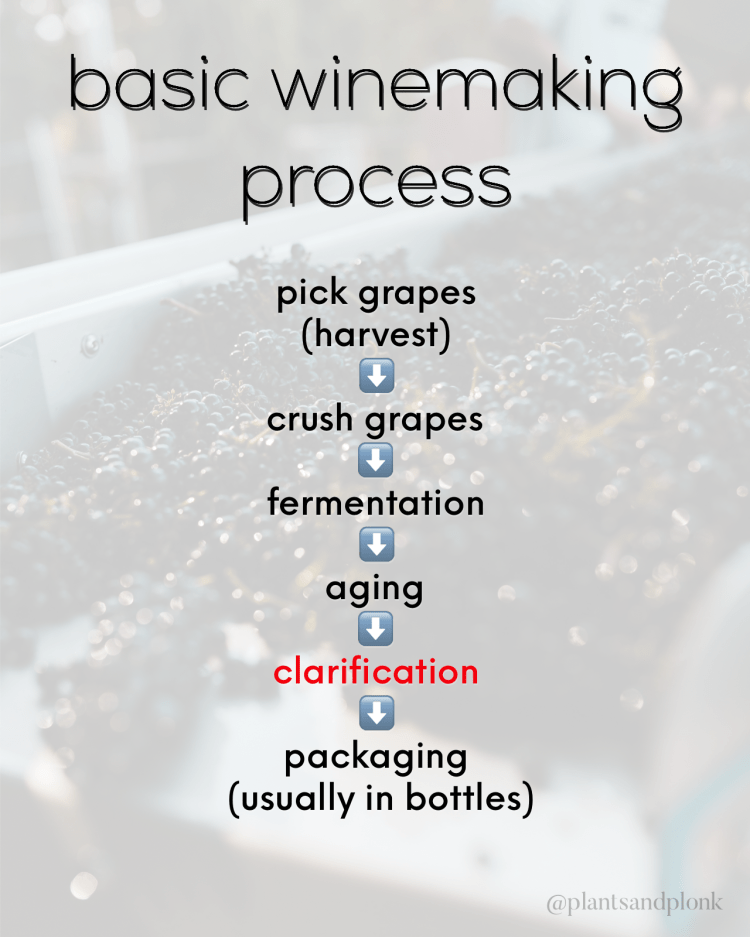
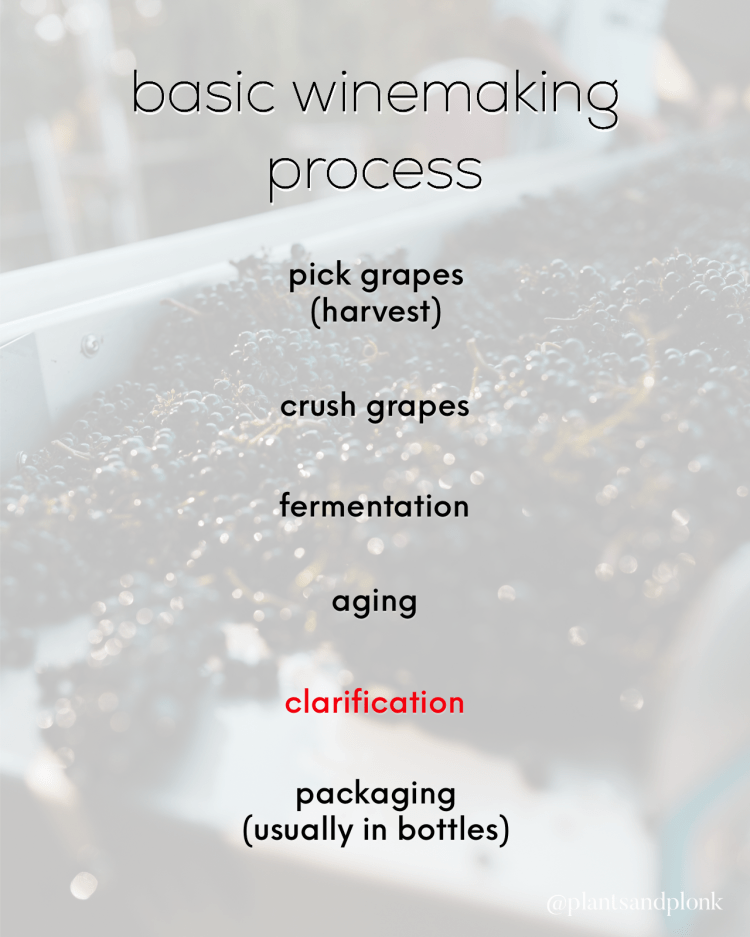
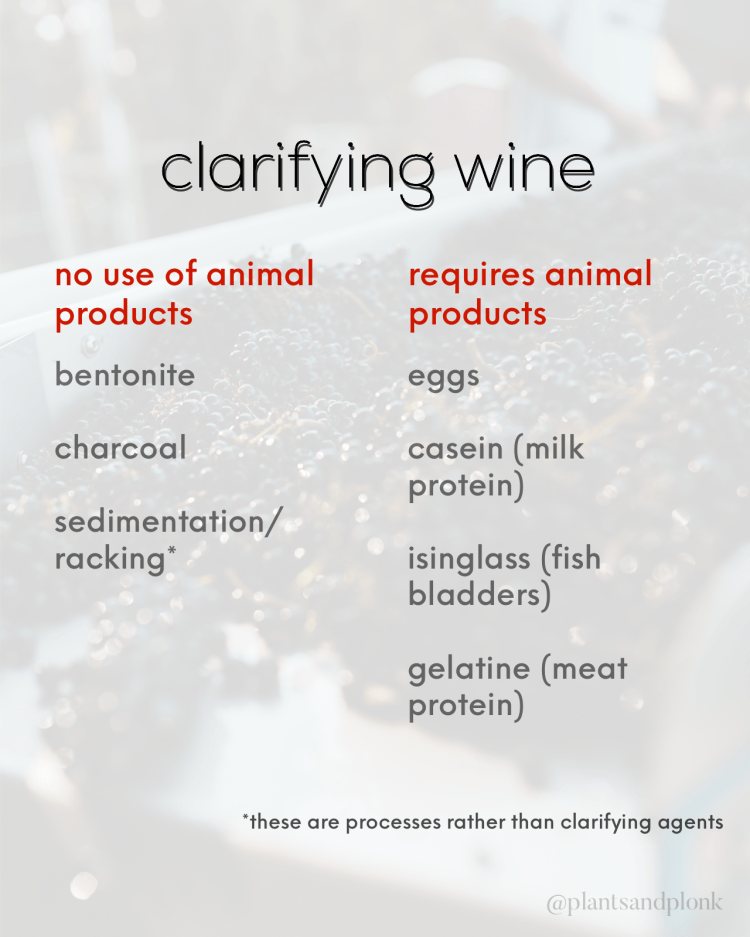
Yes, wine is essentially fermented grape juice, but it’s not quite that simple. See, after the grapes have been picked and crushed, and the juice fermented and aged, the resultant wine is usually clarified before it goes in the bottle. This process (better known as “fining”) gets all the yummy but unsightly microscopic guck out and has been known to sometimes use animal products (see the slideshow below for more information). So, you can see, with the use of animal products, you have a non-vegan wine.
So why don’t winemakers just use a different fining agent? Well, it can be complicated, since not all fining agents are created equal. Some are less effective or less economical than others. A few can strip the wine of flavors or colors, and others can impart undesirable ones.
In some cases, winemakers have decided to forgoe this process and instead refrain from fining their wines at all. Those who still want a clear wine opt to allocate extra time before bottling to allow the sediment to settle before racking (syphoning to another vessel) the wine to achieve clarity.
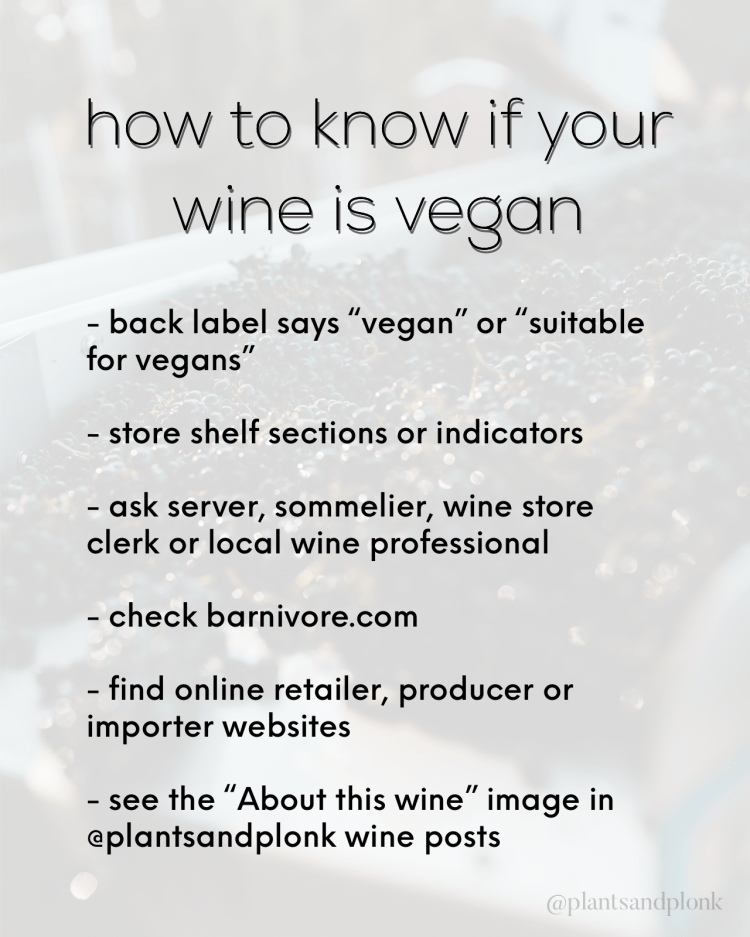
The most difficult part for us is deciphering which wines have been made using animal products, as this information isn’t required under wine labelling laws. An increasing number of producers are labeling their wines “vegan” (no animal products used) or “vegetarian” (only egg- or dairy-based agents used). Other labels will say “unfined/unfiltered,” which we can extrapolate as vegan. Nowadays there are also retail stores where vegan wines are indicated as such on the shelf. When in doubt, ask your server, sommelier or local wine professional.
If you’re particularly scrappy, you can prowl the internet for information on your wine, or – even better – check out the website, barnivore.com, which includes the vegan status of many wines. Just keep in mind it may be difficult to find information on smaller productions or niche or new wines.
Outside the cellar
Beyond filtration, animals can also be employed outside the cellar for wine production. Vitners may use manure or engage animals as labor for plowing or harvest. For strict adherence to biodynamic farming, many of the preparations require animal organs or other body parts. Some of these same farms also include animals as part of their overall ecosystem. Finally, some wine labels may be attached with bone glue as opposed to plant-based glue.
For the purposes of this blog, I’ve tried to do my research. For each wine, I include an overlaid photo with basic information entitled “About this Wine”. There, you’ll find basic information about the producer’s approach to winemaking. I’ve stuck with industry standards and labeled any wines filtered without the use of animal products as “vegan.”
You’ll find 36 out of the 40 I’ve selected fit this criterion, and they pair beautifully with their accompanying dishes. See you in a week for the next one!
Jump to section: about wine pairings || about pairing with plant-based food || about vegan wine

 celeste radosevich
4 thoughts on “introduction to plant-based food and wine pairings”