7 minute read
Jump to section: about the wine || about the pairing || recipe
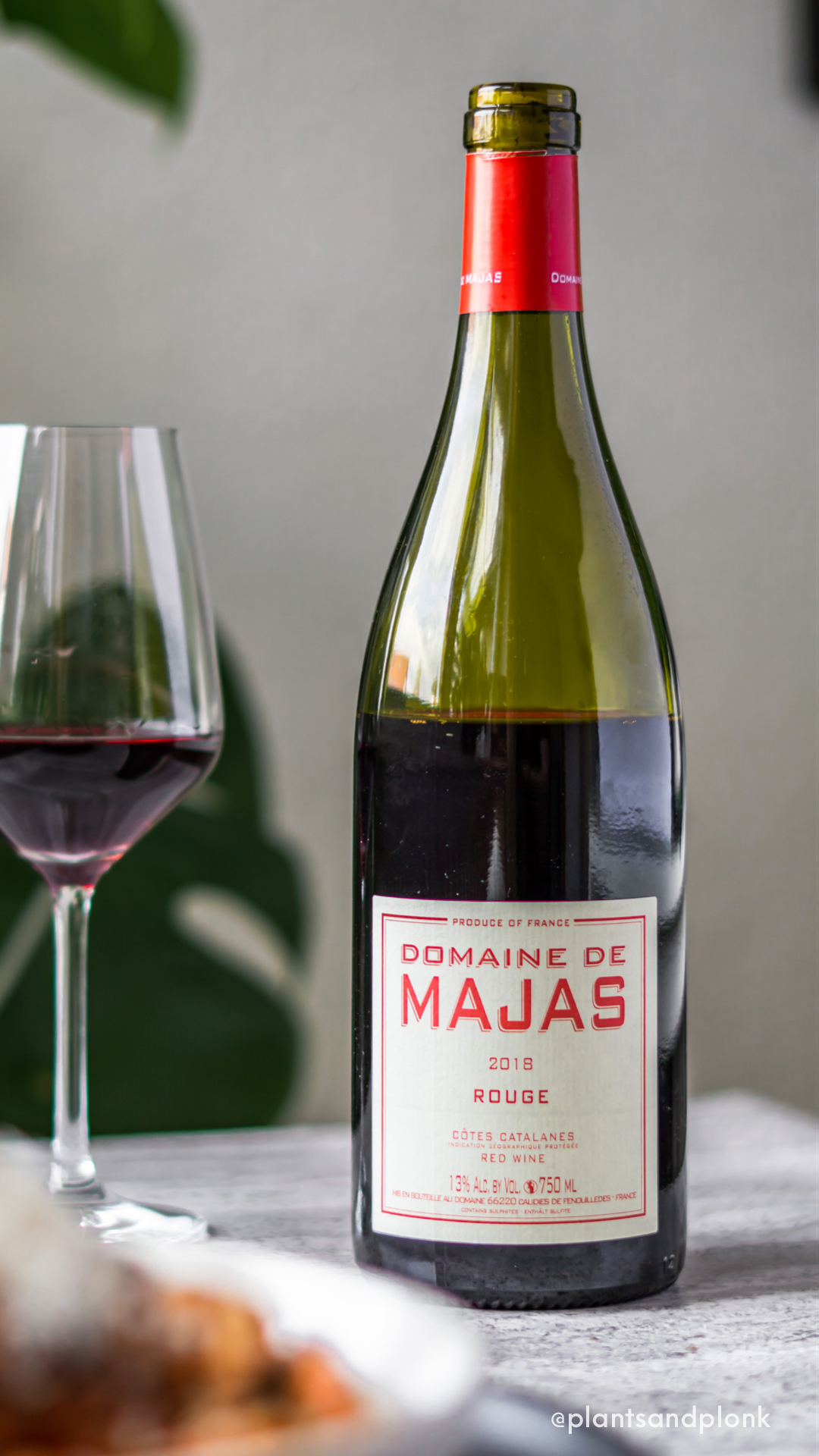
If last week’s wine was a bit obscure and the food pairing a little…special occasion-y, then this week we’re bringing it back to what Plants and Plonk is all about.
Actually, this week’s wine accidentally launched Plants and Plonk. I read about Domaine de Majas while researching natural wine for a WSET diploma paper on the subject. I never ended up writing the paper for reasons too involved to explain here, but the information I learned about natural wine continues to fascinate me. (If you’re unfamiliar, you can learn the basic gist about natural wine in the note below.)
In the microcosm of the wine world, there’s a lot of glamour and buzz around natural wine. Many of my peers are drinking and posting about much more expensive and elusive bottlings than this humble red. But this producer fascinated me because -despite their rise to prominence- they’ve continued to produce affordable, accessible, and uncompromisingly good wines.
About Domaine de Majas
In 2007, Domaine de Majas was nearly at their end. Since their inception, they’d grown grapes for local a wine co-operative. Wine co-operatives are organizations run collectively by local winemakers. Sometimes these winemakers grow their own grapes and use the co-op equipment to make their own wine. Others buy grapes from local growers based on certain regulations (grape variety, location, etc.) and simply make the wine themselves. The wines are usually, if not always, labeled under the co-op name. One of the main benefits of this relationship for small growers is that they don’t have to purchase their own equipment, rather they pay a fee to the co-op for using its equipment.
Unfortunately, in the early ’90s, when Alain and Agnes Carrère took over what is now called Domaine de Majas, they knew they could no longer afford to sell their family grapes to the co-op. The fees had become more expensive than the prices their wine could fetch. But growing grapes and making wine on their own was also a substantial struggle, so they were relieved when a major French grocery store offered to buy their entire stock for the store’s wine aisles. The compromise in this agreement came in the form of strict adherence to growing and production guidelines – using specific yeasts to make sure the whites and rosés tasted just so, adding certain additives to preserve flavor and ensure it tasted the same year after year. But before long, the Carrères found that the bulk grocery store wine they made wasn’t selling at prices that could pay for its production.
Serendipitously, this was the moment they met Tom Lubbe of the famed Domaine Matassa. He gave them the push they didn’t know they needed to launch into full blow organic viticulture and natural winemaking. Bit by bit, they transformed their practices and methods. Now, not only are they thriving, but they are sadly one of very few surviving independent producers in their town.
Jump to section: about the wine || about the pairing || recipe
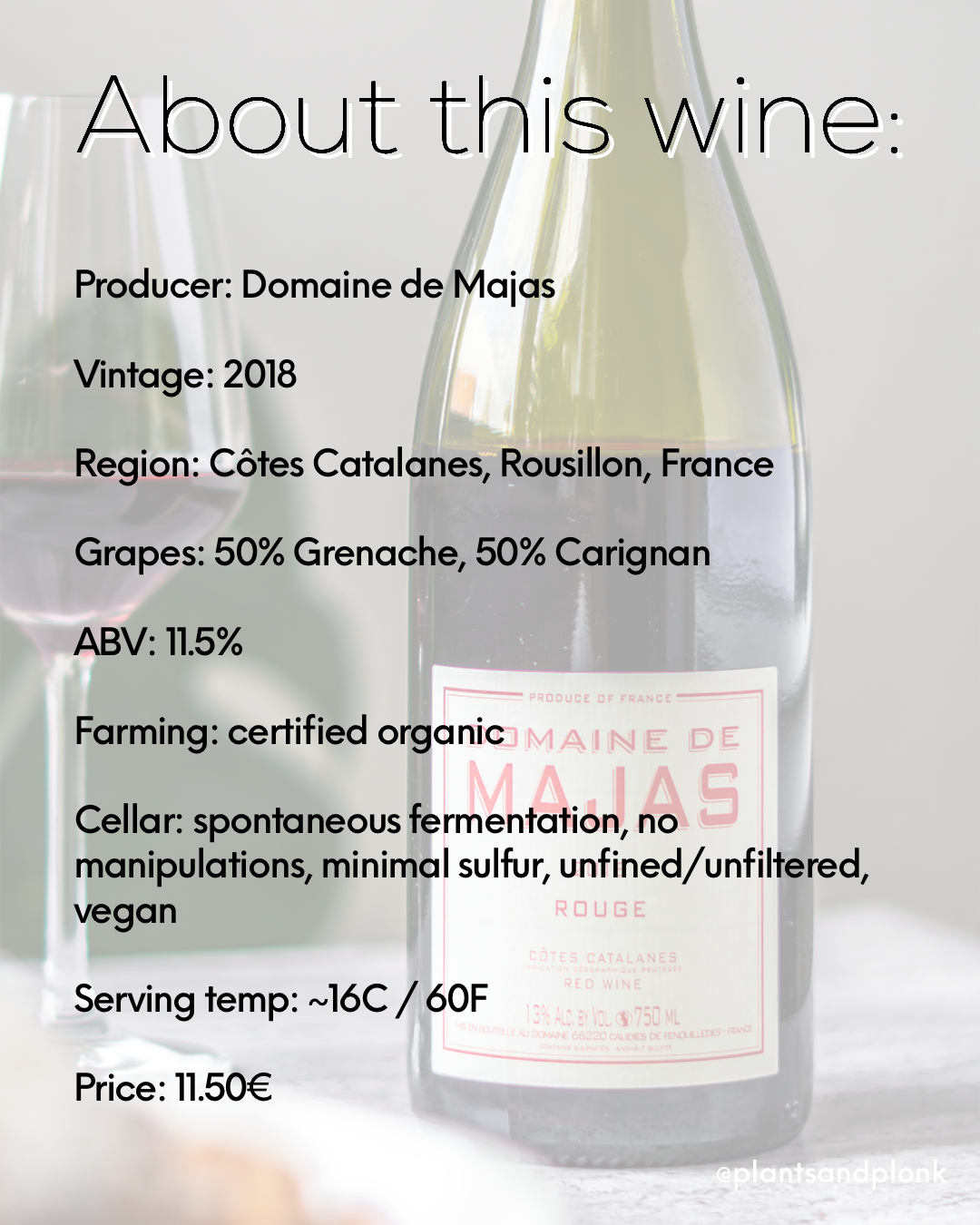
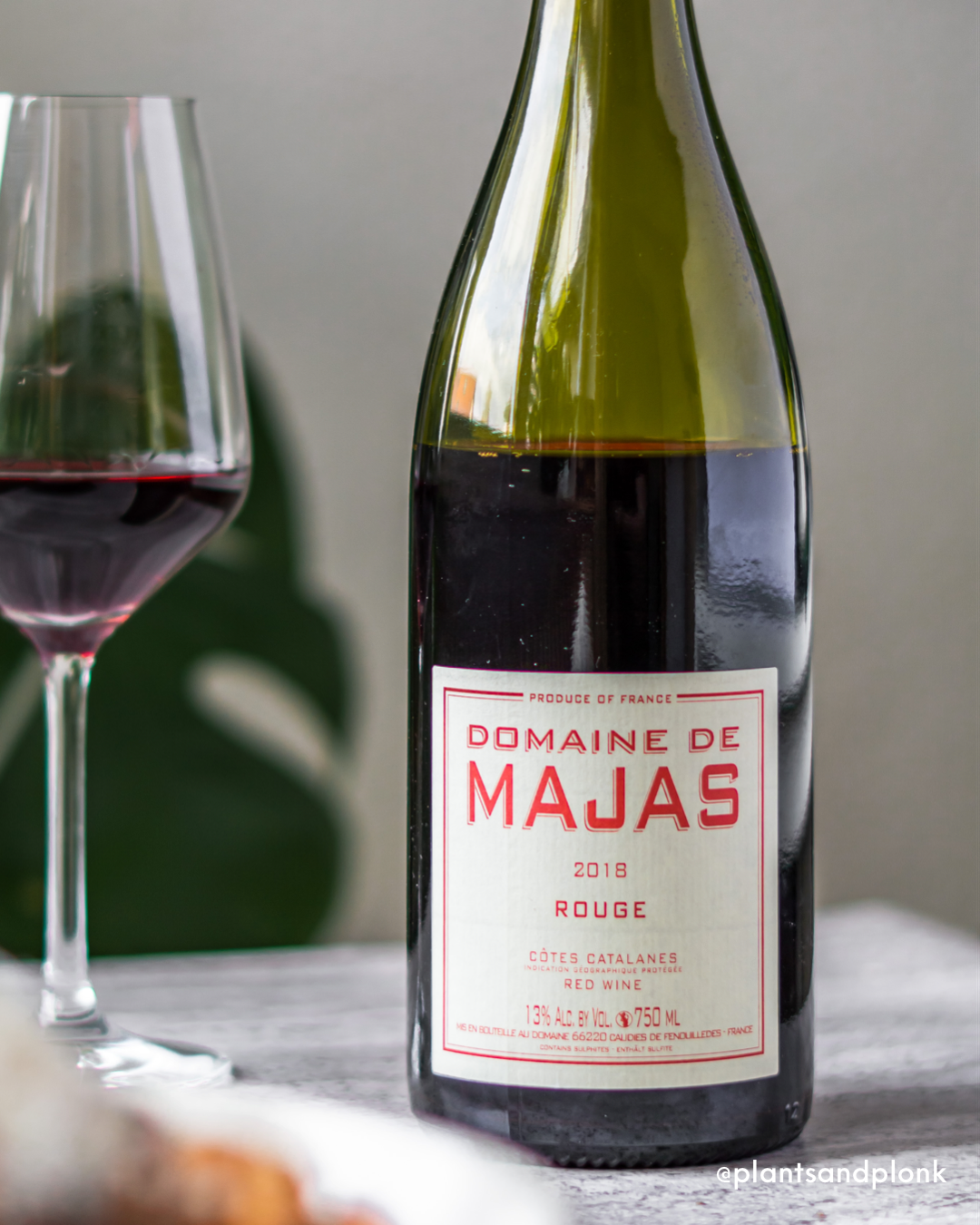
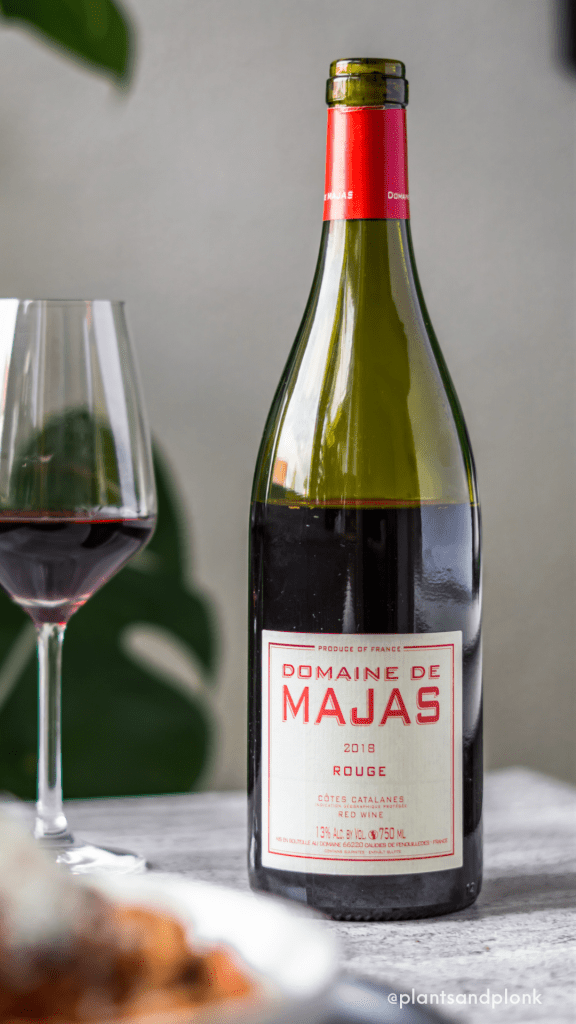
2018 Domaine de Majas Rouge
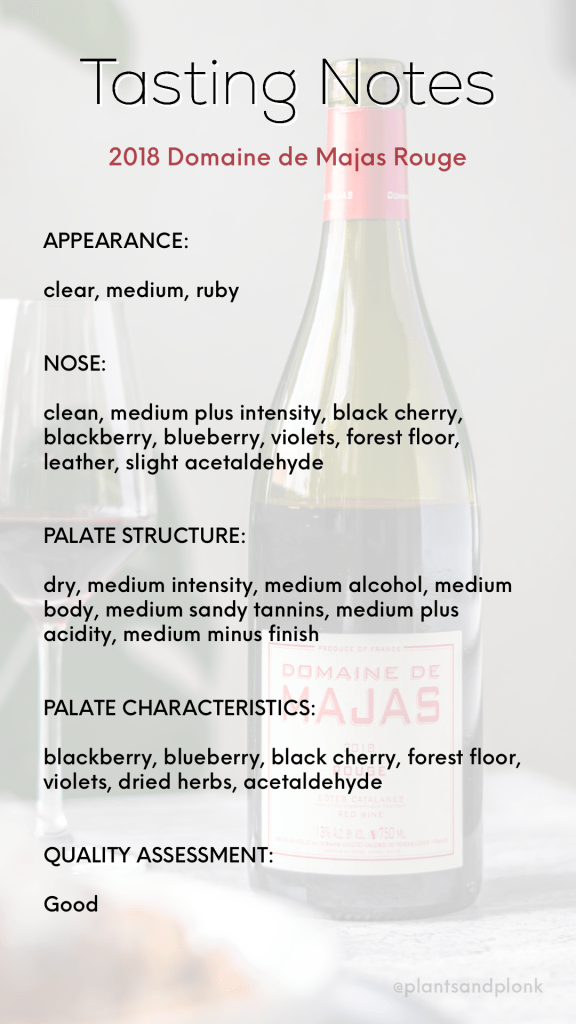
Though only 11.50€, this wine has a surprising amount of flavor complexity, with earthy and herbaceous notes along with brooding black and blue fruit flavors. The sandy tannins and juicy fruit tell of the juice’s time on the grape skins without being forcibly or overly extracted. It does have a touch of that typical natural wine acetaldehyde note, but it makes the wine interesting without overwhelming it. You can find my full tasting notes below.
Today, the main goal of the Carrères is to make wines that speak of their location in Rousillon, a wine-making region in southern France. This red is no exception to that approach. It’s made of a fifty-fifty split of Grenache and Carignan. Both are typical to the Rousillon region, and the ones grown for this wine are fermented spontaneously with the ambient yeasts they carry into the cellar.
Pairing Food with Domaine de Mayas Rouge
This week, I kept things simple. I mean who has time to make sushi every week? ::wink::
Again with this wine, I ran myself through the basics for pairing, evaluating what kind of acidity, tannins, sweetness and body the food would be working with. I realized pretty quickly that I wanted to do a hefty tomato-something with it. The savory and herbaceous aspects of this wine told me it could handle some umami and herbs. This wine’s acidity can also stand up to tomato-something, since it’s more elevated than I would have expected for something from the south of France – not that I’m complaining!
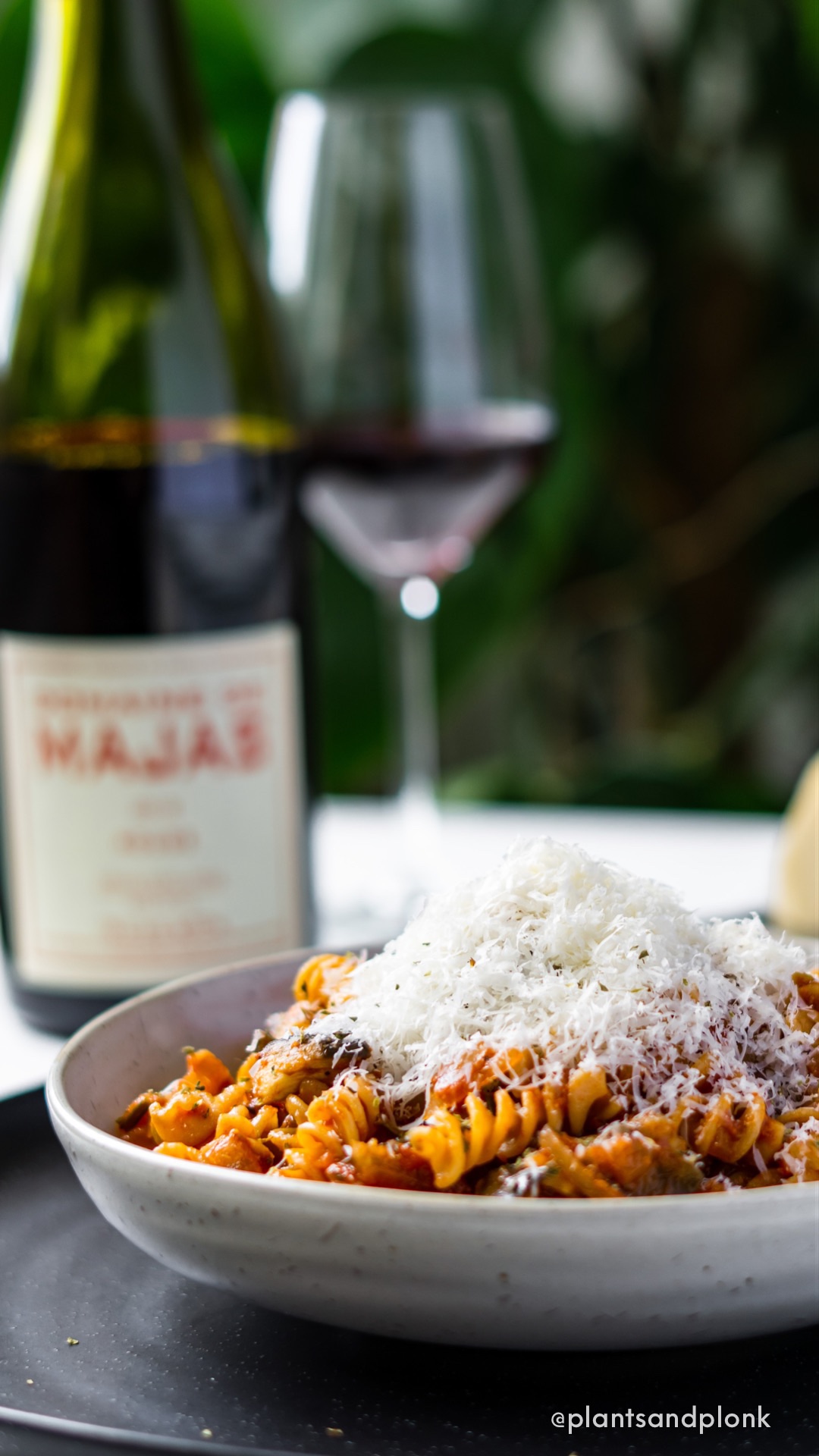
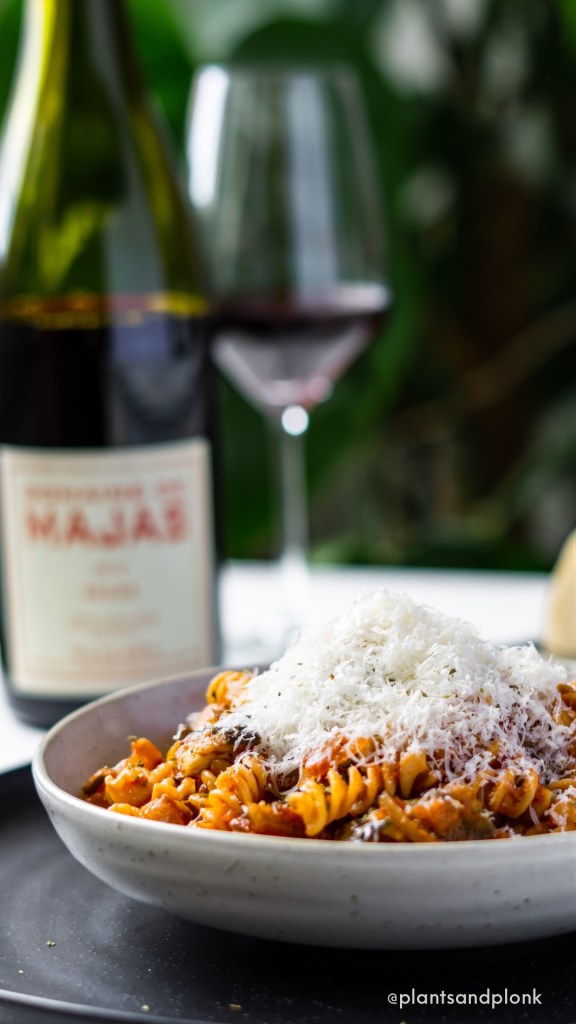
I opted for pasta with tomato sauce and veggies. It’s straightforward, quick, easy and super tasty. That’s the thing about pairing at home – neither the food nor the wine have to be expensive or fancy. There are delicious options that are totally weeknight-able.
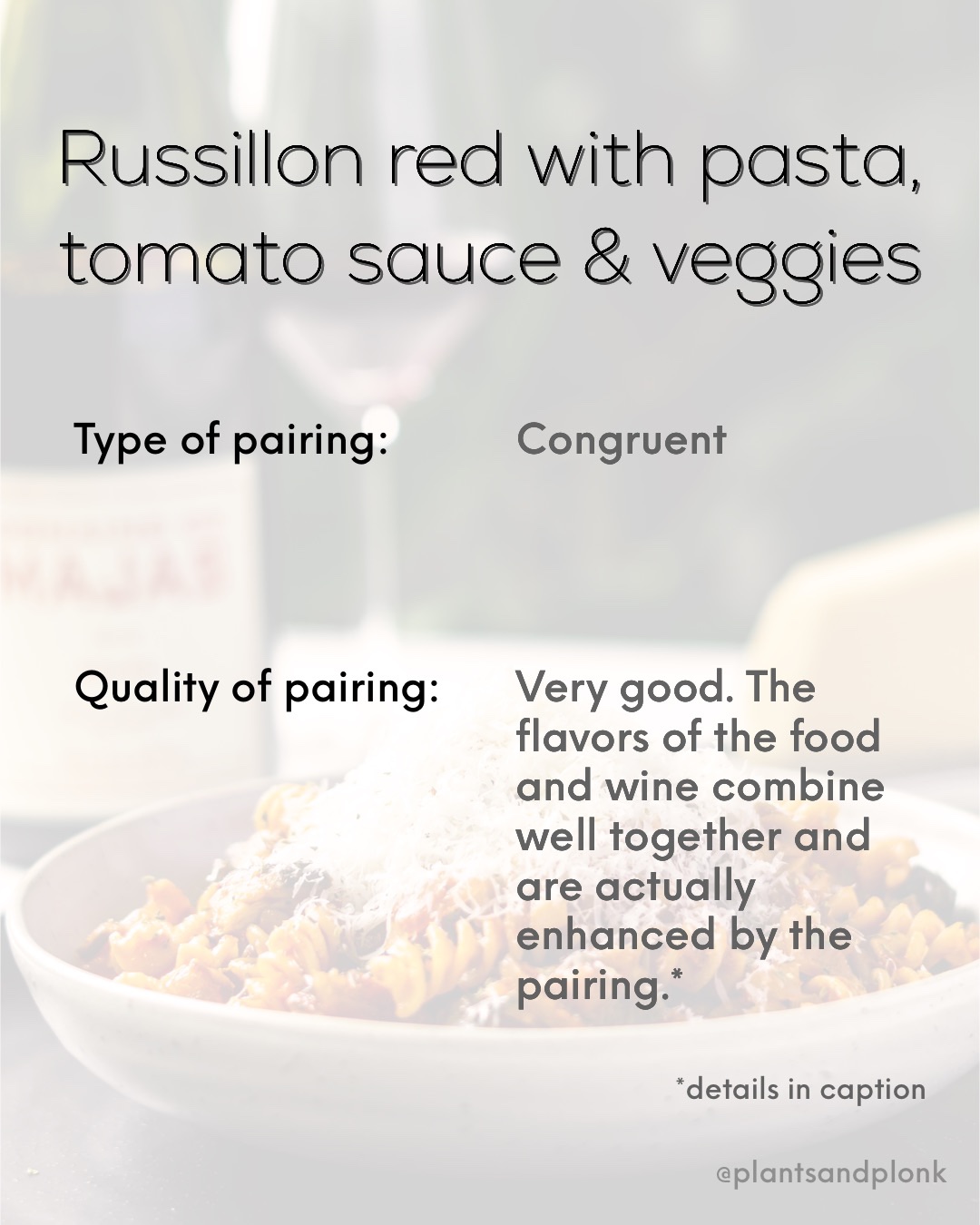
You can find my favorite recipe below, but the base sauce is really versatile. It can take on a lot of variations, depending on what veg I have hanging around the kitchen. No matter what form, though, I could (in most cases) still pair the same wine with it. Tomato sauce is powerful. And, as is true for most sauces dishes, the tomato sauce flavors reign supreme. Don’t believe me? Think about the difference between a creamy mac and cheese and a basil pesto. You can throw mushrooms and zucchini in both, but the sauce will still dominate the dish.
Jump to section: about the wine || about the pairing || recipe
So, how did it go?
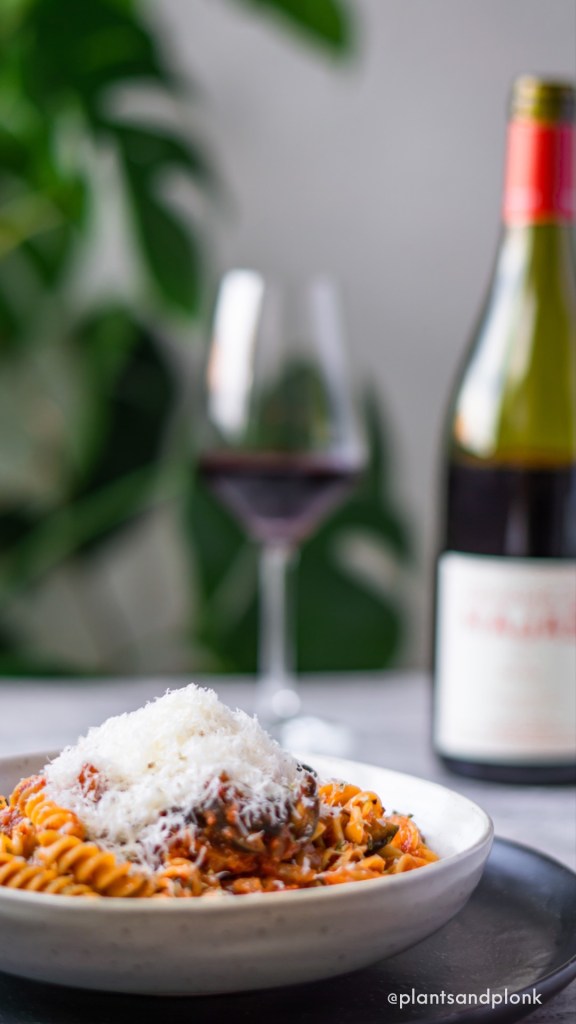
This Rousillon rouge made for a spot on pairing with this pasta. As expected, the herbaceous and savory components dovetailed together nicely, making them both a bit more apparent on the palate. The dark fruit of the wine also plays nicely with the cooked tomato sauce, intermingling together as if the wine really was just another ingredient in the recipe. The tannins also nearly disappear with a few bites of chickpeas and gluten-free pasta.
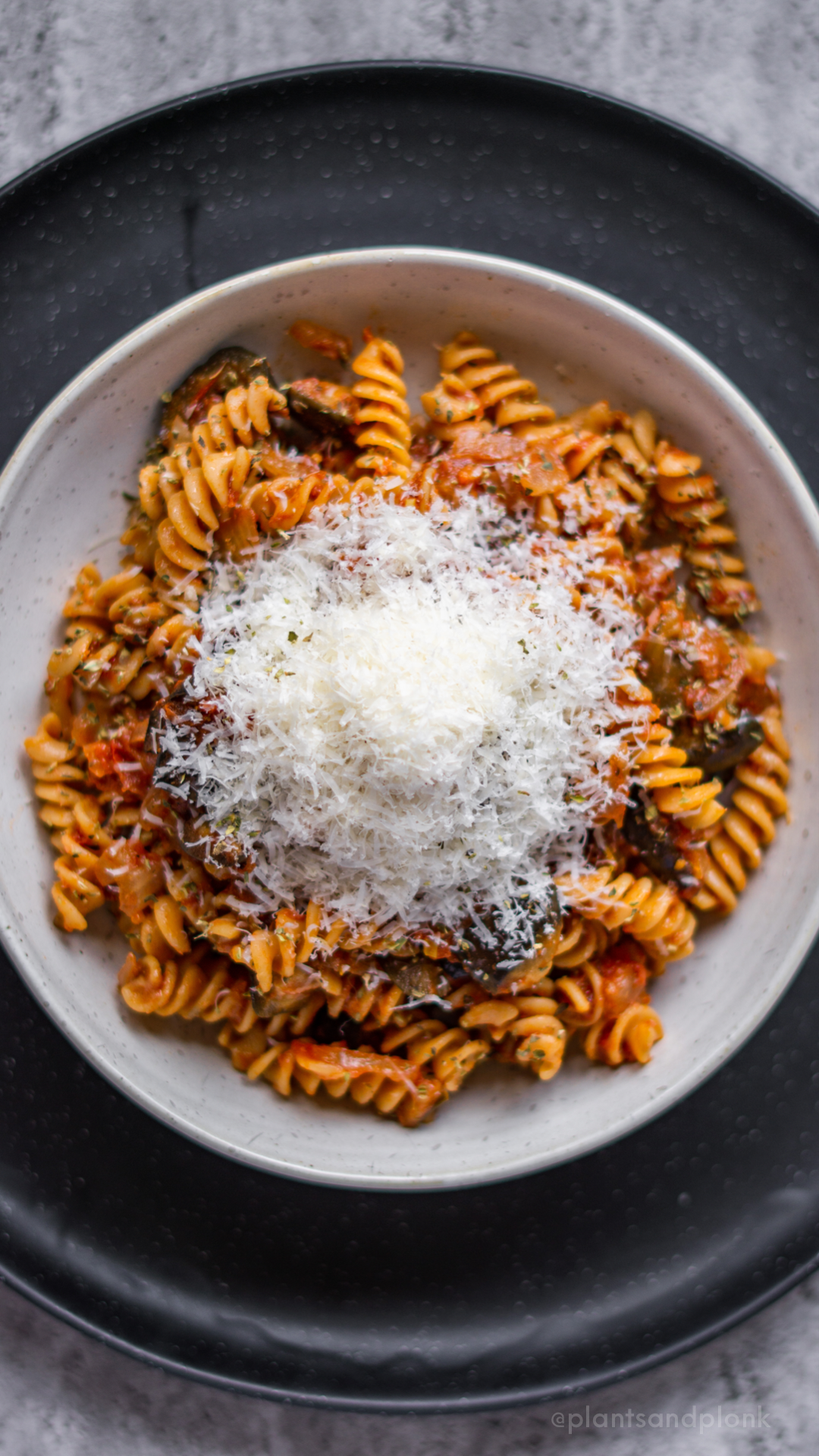
I like that both of the food and the wine are quite robust in their intensity and flavors, but that neither overpowers the other. This is definitely a perfect mid-week pick-me-up!
Gluten-free pasta with tomato sauce and veggies
The kitchen is my favorite place to be creative and to de-stress, so a bunch of the dishes on this blog might not be…um…easy to whip together.
This one is.
This is definitely one of those meals for the days I’m tired or don’t feel like cooking (which happens more often than you might think). I just grab a couple tins of tomatoes and some pasta – both of which I try to keep on hand at all times. Add onions, some herbs, and a handful of roasted veggies and it’s kinda like the gluten-free vegan version of Hamburger Helper.
Ok, not really, but it’s definitely easy.
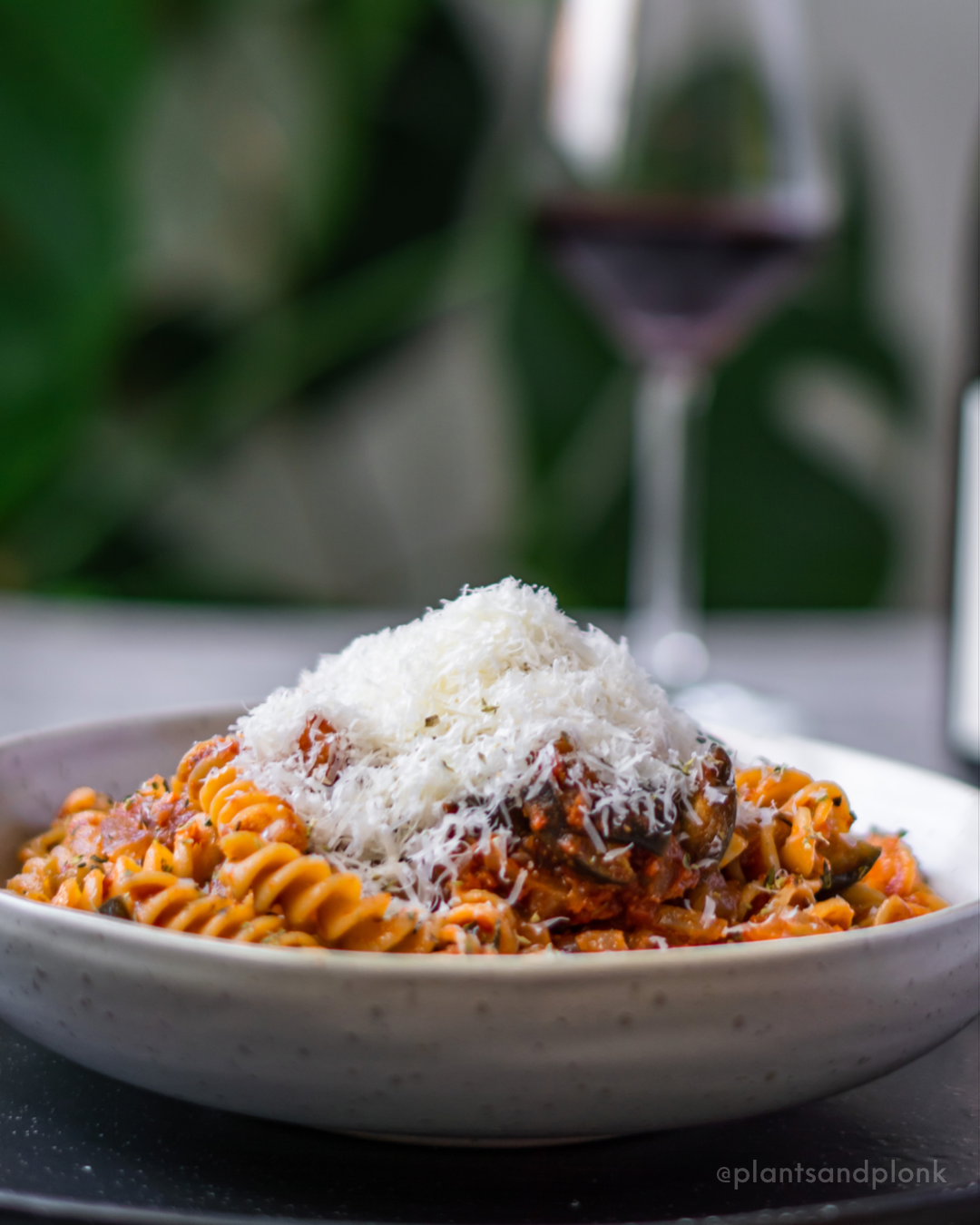
I find the combination of herbs and sautéed mushrooms a great way to add depth of flavor, and they really pop with this wine. Chickpeas and butter beans both work great with this, but honestly, sometimes I’ll just leave them out if I don’t have them on hand (cue everyone panicking about getting enough protein). That or I’ll use Barilla’s red lentil fusilli (labeled rotini in some markets). It may just be my favorite gluten-free pasta for flavor and texture! The last key for this dish for me is the roasted eggplant – it adds a slight carmelization that is ::chef’s kiss::.
Finally, don’t forget the garnish. Vegan cheese has come a long way and it’s a great addition to the plant-based pantry (or refrigerator in this case). We like the Violife version – it isn’t a perfect imitation of the real thing, but it’s pretty damn good. In fact, it was convincing enough to fool my husband into thinking I’d accidentally bought the real thing!
Jump to section: about the wine || about the pairing || recipe
Tasting and other Notes

Ingredients
1 package pasta of choice
1 medium sized eggplant, cut into cubes
1 16oz / 400g package mushrooms*, sliced
1 15oz / 400g can chickpeas or butter beans**, drained (reserve the aquafaba for another recipe) and thoroughly rinsed
1 medium sized onion, diced
2 cloves of garlic, minced
2 15oz / 400g cans of crushed tomatoes
1 tbs dried or fresh oregano
1 tbs dried or fresh rosemary
1 tsp crushed red chili flakes
Salt & pepper to taste
4-5 tbs regular olive oil
To garnish
Vegan parmesan
Preparation
Heat oven to 450F / 230C. Spread out eggplant cubes on a silicone- or parchment paper-lined baking sheet. Toss with 2 tablespoons oil and season well with salt. Roast, turning the eggplant about halfway through, and cooking until it is very soft and deeply golden brown, 30 to 40 minutes.
Meanwhile, make the sauce: in a large sauté pan over medium-high heat, cook the mushrooms in 1-2 tbs of oil for about 5 minutes. Stir regularly to ensure they don’t burn.
Add the drained and rinsed chickpeas or other beans and cook for another 5 minutes. Then remove to a separate bowl.
In the same pan, cook the onions in 1 tbs of oil about 3-5 minutes. Add the garlic and cook for another minute. Add the oregano, rosemary and chili flakes and cook until aromatic.
Add the crushed tomatoes to the pan and stir to mix well. Cook on medium-high until the sauce begins to bubble, then reduce to medium low and let simmer.
Meanwhile, cook pasta to package directions, drain and season.
About 2 minutes before the eggplant is finished, add the pasta, mushrooms and chickpeas to the tomato sauce and mix well.
Mix in the eggplant when it is finished.
Serve immediately with plenty of vegan parmesan and a glass of Rousillon red.
*I like cremini, but any kind will work
**You can also soak and cook your own chickpeas or beans, just be sure to rinse thoroughly before adding them to the recipe

 celeste radosevich
It’s so satisfying- and an oft repeated dish on our table!
LikeLike
This recipe looks delicious and at my level of complexity Celeste! Haven’t cooked with eggplant very much, so it
will be a treat I’m sure.
LikeLike