6 minute read
Jump to section: about the wine || about the pairing || recipe
Northern Italian wines are a favorite of nearly every wine professional or aficionado I’ve ever met. Usually, they’re envisioning the rolling hills of Piedmont, with its classic wines from Barolo and Barbaresco. But, I’m heading even further north, to the more mountainous region of Alto Adige – Südtirol.
About Alto Adige – Südtirol
I live in southern Germany, just a stone’s throw from Italy. But some part of my very American brain still forgets that the northernmost borders of the long country are historically, culturally, gastronomically, and (obviously) physically closer to German-speaking nations than they are to their southern Italian compatriots.
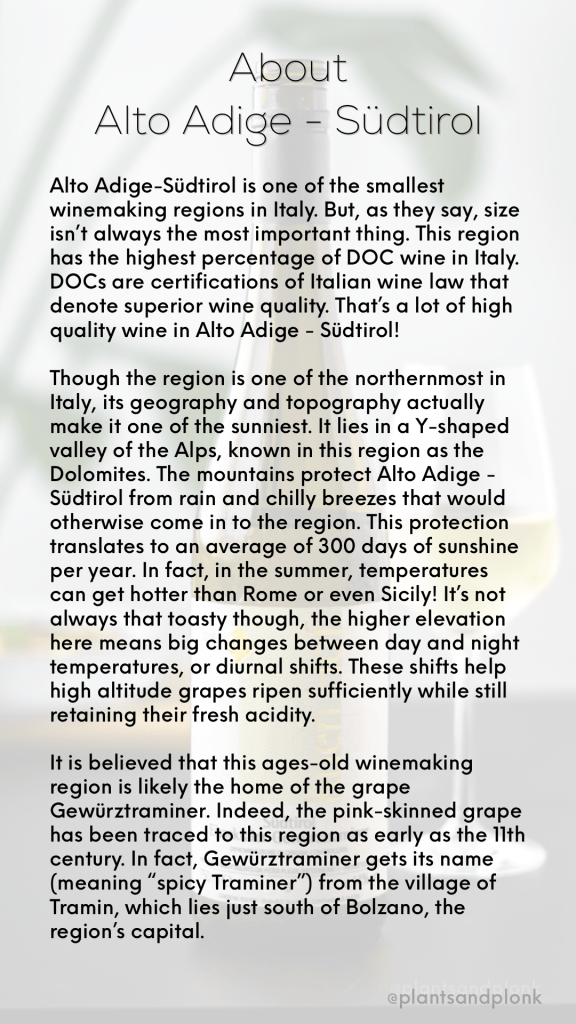
That’s definitely true for Alto Adige, where 60%(!) of the residents are native German speakers. In fact, the region goes by two names: Alto Adige is Italian, Südtirol is German. This white wine dominate region is nestled in the Alps south of Austria and east of Switzerland. (You can read more about this autonomous region in the note below.)
Alto Adige-Südtirol is also believed to be the native home of this week’s grape, Gewürztraminer (guh-VURZ-truh-mee-ner). This grape is seldom given its just attention. It’s known for its powerful perfume (typically with strong scents of jasmine and rose petals) and tropical fruit flavors, like pineapple, mango and lychee. Funnily enough, Gewürztraminer taught me what lychee tasted like, since I hadn’t tried the juicy fruit until just last year. Indeed, after first trying a lychee, I believe my next words were “holy crap, this really does taste like Gewürztraminer!”
Jump to section: about the wine || about the pairing || recipe
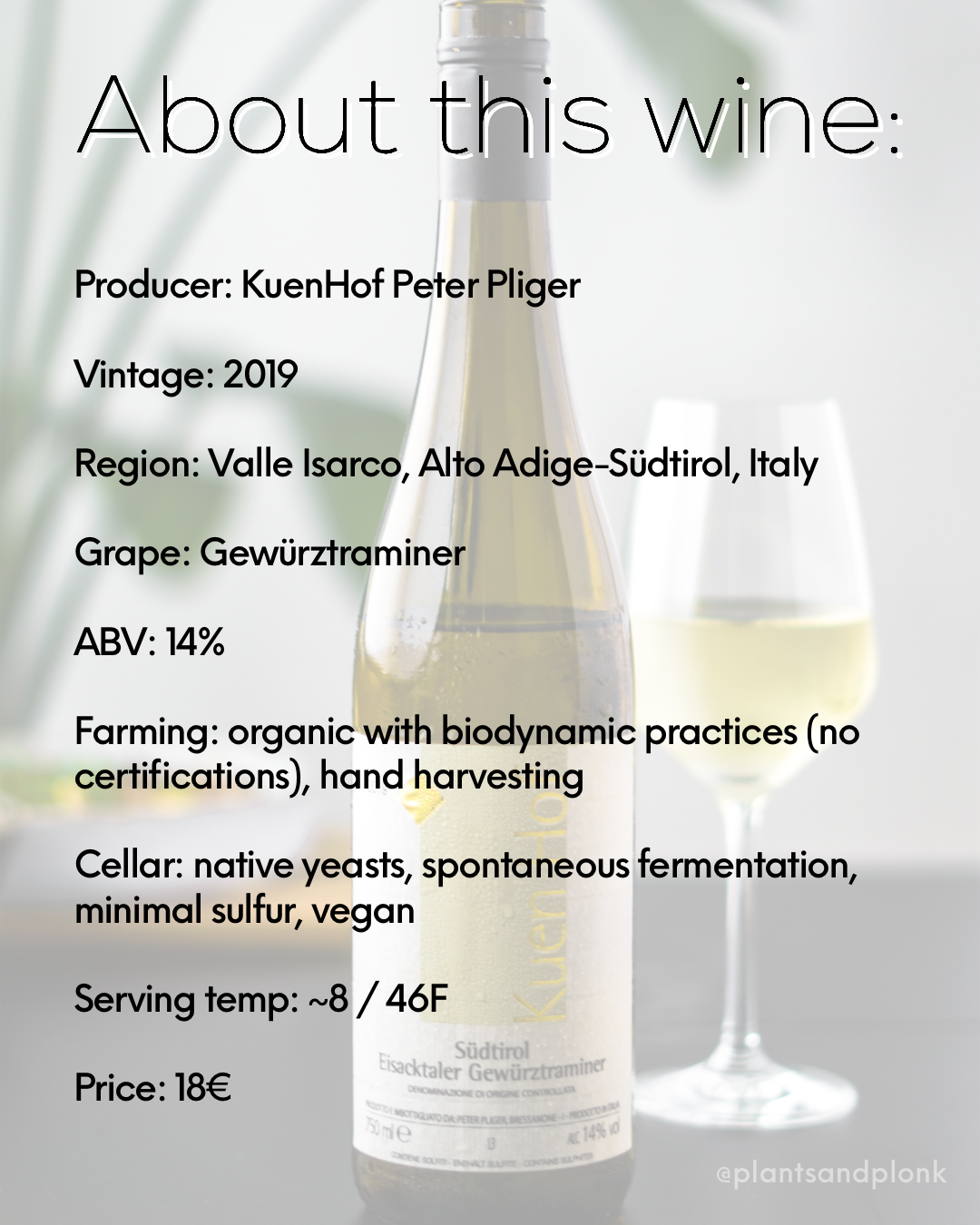
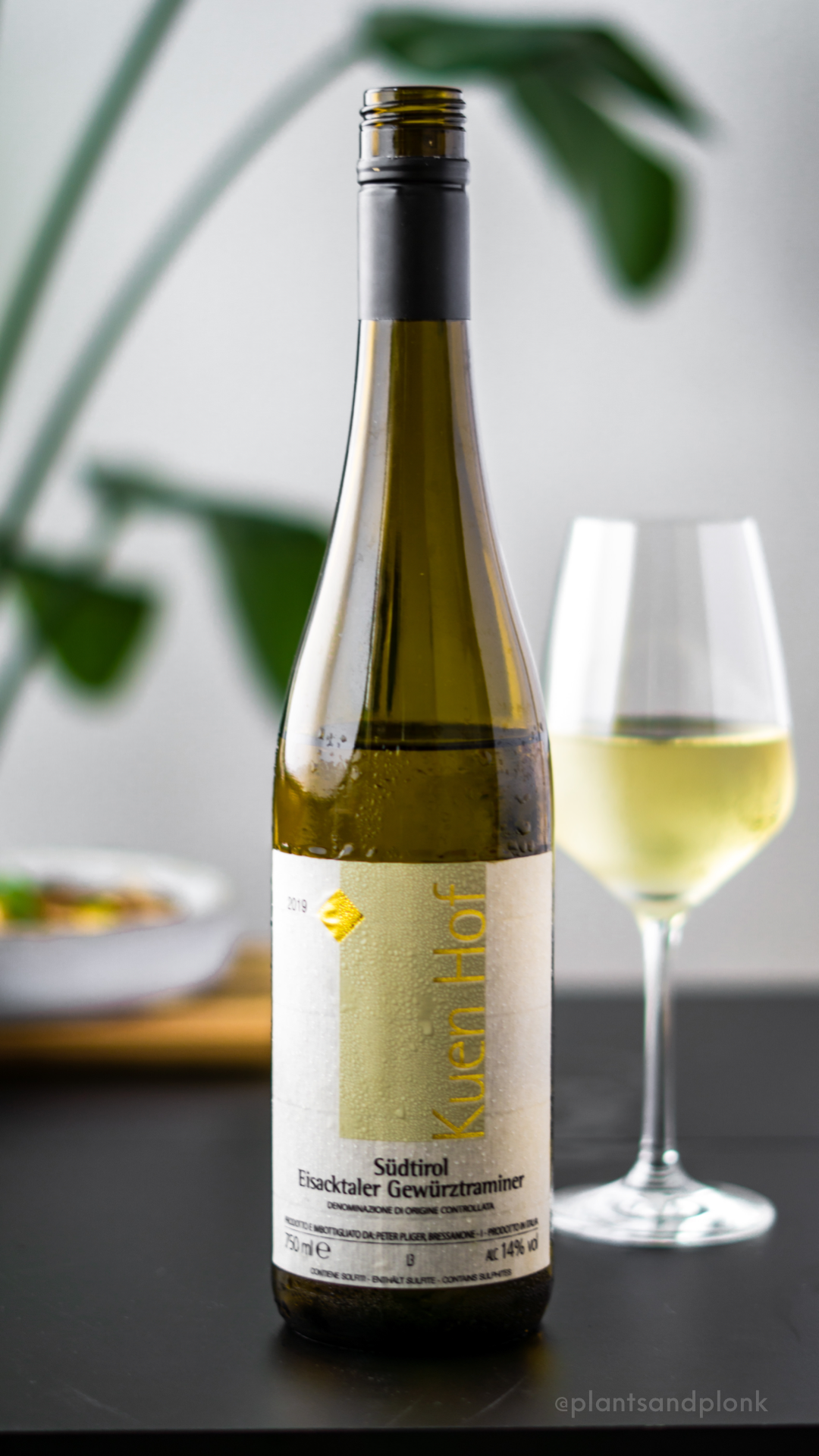
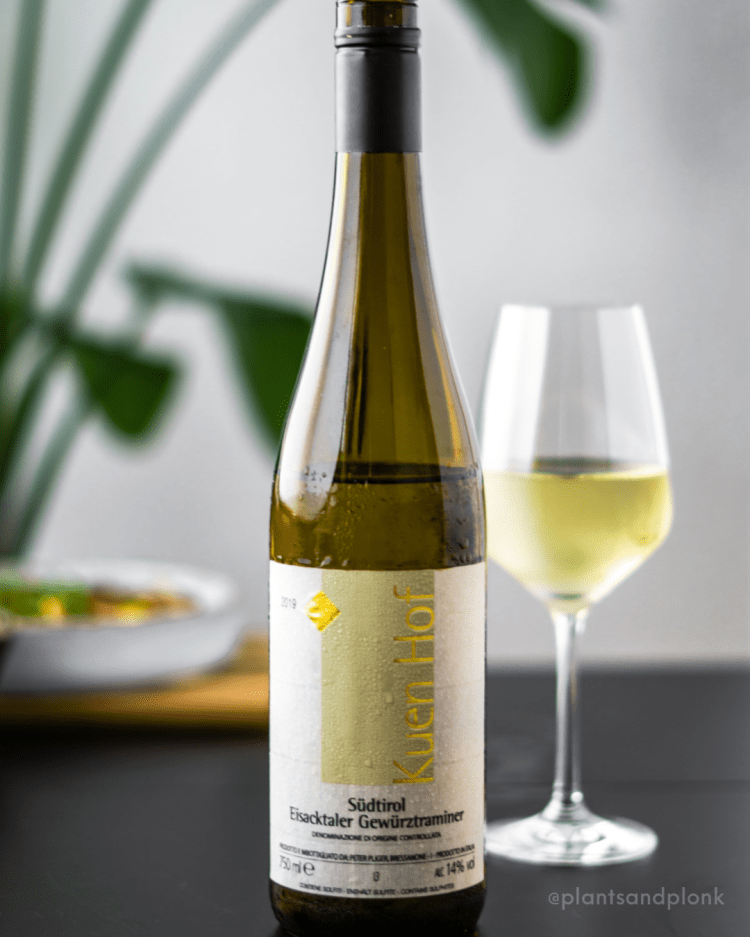
2019 Pliger KuenHof Einsacktaler Gewürztraminer
Unfortunately, the varietal has gained an undeserved reputation somewhat akin to cheap perfume: overly fragrant, sickly sweet and out of fashion. (In full disclosure – I also fell prey to that negative view!)
Why? The Gewürztraminer grape is naturally high in sugar, so if the wines are allowed to complete fermentation (which means the yeast eats up all that tasty sugar and turns it into alcohol), the alcohol can be quite high. Higher ethanol content is thought to enhance the perceptibility of wine aromatics, thus turning an already perfumed wine into a (boozy) perfume bath. On the other hand, if fermentation is stopped early, the wines may retain some of that residual sugar and be a bit sweet on top of all that aromaticity. Either way, if not done with care, Gewürztraminer wines can be a little over-the-top.
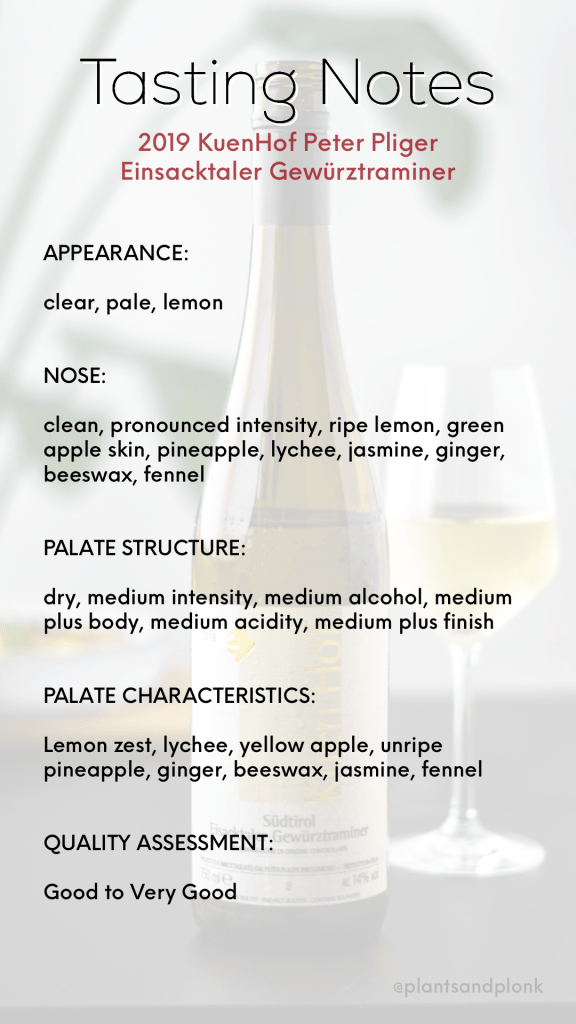
Fortunately, the owners of KuenHof have taken great care to make this wine – and let me tell you, it could turn even Gewürztraminer’s biggest doubters. Brigitte and Peter Pliger of KuenHof have made a wine that retains Gewürztraminer’s lychee-ness and pretty jasmine notes, but with other complex flavors of beeswax, ginger and just a hint of bitter fennel. (Find my full tasting notes below.) They are one of the few independent wineries in Alto Adige-Südtirol, with many of their peers participating in one of twelve wine co-operatives that dominate the region’s production. Also like Domaine Majas from last week, KuenHof has transitioned to organic farming and more natural winemaking.
Jump to section: about the wine || about the pairing || recipe
Pairing food with Gewürztraminer
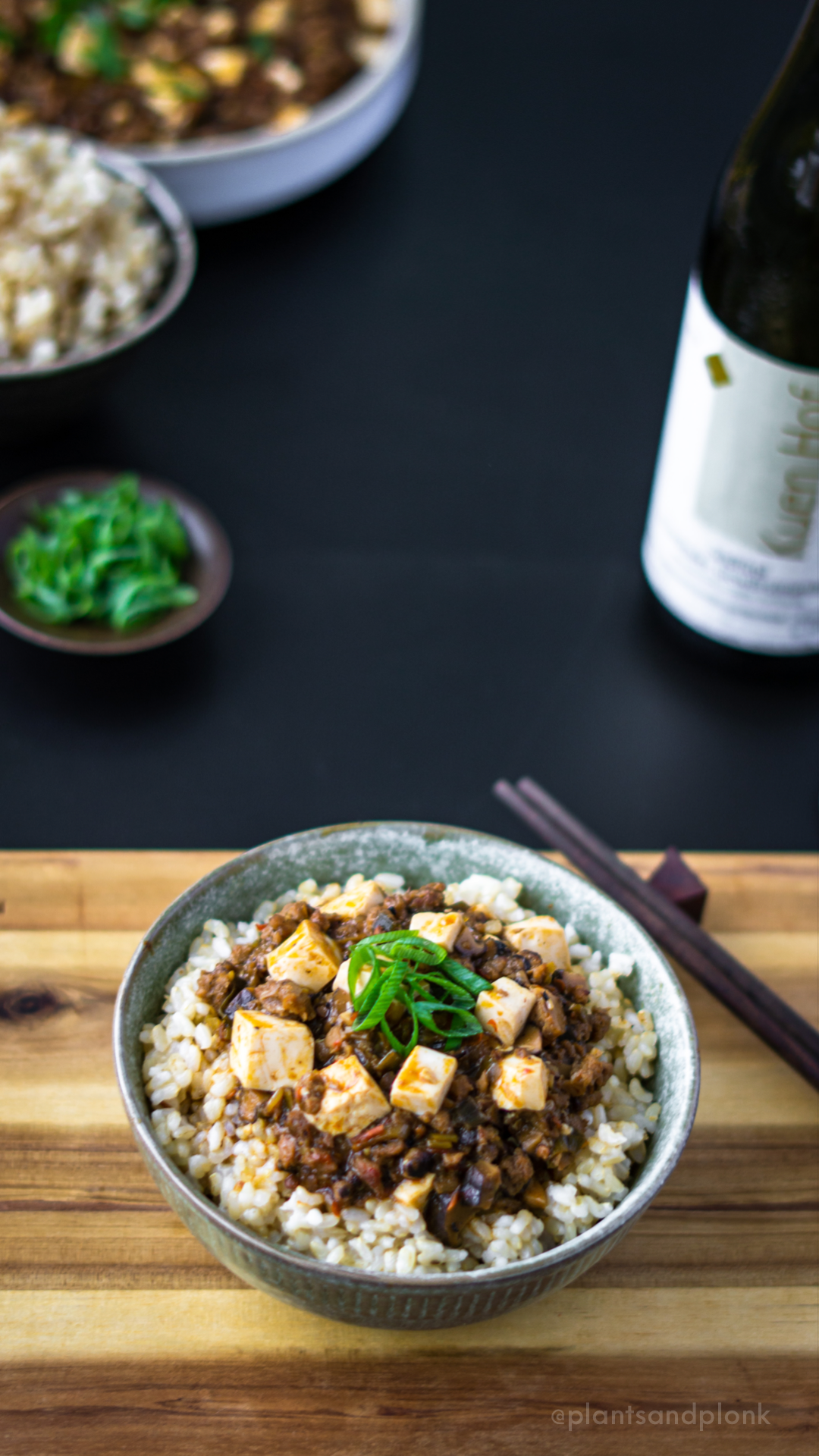
I’m not gonna lie, I had Mapo Tofu in the back of my mind when I bought this Gewürztraminer.
Mostly because I’d been obsessed with making my own Mapo Tofu, and it was my first experience with toasting and grinding Sichuan peppercorns. If you’ve never done so, definitely give it a go – they’re so floral and spicy, it’s intoxicating! When I finally did taste the florals and fruit in this wine, my mouth was full-on watering for this dish.
I still made sure to heed my basics, though: weighing the wine’s dryness, medium acidity level, slightly fuller body and particularly, its intense aromatics against the Mapo Tofu’s richness, protein content, sweetness, spice, and its own potent aromatics.
I knew matching aromatic food with an aromatic wine could go either way. It might be perfect or it might be a hot mess. But it was too tempting to let slide!
So, how did it go?
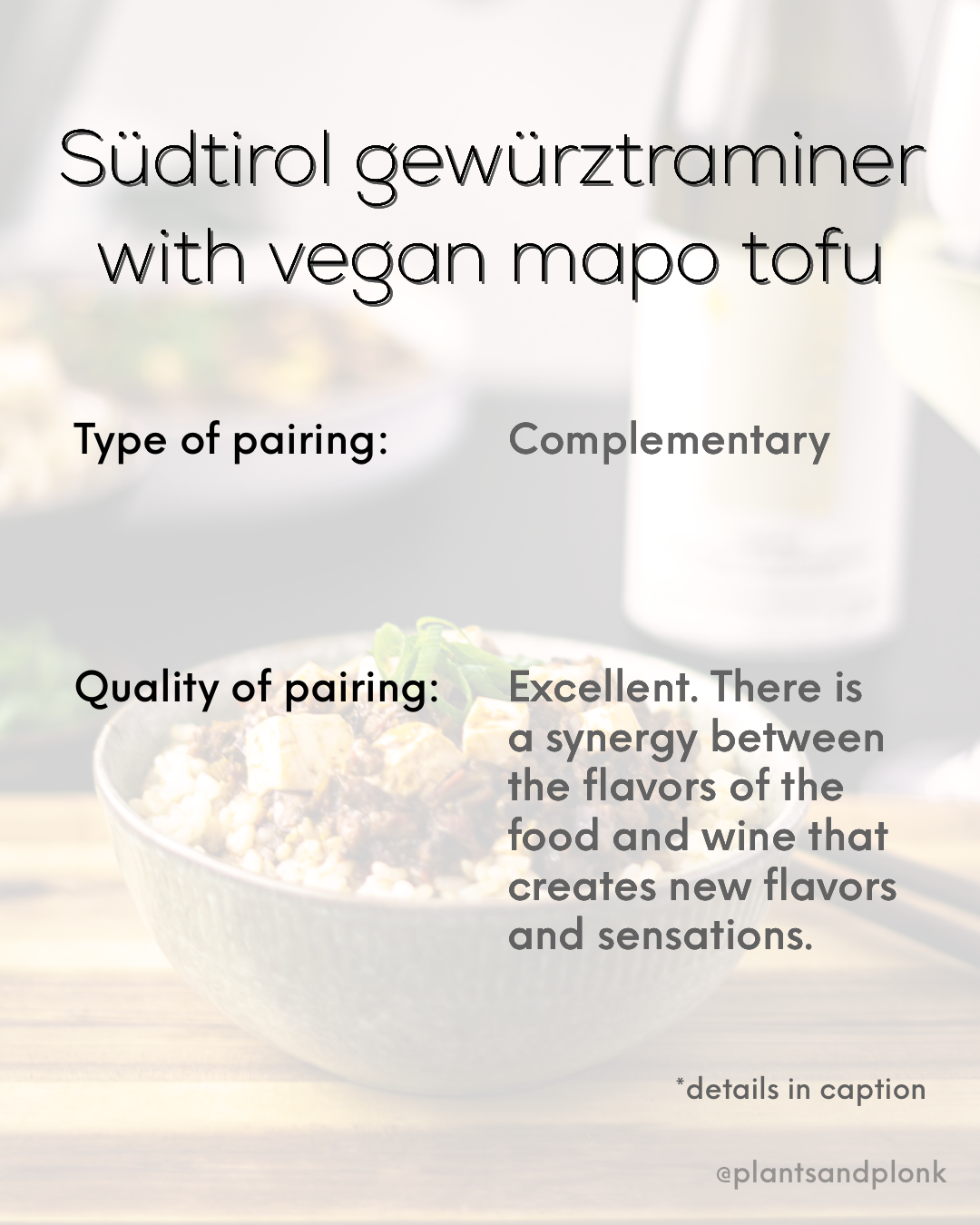
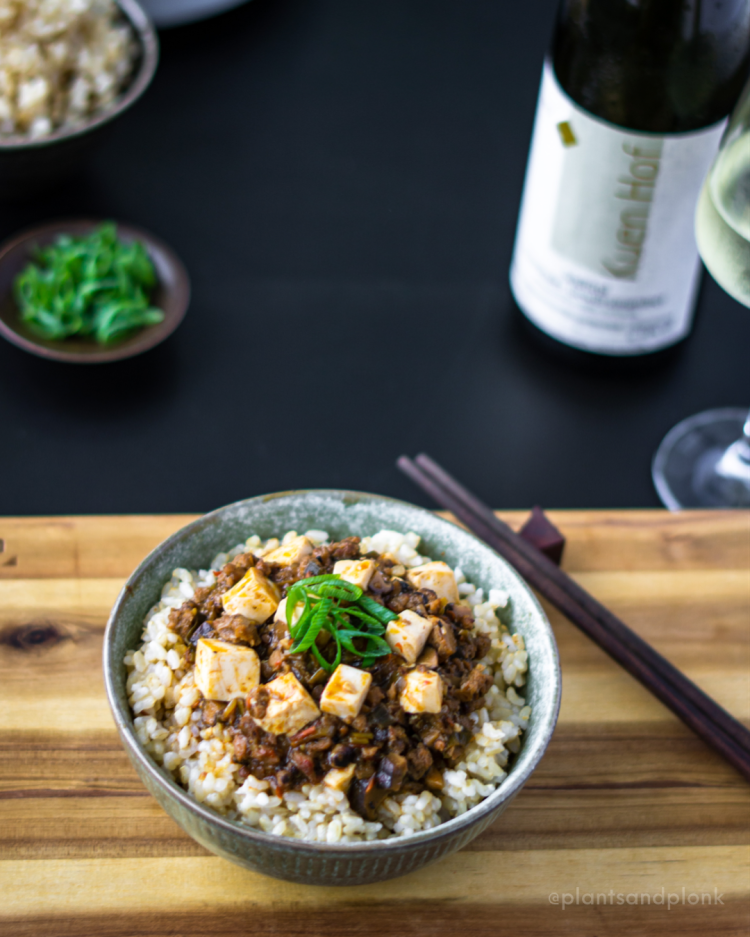
Well, it definitely wasn’t an aromatic disaster! Quite the contrary, the floral fruitiness of the wine contrasted beautifully with the piquant, numbing florality of this Sichuan food. Besides the glorious marrying of perfumes, though, there were several other reasons this was an excellent pairing:
The slight ginger spice and fennel bitterness came through to accent and enhance the other spicy ingredients at play here, creating pleasant sensations and flavors that weren’t there to begin with. And the ripe tropical fruit flavors of this dry wine provided a bright not-quite-sweet contrast for the brooding umami and spiced flavors in the dish.
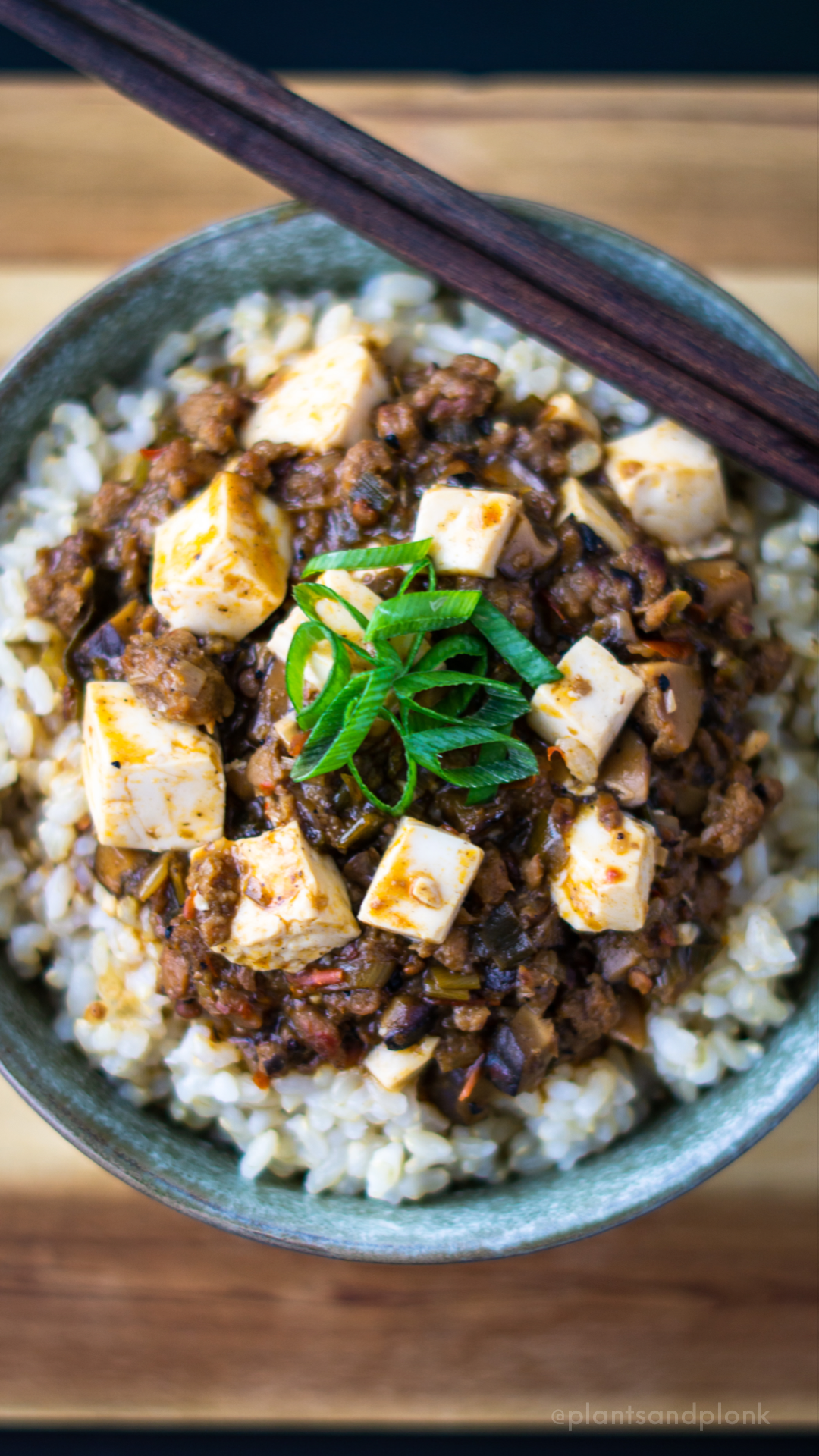
A great bonus for this plant-based version is that it’s not nearly as fatty as the original, so while a wine with elevated acidity would still work, this medium acid wine easily refreshes the palate without getting lost.
Finally, there’s a lovely textural aspect to this wine that I don’t have the words to properly describe (something like a chewy, oily, silk?), but it responded really well to the toothsome texture of the mushrooms and vegan meat and the melt-in-your-mouth tofu.
This pairing is a great example of how maxims like “what grows together goes together” are not only unhelpful, they actually fail. The Sichuan region of Southwest China is thousands of miles away from Südtirol, but the food and wines of these respective locations make for a perfect pairing in this case. So throw out those old ideas and just stick to the core principles we talked about at the beginning of this month!
Jump to section: about the wine || about the pairing || recipe
Plant-based Mapo Tofu
It still surprises me that I didn’t try Mapo Tofu until 3 years ago. I was living with one of my best friends (miss you Pao!) and there was a Chinese restaurant just a block or two away from our apartment.
I always ordered General Gao’s Tofu, but their vegetarian Mapo Tofu was one of her go-to dishes. Even with plenty of my own food, I would still not-so-secretly steal bites (::cough cough:: full portions) when she wasn’t looking (as if she didn’t notice). I’m lucky she loves me so much.
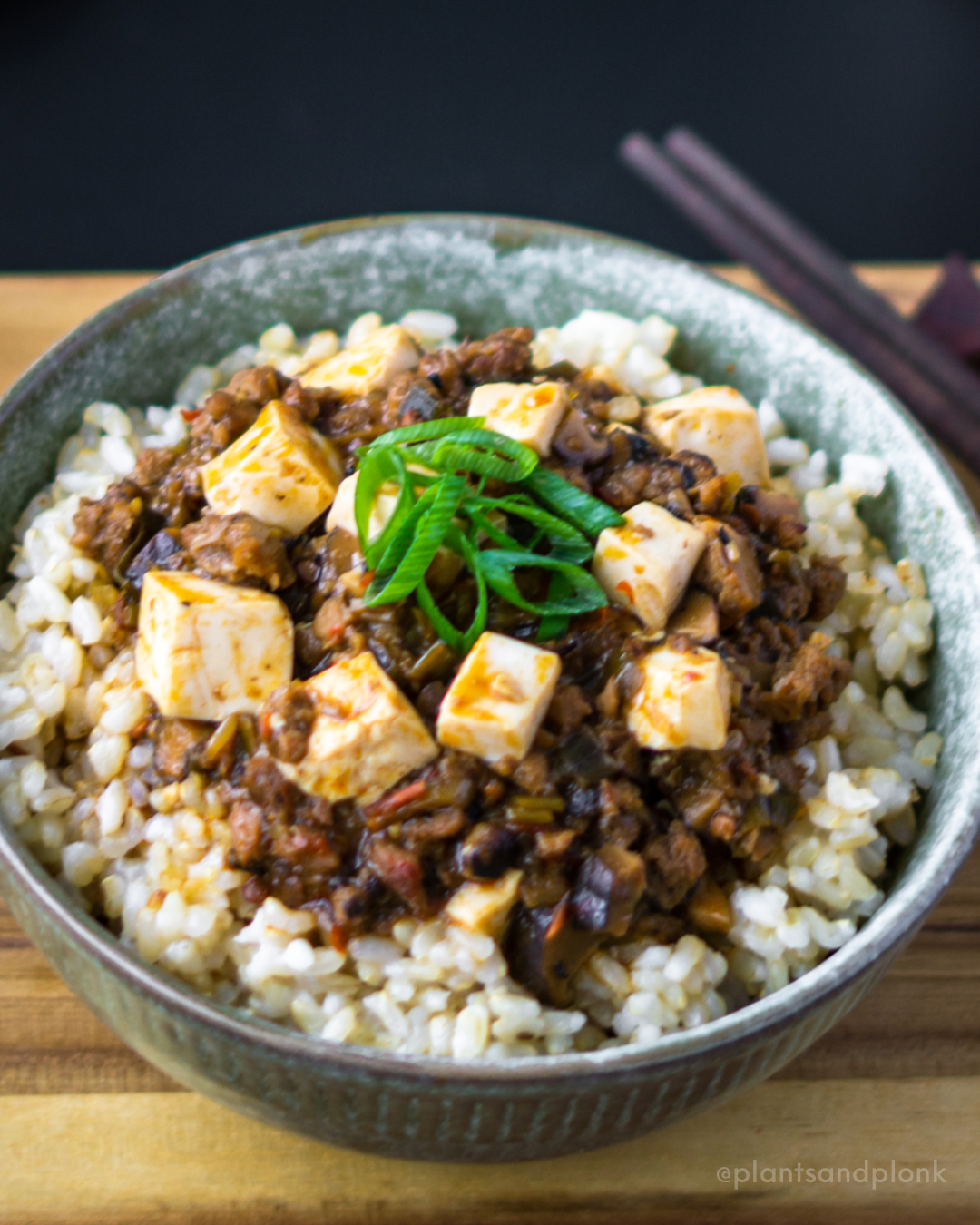
I started toying with a Mapo Tofu recipe during lockdown last year, when the cravings for plant-based takeout became unbearable (this lovely small town doesn’t have as quite many plant-based options as we were used to in larger cities). It took me some time to craft my perfect version of this recipe, but I do want to thank Seonkyoung Longest and Judy, Bill, Sarah and Kaitlin from The Woks of Life for paving the way.
I found the key to getting that legit restaurant-style flavor in this dish (besides the toasted Sichuan peppercorns, of course), is the spicy bean paste or Toban Djan. Most Asian stores stock it, but it’s also available through many online retailers. My fellow gluten-intolerant peoples will want to carefully check labels, though, as wheat and other glutenous tasties can be slipped in to a lot of condiments.
This recipe can look intimidating, since there are many steps. But, as long as you’re gentle with the silken tofu, it’s really quite easy. I make this a couple times a month and it’s so straightforward, I have to try hard not to make it more often. I hope you enjoy it as much as we do!
Tasting Notes and Other Notes


Ingredients
For the base
- Neutral oil like sunflower or peanut for sautéing chilies and garlic ginger
- 1 1/2 tablespoons whole Sichuan peppercorns (or 2ish tsp ground)
- 2 dried Thai bird chili peppers (thinly sliced)
- 3 dried red chilies (thinly sliced)
- 1 thumb sized piece ginger (finely minced)
- 4-5 cloves garlic (finely minced)
- 3 stalks green onion (diced)
- 2 Beyond Burger patties (226g) (or equivalent plant-based meat)
- 6 dried shiitake mushrooms
- 2 cups boiling water
For the sauce
- 1 tsp veg boullion (about 1 cube)
- t tsp Lee Kim Lee mushroom bouillon powder
- 1 tsp vegan dashi granules
- 2 tbs spicy bean paste (Doubanjiang)
- 1 tbs vegan oyster sauce (or miso paste in a pinch)
- 1 tbs soy sauce
- 1 tbs sesame oil
- 1 tbs rice vinegar
- ½ tbs mirin
- 1 tbs maple syrup
To finish
- 1 1/2 teaspoons cornstarch dissolved in 2 tbs water
- 1 tsp MSG (optional)
- 1 pound silken tofu (450g0 cut into 1 inch cubes
To garnish
- sesame seeds
- green onion
- additional ground Sichuan pepper
Recipe
At least one hour before prep (or overnight), soak the dried shiitakes in 2.25 cups boiling water. (The water will be used later, so don’t throw it out!)
After soaking, squeeze out the mushrooms, then strain.
Add vegetable bouillon, dashi and mushroom bouillon to the mushroom water. Stir to mix and set aside
Finely dice the shiitake mushrooms
If using whole peppercorns, toast them until fragrant in a dry pan over medium heat. Remove from pan and set aside to cool slightly. Then grind into fine powder with mortar and pestle or dedicated spice grinder (don’t use a coffee grinder!).
Mix the sauce together: combine spicy bean sauce, vegan oyster sauce, soy sauce, vinegar, sesame oil, mirin and maple syrup and mix thoroughly.
Heat oil over medium heat. Add the ginger for about 1 minute.
Add garlic and onions and cook for 2-3 minutes, until fragrant and translucent. Season a bit with salt to bring out the extra water.
Add chilis and cook until they are bright, about 1 minute.
Add the minced mushrooms and lightly season. Sautee until some of them start to brown.
Beyond patties and turn the heat to medium-high. Break up the meat and fry it until cooked through, browned and crispy in parts.
Add the bean sauce mixture from earlier and stir well. Cook until browned, allowing to nearly burn on bottom (but don’t burn it!)
Add the toasted, ground Sichuan pepper and stir to mix
Add the 2 cups mushroom water/bouillon mix. Bring to rolling boil. until reduced to a thick curry-like consistency.
Meanwhile, prep the tofu, carefully(!) removing from packaging. Drain liquid and let rest on a clean tea towel or paper towels.
When the beef mixture has reduced for about 10-15 minutes, and the tofu has thoroughly drained, reduce the pot to a gentle simmer
Carefully slice the tofu into large cubes and very gently add it to the pot. Carefully spoon the mixture over the tofu and let it cook. DO NOT stir or aggressively mix the tofu in, that will break up the tofu into small bits and risk dissolving the tofu into the sauce.. Less (movement) is more here!
Meanwhile, make the cornstarch slurry. This is when I add the MSG.
Once the tofu has cooked a bit (about 7-10 minutes), add the cornstarch mixture to your sauce and gently mix. Again gently spoon the mixture over the the tofu, or just nudge the tofu around to let the slurry sink in.
Let it bubble away until the sauce starts to thicken – usually it only needs a couple of minutes. (If it gets too thick, splash in a little more water or veg stock.)
Serve with warm, short-grain rice and garnish with a last sprinkle of Sichuan peppercorn powder, sesame seeds and/or diced green onion. (I also like to drizzle with a tiny amount of Sichuan peppercorn oil.) And don’t forget the glass of northern Italian Gewürztraminer!

 celeste radosevich
One thought on “gewürztraminer from northern italy with vegan mapo tofu”