6 minute read
Jump to section: about the wine || about the pairing || recipe
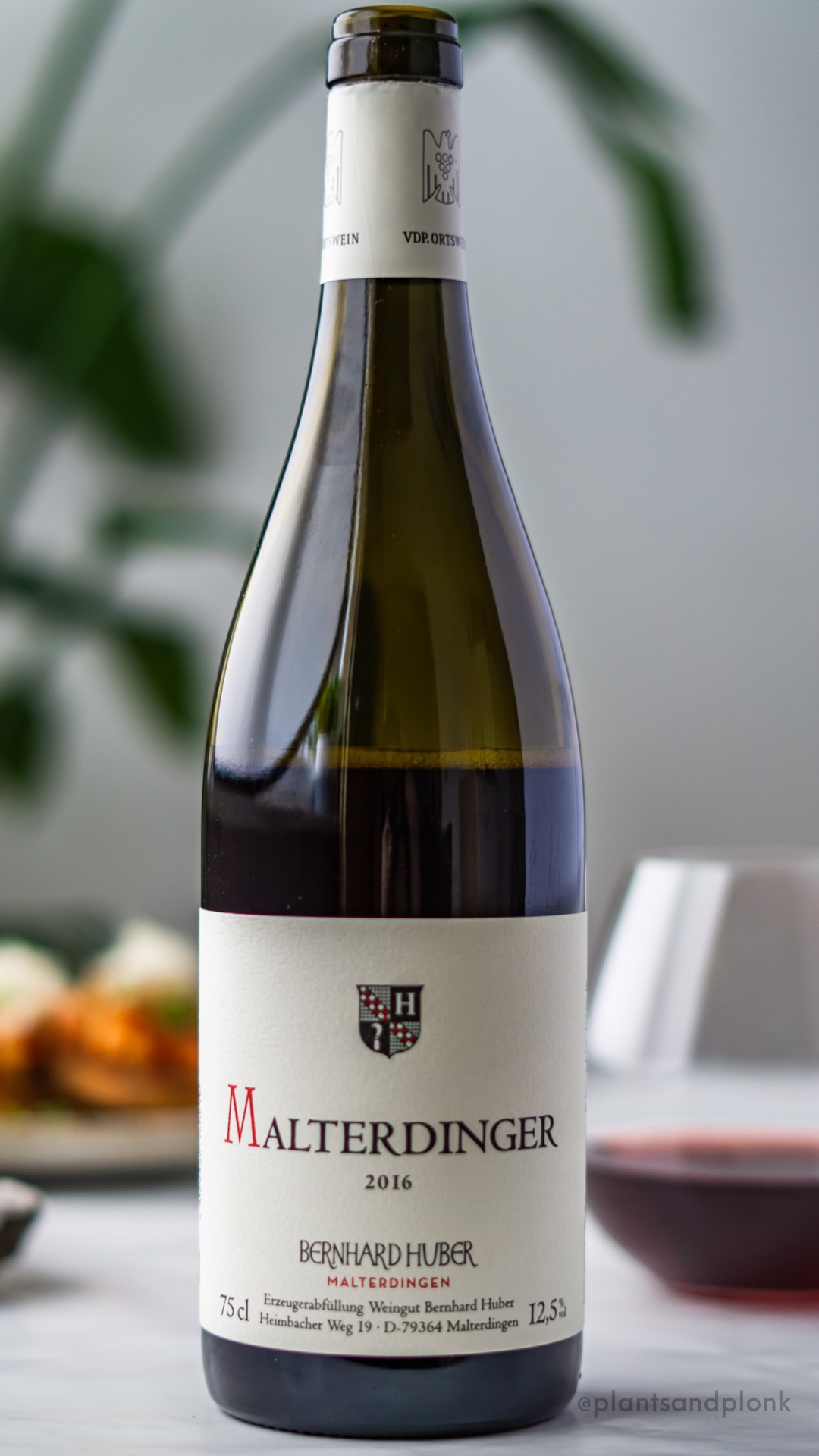
Funnily enough, Pinot Noir is not really in my wheelhouse. I’m more of a Poulsard, Listán Negro, Xinomavro, Lagrein kind of girl when it comes to reds. The harder to pronounce, the better. (Can you feel my supreme wine snobbery oozing through the screen?)
Still, Pinot Noir is like the little black dress of wines. It’s timeless, elegant, flexible, and is liked by nearly everyone. It can be expensive or affordable, simple or incredibly complex. And if you’re in a bind, you can almost always find one you like wherever you go. (Hey, this metaphor is actually pretty good.)
When most people think Pinot Noir, they think of Burgundy or California or maybe Oregon. That’s fair, those places have developed a reputation for making some impressive Pinots. Plus, France and the US are the two top producers of Pinot Noir. You know who comes in third?
Germany.
(Spoiler alert: we’re going to spend a lot of time on German wine, both because it’s my home country now and because…well…it’s awesome.)
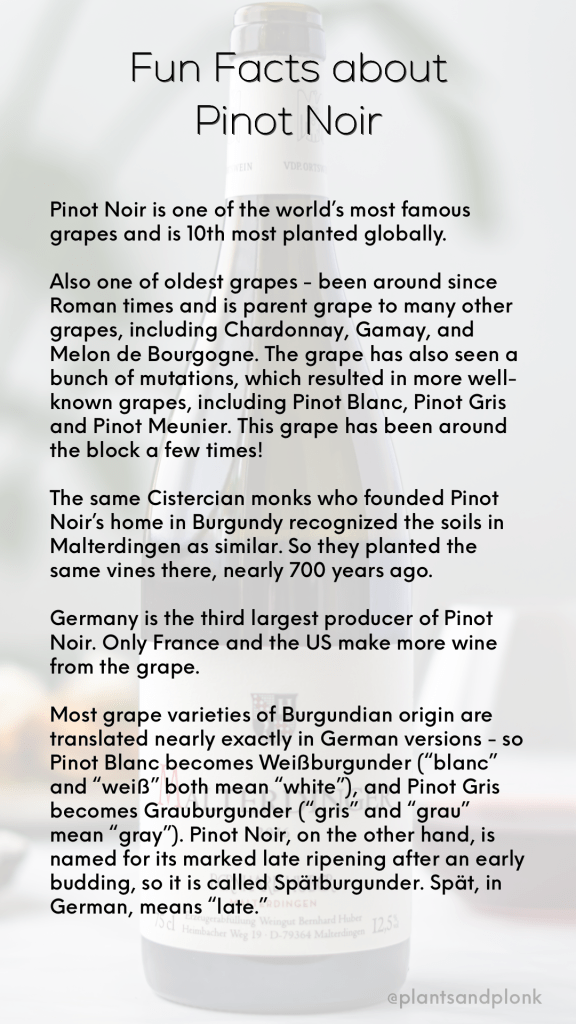
In Germany, Pinot Noir is called Spätburgunder (SHPATE-bur-guhn-deh). “Spät” means “late” in German, a nod to the grape’s late ripening characteristics. “Burgunder” means “from Burgundy,” which make sense since that’s Pinot Noir’s native home. (More fun facts about Pinot Noir below.)
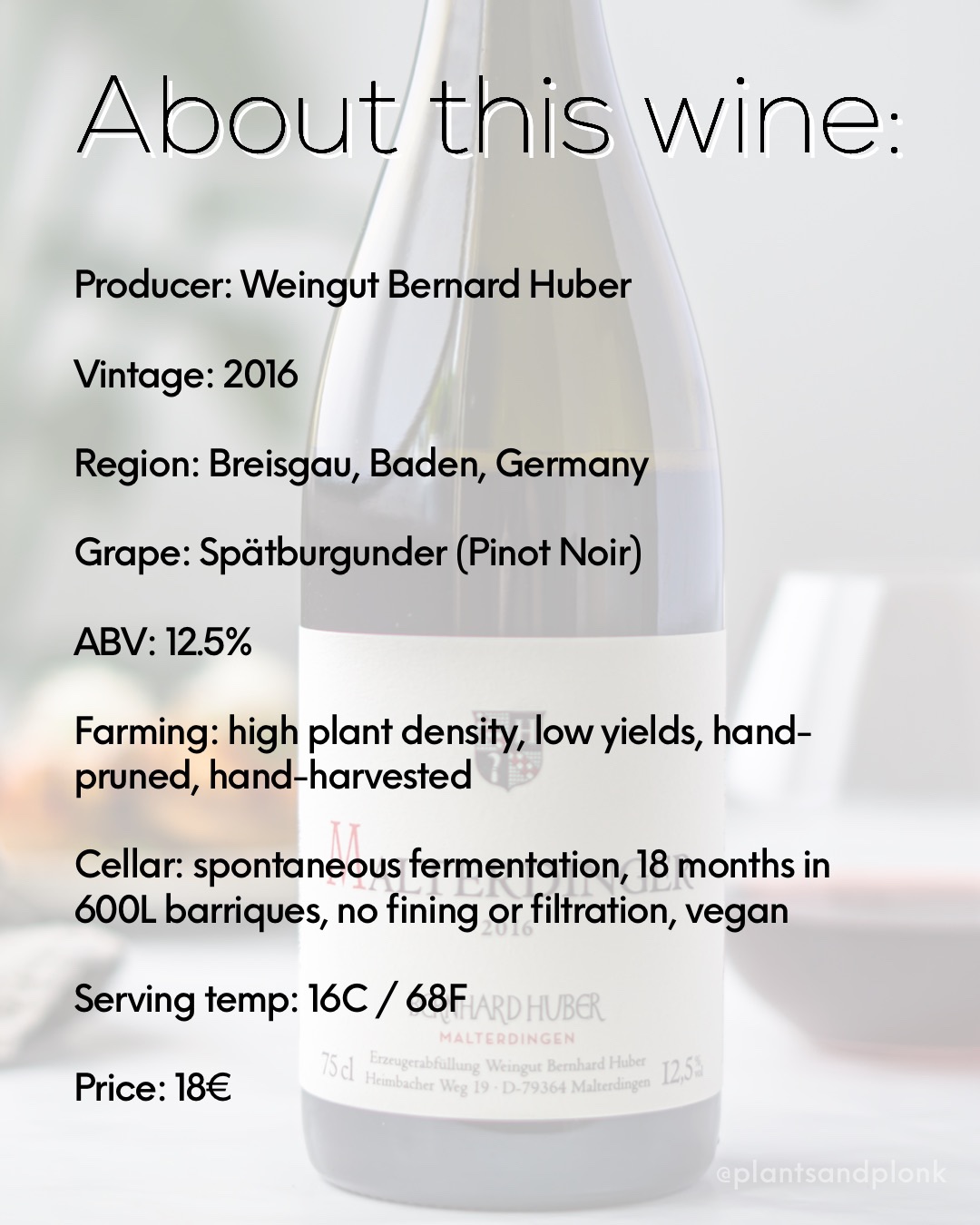
Pinot Noir has actually been grown far longer in Germany than it has in the US. In fact, the same order of medieval monks who found and perfected the vines in Burgundy were also in southwest Germany about 700 years ago. They recognized a terroir (the French word for soil, topography, climate, and other environmental contexts) that was nearly identical to Burgundy’s. So they brought some of those vines over and planted them. Incidentally, this happened right where the grapes for this week’s wine were grown.
Jump to section: about the wine || about the pairing || recipe
Weingut Bernard Huber
Bernard Huber has come to be known as the godfather of Pinot Noir in Germany. That’s a pretty big deal for a country that makes the 3rd largest amount of Pinot Noir in the world.
As is true for many winemakers, before Bernard took over his family’s vines, they had been sold to local co-operatives. But he was fond of French wines, and knew his vineyards could produce something similar – though with a distinctly German style. Clearly, he was right on the money.
Slowly but surely, he and his wife, Barbel, cultivated French Pinot Noir clones in tightly planted vineyards while carefully restricting yields. He used a light but careful hand in the cellar, allowing for spontaneous fermentation and using French barriques for part of fermentation as well as aging.
His son, Julian, became intricately involved in winemaking, too. He then took over production altogether when Bernard sadly lost his battle with cancer in 2014. Julian’s success since then indicates that he plans to carry on his father’s impressive legacy.
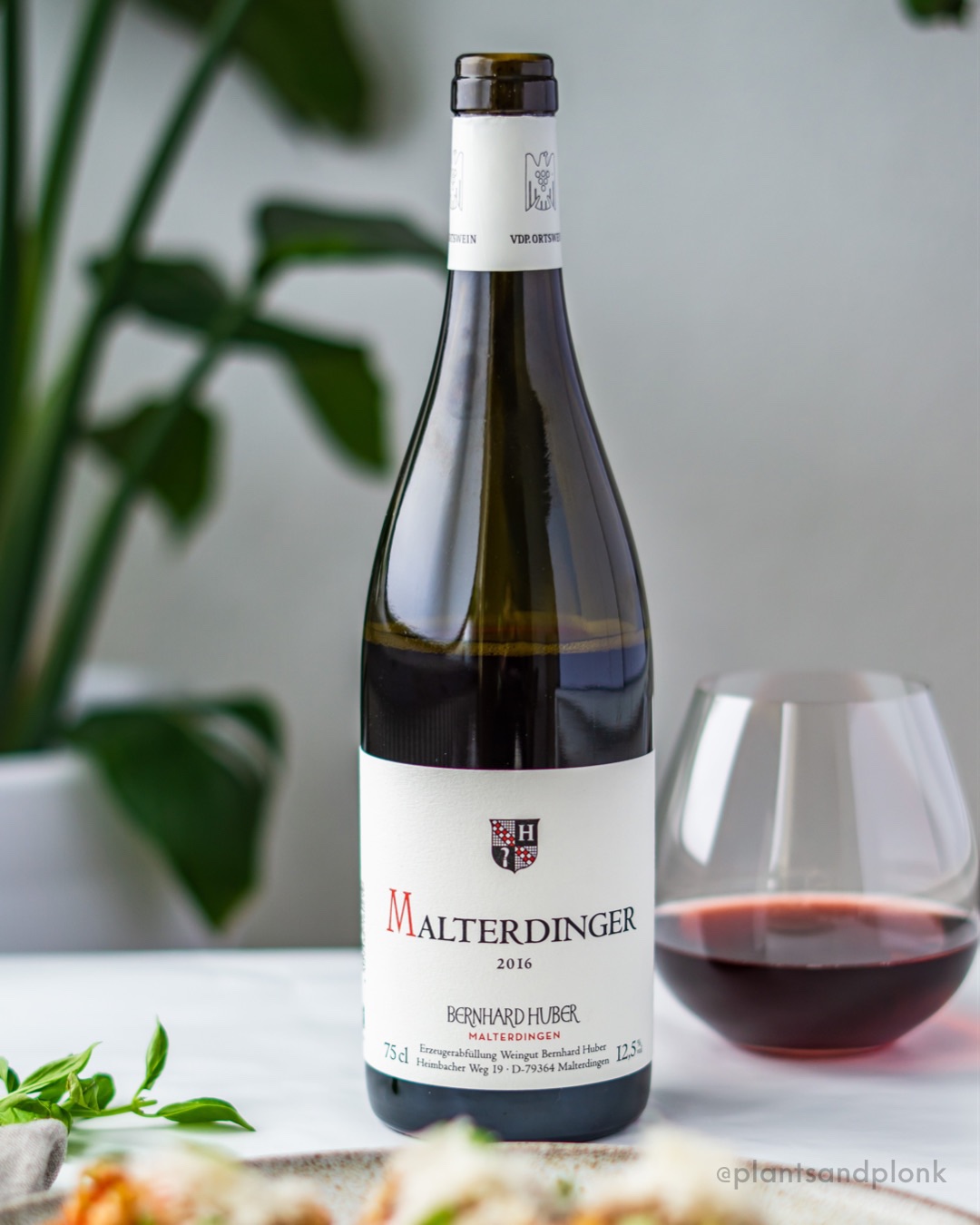
2016 Weingut Huber Spätburgunder
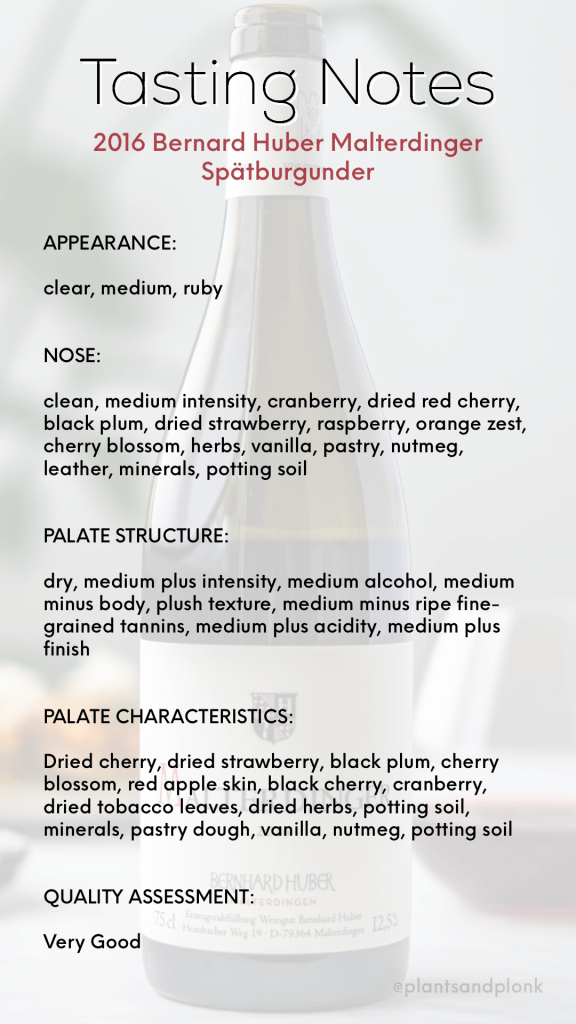
This 2016, is Weingut Huber’s entry level Spätburgunder, and punches way above its weight. It shows loads of complexity even in the primary flavor characteristics which are dominated by red fruit, cherry blossom, limestone minerality, and a dose of fresh potting-soil style earthiness. Subtle notes of vanilla and nutmeg hint at the small amount of oak that was used to age this wine. There’s even a hint of age starting to come through with flavors of leather and dried cherries and strawberries. (You can find my full tasting notes below.)
This wine’s structure is a dream for pairing – the tannins are definitely there, but they’re subtle, ripe and fine-grained. The racy, youthful acidity keeps the palate wanting more and the plush textured medium minus body is so versatile, I almost didn’t know where to start.
Jump to section: about the wine || about the pairing || recipe
Pairing with 2016 Weingut Huber Spätburgunder
There was something very tempting about taking this gorgeous, elevated wine and pairing it with something really down to earth. Plus, it gave me the opportunity to bust another myth: you don’t need to pair higher end wine with high end food. Seriously. Try vintage Champagne with a Beyond Sausage hot dog, or a good Condrieu with take-out falafel. Let go of the FOMO and enjoy!
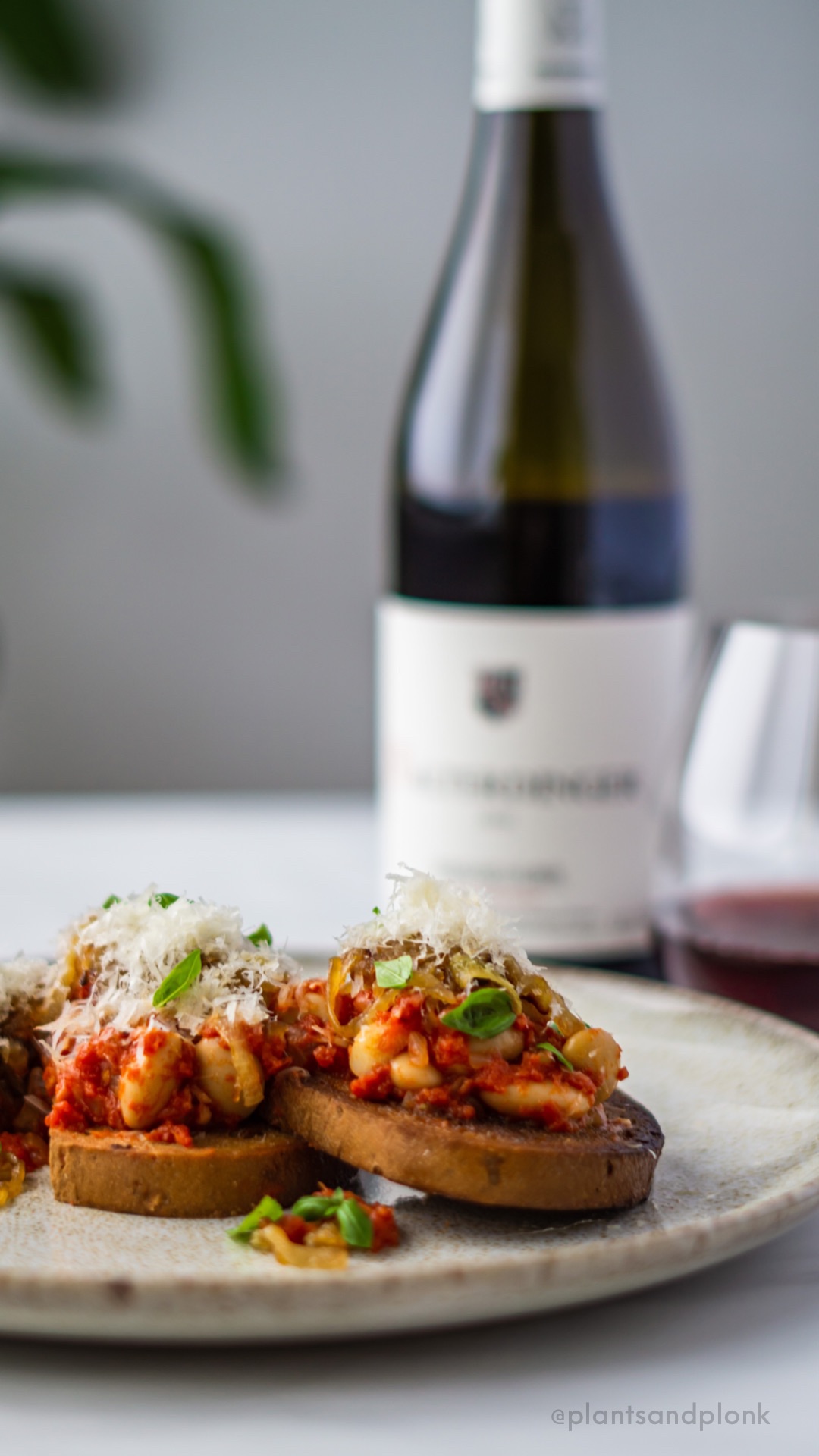
For this elegant Spätburgunder, I went for English comfort food: beans on toast, baby.
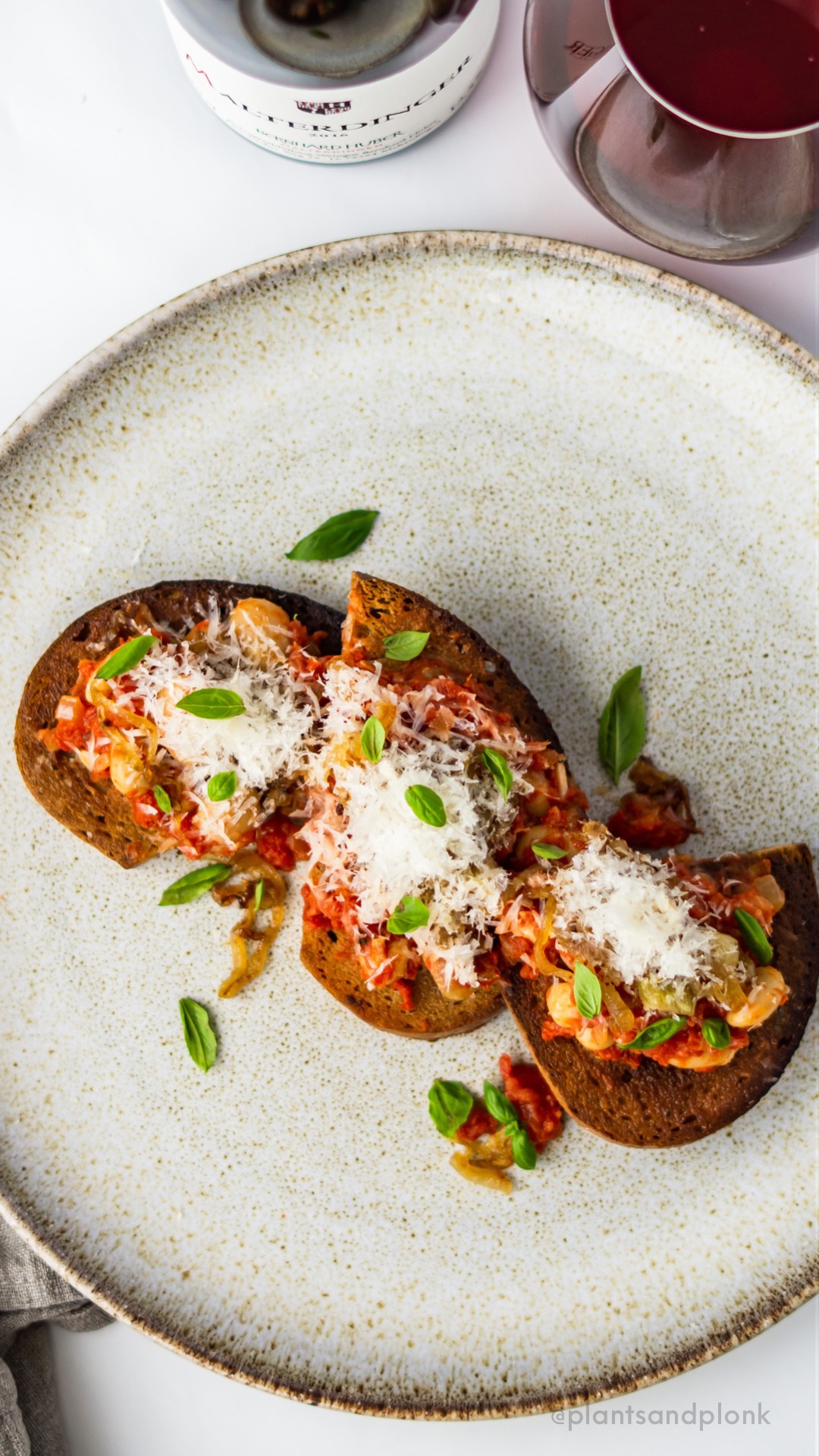
I did upgrade this staple slightly, but the heart of it is the same: white beans in tomato sauce on buttered toast. Most Brits do garnish with some kind of cheese, but the caramelized onions and herbs were my addition.
So, how did it go?
I’m sure you’re dying of suspense, so let me put your mind at ease: this was so good! (Did you not see that coming?)
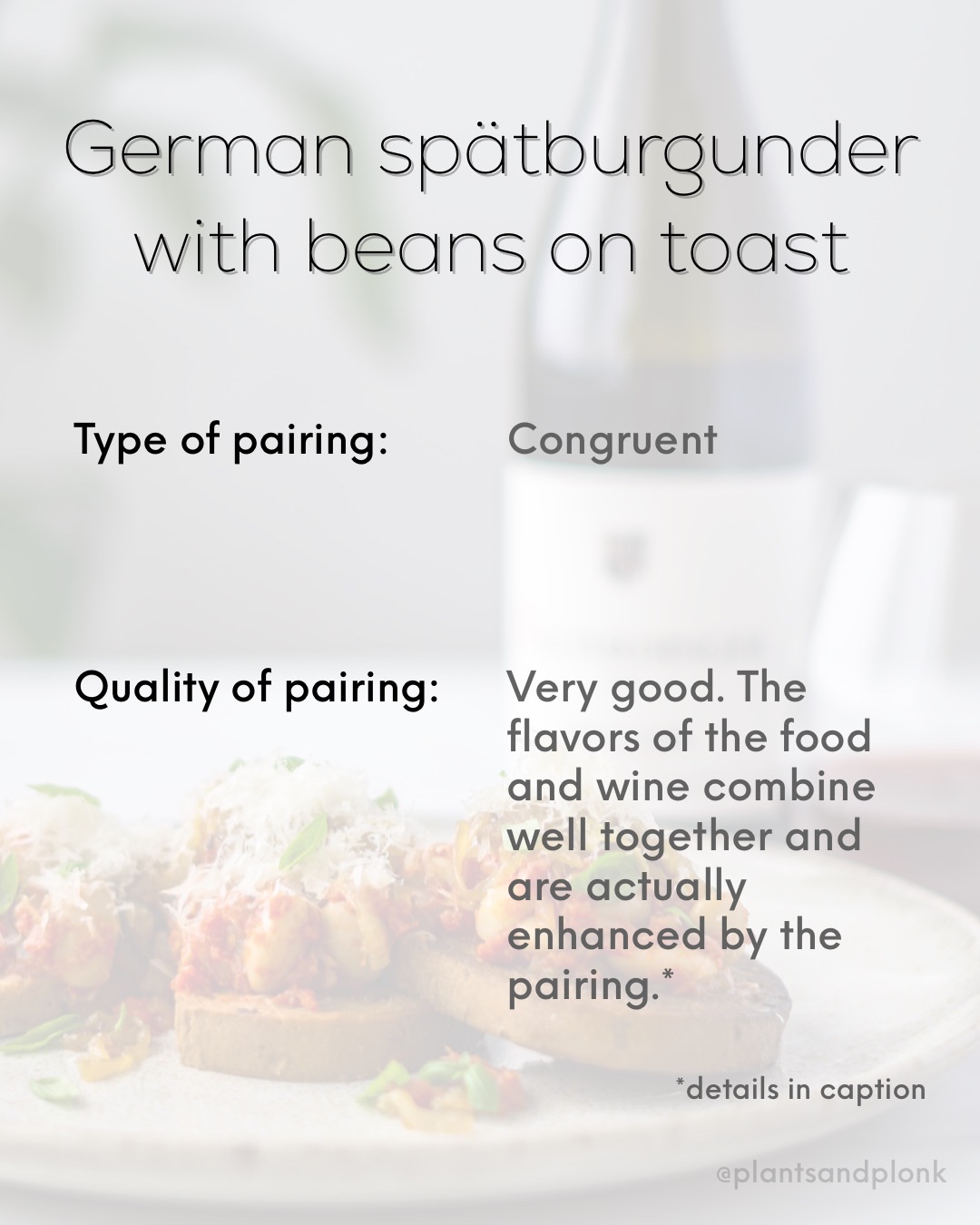
We’ve already established that red wines can work well with tomato sauces and this dish was no exception. The flavors here were definitely congruent, with a lot of like-for-like matches: the reduced tomato sauce took on some deeper, umami flavors, which really accented the dark plum and cherry notes in the wine. And the wine’s slightly sweet oak flavors seemed made for the caramelized onions and the richness of the buttered toast. There are also some herbal undertones in this Pinot which played well with the oregano in the sauce and the baby basil garnish.
Structurally, it was the match I hoped for – the wine’s acidity was met well with the acidity from the tomatoes. And it still had plenty of zip leftover to refresh the richness of the vegan butter and cheese. The meatiness of the butter beans was plenty to keep the tannins here busy. And the wine’s plush texture added a missing element to the chewy, creamy, crunchiness of this dish.
Jump to section: about the wine || about the pairing || recipe
Beans on toast
When my husband first raved to me about the glories of beans on toast, I wasn’t just skeptical, I was downright grossed out. On nights when neither of us felt like cooking a full meal, I’d sauté some garlicky spinach to eat with hummus and pan-seared bread. He’d heat up a can of beans and dump them on buttered toast. Not really a treat for the eyes, I gotta say.
To be fair to Sam, I was never really into canned beans as a kid either. On nights when my mom worked late, dad used to warm up some Aldi-brand baked beans and mix in pieces of boiled cheapo hot dogs. All these years later, the memory alone still makes me gag a little.
I think I spotted some café make a “fancy” beans on toast Instagram post and started to reconsider my position. I’ve made a few versions of this recipe before, but the one below is our favorite. The caramelized onions were a last minute stroke of genius, if I do say so myself. (The recipe I used is from Bon Appetit, so I won’t repeat it here.) And the dried oregano and baby basil leaves add a perfect subtle herbaceous pop. One big tip: don’t skip on buttering the toast. It sounds silly, since there’s plenty going on in this dish, but in this case, I swear, it’s that perfect extra touch.
Jump to section: about the wine || about the pairing || recipe
Tasting and Other Notes



Recipe
Ingredients
- 1 can butter beans, drained and rinsed (or soak and cook your own)
- 1 can crushed tomatoes
- 2 cloves garlic, finely minced
- 1 onion, diced
- 1-2 tomatoes, diced
- 1 tsp dried oregano
- 2 tbsp olive oil
- salt and pepper to taste
For serving
- toasted gluten-free bread
- butter
- caramelized onions
- vegan parmesan
- baby basil leaves
Instructions
In a skillet over medium-high heat, warm the oil
Add the onion and sauté a few minutes or until transparent
Add the garlic and sauté another minute or two, until fragrant
Add the fresh diced tomatoes and sauté for 2-3 minutes
Add the canned tomatoes, stir well and bring to a simmer
Add the dried oregano and reduce the heat to medium-low
Let the sauce reduce for about 15 minutes
Taste the sauce and adjust the seasoning to taste
Add the butter beans and stir well.
Cook for another 5-7 minutes
Meanwhile, prepare the toast with butter (don’t skip this!)
Scoop a healthy portion of the beans and sauce onto the buttered toast
Top with caramelized onions, vegan parmesan cheese and baby basil leaves
Enjoy with a glass of German Spätburgunder!

 celeste radosevich
Haha right? I don’t know why I don’t make this all the time. It’s so friggin good (and would spare me being grossed out by the canned version).
LikeLike
You’ve come a long way from beans and franks Celeste! This beans and toast recipe looks much more appealing than what I imagined your husband was preparing for his dinner! Your embellishments raise the bar on this dish!
LikeLike