5.5 minute read
Jump to section: about the wine || about the pairing || recipe
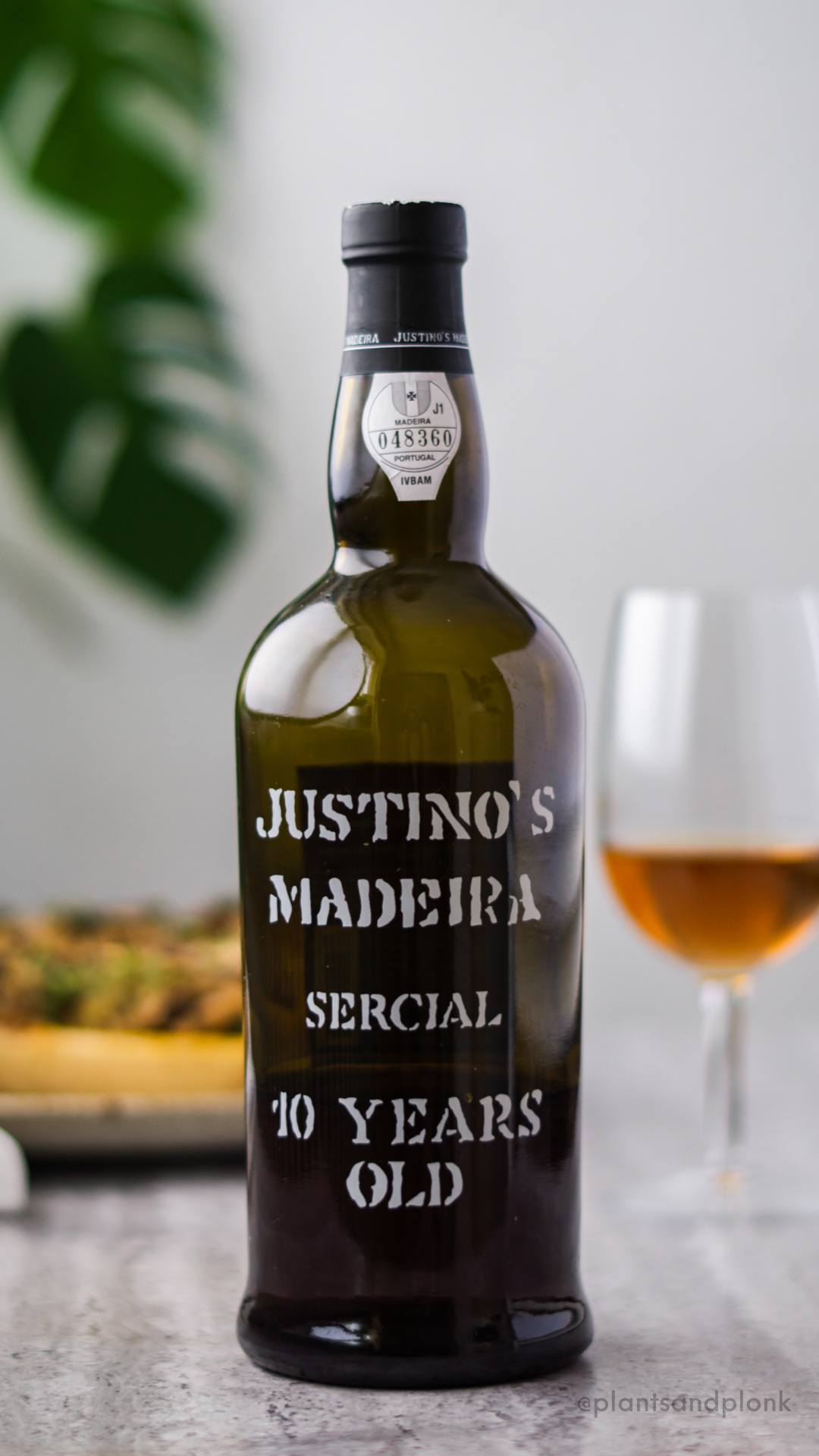
Let’s make Madeira great again!
Wait! Before you exit this page, hear me out. This isn’t the kind of Madeira you stole from the kitchen cupboard at 16.
Madeira, like sherry and other fortified wines, has suffered not only a negative reputation, but a significant decline in favor among contemporary consumers. And restaurants that aren’t at the higher end of the spectrum seldom stock them, as revenues don’t allow for letting guests linger over appetizers or desserts.
But let’s take this opportunity to debunk another myth right upfront. We’ve had it wrong. Madeira isn’t just for early meal sipping or for pairing with sweets. (And no, it’s also not just for cooking.) There’s a whole world we haven’t explored, especially as main course meal pairing.
Madeira in a Nutshell
With Thanksgiving coming up this week, it seems an appropriate time to delve into Madeira. Though definitely an interesting story, it was also one born of conquest and colonialism (hence the parallel with Thanksgiving).
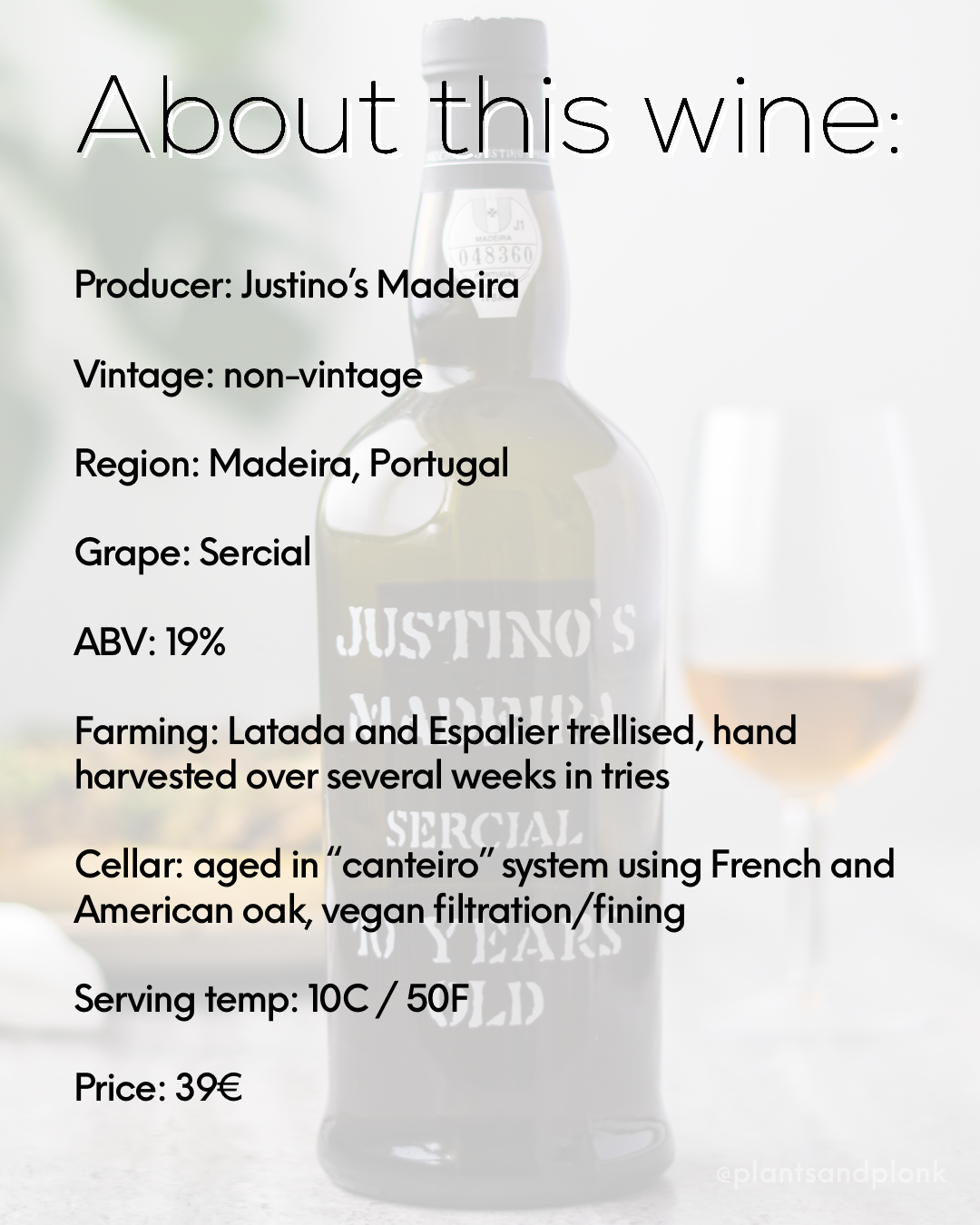
Madeira wine is named for its home island in Portugal. Well, the island is now part of an autonomous region of Portugal (one of two; the Azores being the other). But it’s geographic location is actually closer to Morocco than to mainland Portugal.
The island “Madeira” means “wood” in Portuguese and is so named for the forests that covered the island prior to their savage burning by farmland-seeking colonists. The island served as a key departure/refueling location for colonizers returning to Europe from their conquests in what is now Southeast Asia and the Americas.
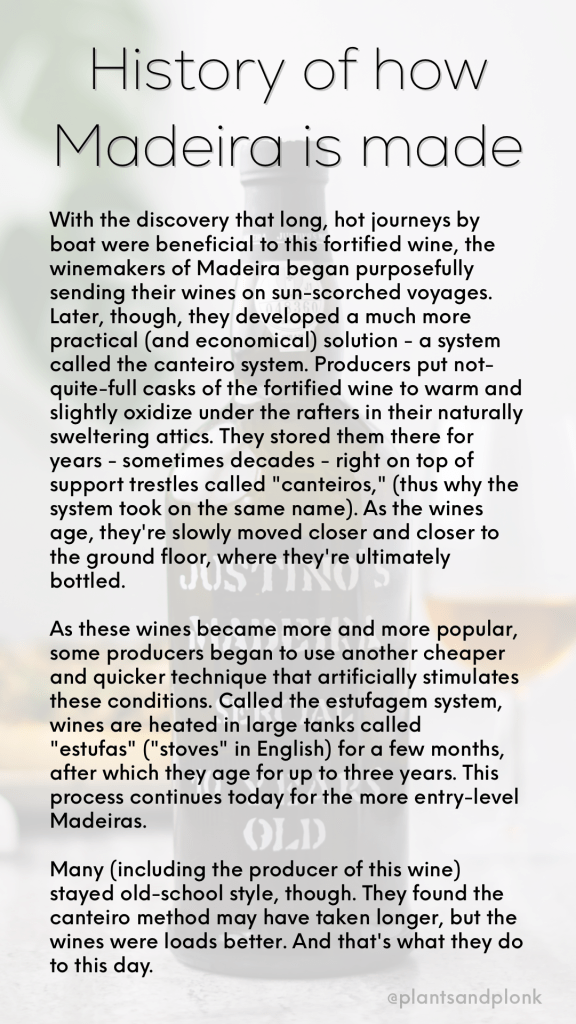
In fact, Madeira wine was also born of these violent voyages. Sailors stocked their boats with wines, as it was safer to drink than water and the barrels served as a ballast to help steady the boat. But after one very hot trip, the wine seemed to have spoiled from having been practically cooked by the high tropical temperatures. Needing some kind of refreshment, the sailors drank it anyway (shocking, I know) and found that the new flavors were to their liking.
As it turned out, the flavors were to the liking of many. So they found ways to make the wine that didn’t involve a round-trip to India. Read a quick summary of that story below.
Jump to section: about the wine || about the pairing || recipe
About Justino’s Madeiras
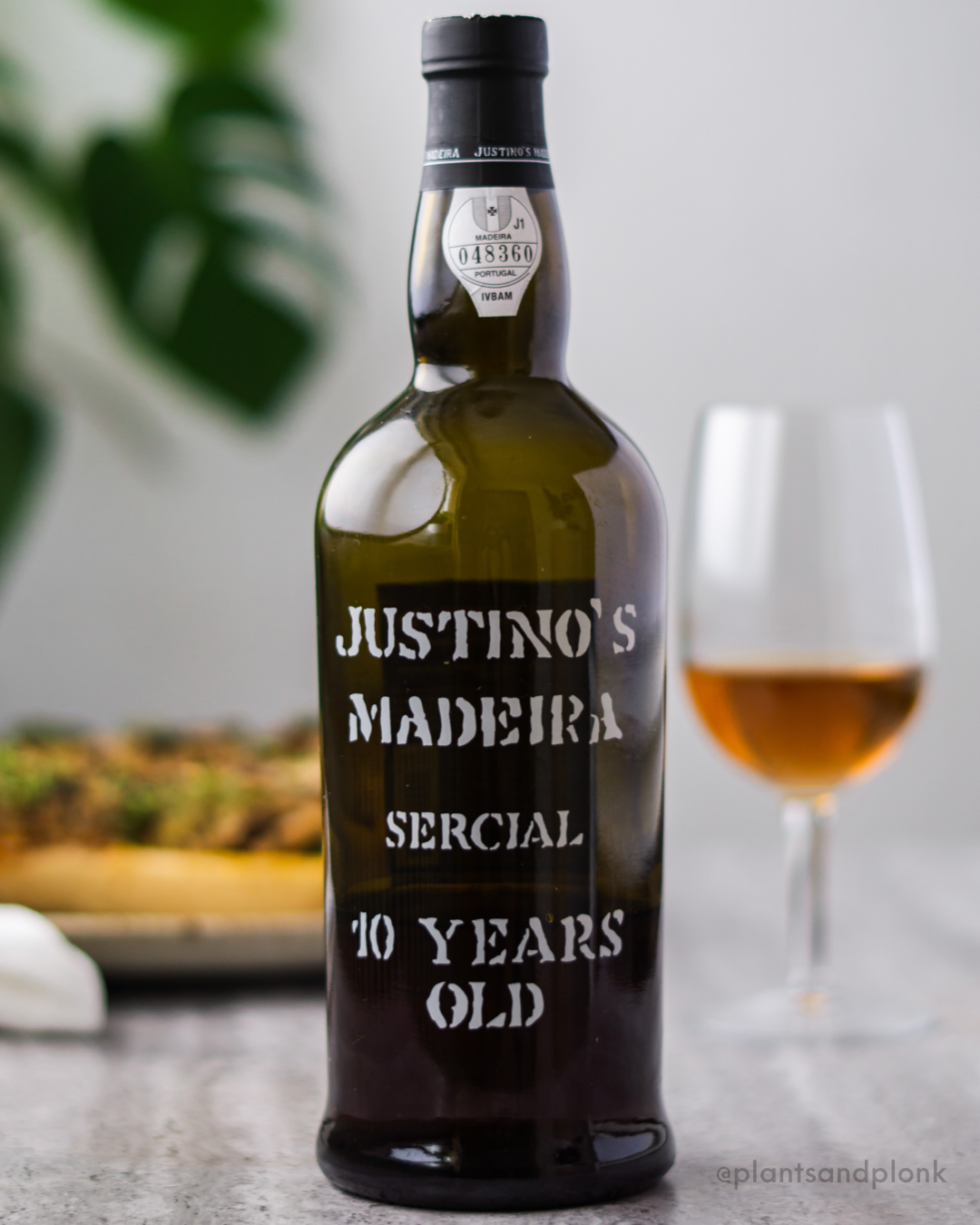
The company that made this Madeira was founded over 150 years ago. Today it holds one of the largest stocks of Madeira wine on the island and exports in addition to producing wine. Normally, I’m not into these large scale producers, but Justino’s makes some legit good stuff. And at 29€ this 10 years old Sercial was one of the most affordable quality Madieras I could find. Plus they’re able to use their resources to create a crazy extensive summary of Madiera wines on their website, including history, styles, grapes, aging – even the most notable vine diseases to have plagued the island.
About Justino’s Madeira Sercial 10 years old
This wine feels like it was made for fall. One whiff of this nutty, caramely, dried fruit aroma and you’ll swap it for your pumpkin spice latte for good (or at least wonder why the wine wasn’t in your life sooner). Sercial is the grape – one of 5 noble grapes that are allowed to be made as single varietal wines. It makes a wine that has a lighter body, higher in acidity and a boatload of intensity (as usual, I’ve included full tasting notes below). It also happens to be higher in alcohol, but it’s so well integrated and the flavors are so pronounced that I almost didn’t notice. That can get dangerous, though, so make sure not to over-serve yourself à la frat boy.

Serical and Verdelho are known as the “drier” Madeiras, but they still have some residual sugar in them, because fortifying the wine with brandy stops fermentation early. Due to that slight sweet edge, I wanted to make sure I served this with something that had a bit more natural sweetness to it.
Jump to section: about the wine || about the pairing || recipe
Pairing with Sercial Madeira
Justino’s (and other websites) stick to tradition, suggesting lighter and/or appetizer style accompaniments for this wine. Which, don’t get me wrong, sounds tasty. But the holidays are coming up and I knew these flavors could stand up to some hearty fall fair. I wanted to go for a sweet squash with earthy nutty something.
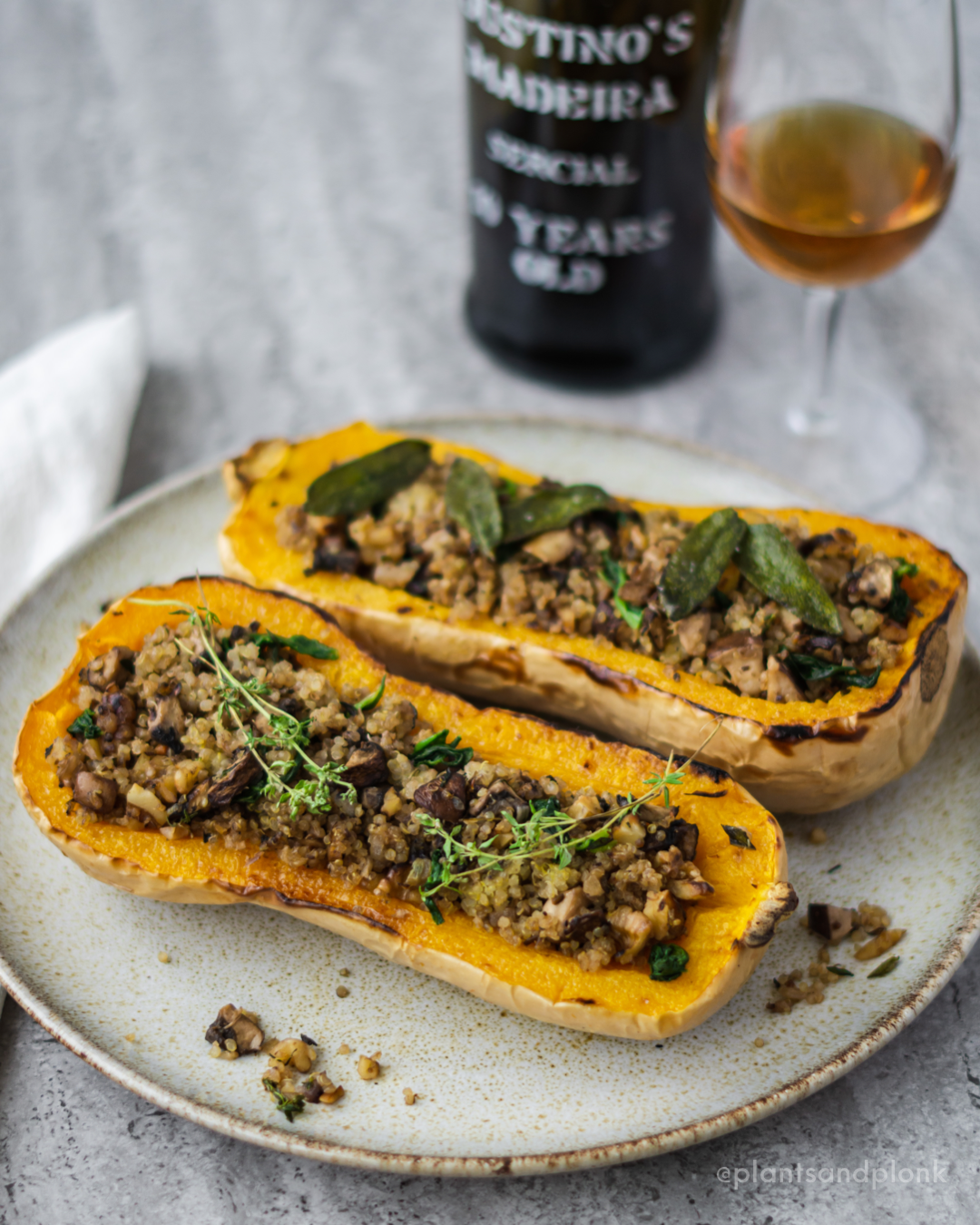
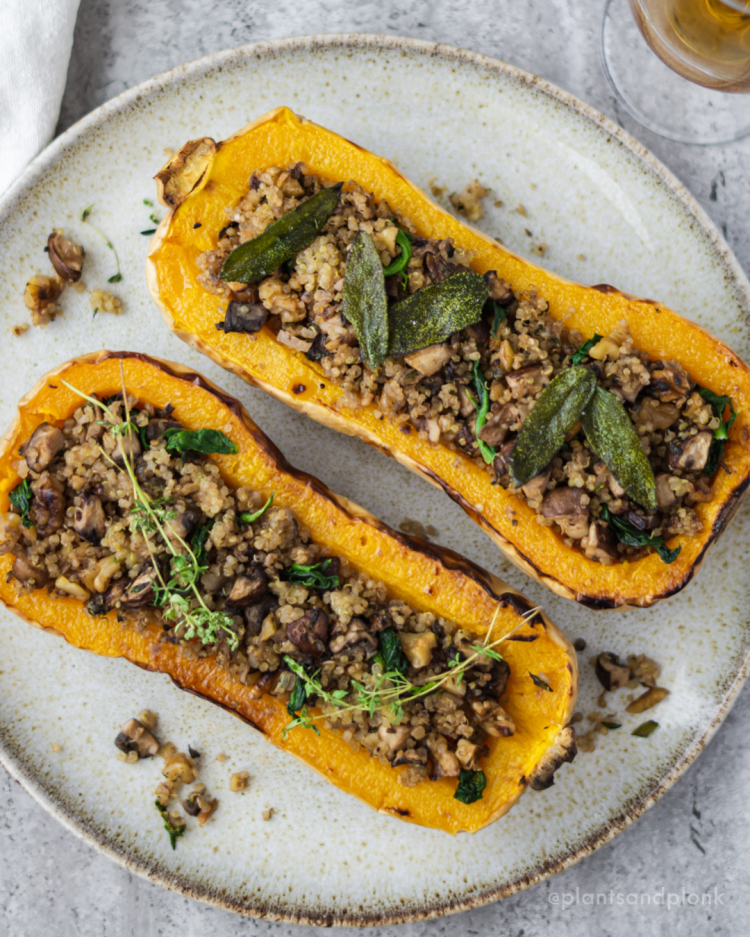
When I spied a butternut squash at a local store, I immediately knew it was the right choice for this wine. When you roast a butternut squash, those nutty sweet flavors become deliciously intense, so I wanted to balance them out with an earthy mushroom and quinoa stuffing. Then I added some walnuts, just go to a little overboard on the nuts. And some spinach because…greens.
So how did it go?
Even though this wine isn’t 100% dry, it works really well with the intensified sweetness of the roasted butternut squash, especially those extra caramelized bits. The squash really brings out the fruit in the wine and the quinoa and walnuts accent its nutty flavors. I was a bit worried about Sercial’s notably high acidity, since this dish isn’t particularly rich. But the wine just adds a lightness to the palate that contrasts to all the deeper, lower toned flavors. And its creamy medium body is a welcomed addition to a very textured dish. The elevated alcohol isn’t too hot, but rather quite warming as the temperatures outside begin to drop.
Though this is a drier Madeira, it’s still medium-dry (as in one step sweeter than off-dry); and that’s almost too much. If it was any sweeter, I think it would be a bit off-putting for those of us who prefer dry wines during our meals. As it is, though, this worked out pretty great. Definitely worth getting your hands on some of this, especially for the holidays.
Jump to section: about the wine || about the pairing || recipe
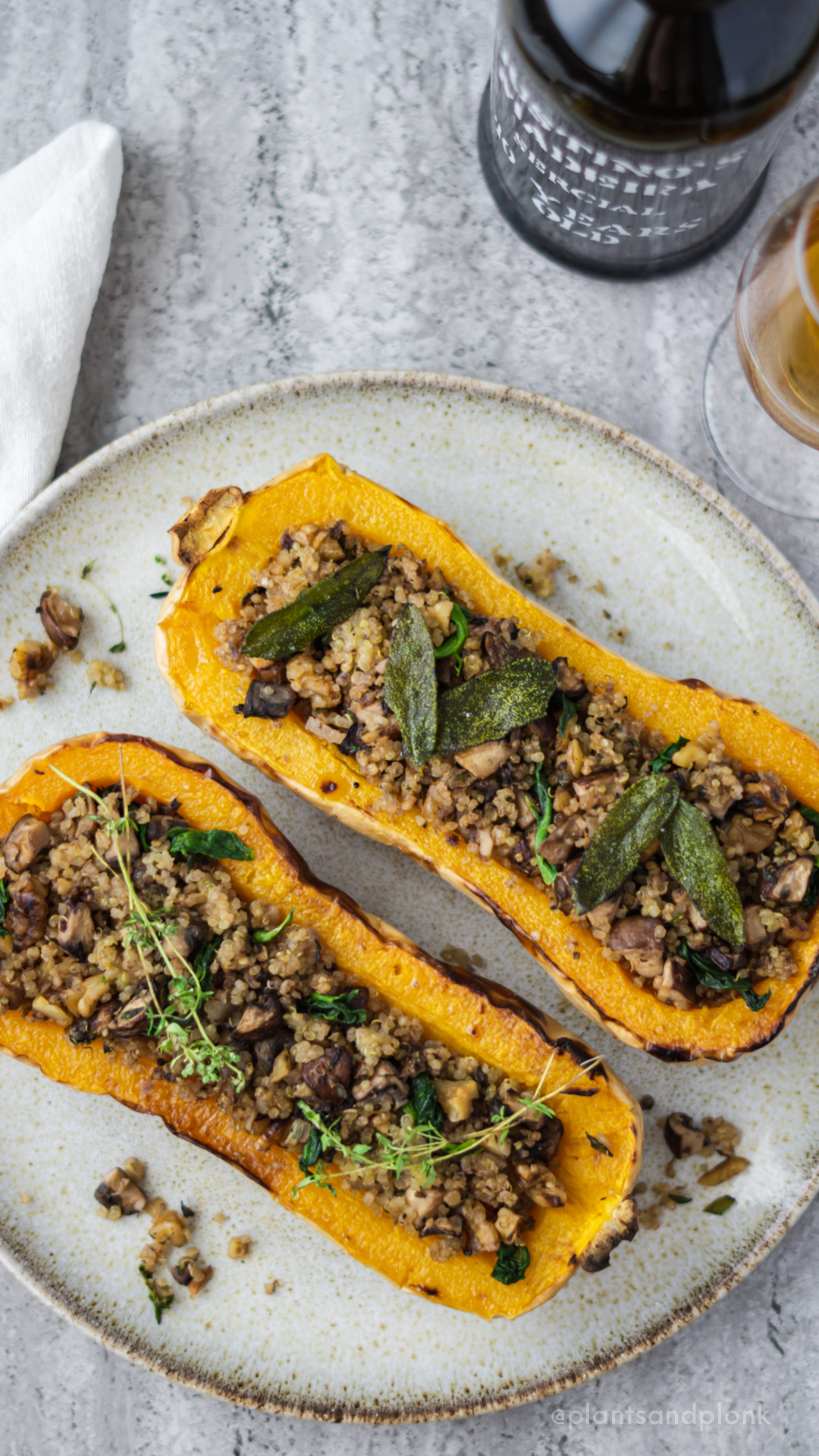
Stuffed butternut squash and Thanksgiving
This is a great addition to the vegan holiday table. Slide it in right alongside the nut roast, green bean casserole, mashed potatoes, balsamic glazed carrots and roasted brussel sprouts.
I’ve been living outside the U.S. for nearly four years now, so I desperately miss these kind of feasts and the coming together of family and friends. But it’s hard to really “celebrate” a holiday that was founded in violence and oppression – one that has worked to silence contemporary indigenous realities for so long. For my part, I’m trying use it as an opportunity to commemorate the many who lost their homes and their lives during the bloody land grab that was the “foundation” of the U.S. This year, I especially want to educate myself and learn what indigenous activists of the Americas want and need now. And to see what actions I can tale to be an ally and support them.
Of course, I also want to take the chance to practice gratitude for all the wonderful things in my life: my privilege, my health, my own food security, my ability to choose to eat a plant-based diet, and my amazing husband, family and friends. (Just to name a paltry few.) So, cheers to that!
Tasting and Other Notes


Recipe


Ingredients
For the stuffing
- 2 cups cooked quinoa (about 1 cup raw – I cook it in vegetable broth for extra flavor)
- 2 tbsp olive oil, divided
- 1 large onion, diced
- 3 cloves garlic, minced
- 3 cups of chopped mushrooms (I used a mix of shiitake and cremini)
- 3 cups of spinach
- 1/2 cup roughly chopped toasted walnuts
- 2 tbsp fresh thyme leaves (pulled from the stems)
- 1 tbsp fresh sage leaves
- salt to taste
For the butternut squash
- 1 large butternut squash, halved lengthwise, seeds removed
- 2 tbs olive oil
To garnish (optional)
- fried sage leaves (I use Saveur’s recipe)
- thyme leaves
- extra virgin olive oil
Instructions
Preheat the oven to 200C/400F
Lightly coat the butternut squash with olive oil (you can use a brush, but I just use my hands)
On a silicone- or parchment paper-lined oven tray, place the squash cut side down and bake for about 15 minutes.
After 15 minutes, flip it and bake another 30-40 (this will change depending on the size of the squash). It’s done when you can pierce the squash very easily with a fork.
While the squash is cooking, prepare the stuffing: Heat 2 tablespoons of olive oil in a skillet over medium heat.
Add the onions to the skillet and sautée for 3-5 minutes, until they’re transluscent
Add the garlic and sauté for another minute
Add the mushrooms and sauté for 2-3 minutes, until they’re slightly browned and have lost some of their water
Add the thyme, sage, and cooked quinoa and cook until warmed through
Remove from the heat and add the spinach, and toasted walnut pieces. The spinach should wilt from the heat of the dish.
Season the stuffing to taste
When the squash is finished roasting, place the cut side up on a casserole dish or plate and fill/top with the quinoa mixture. Feel free to let it overflow!
Garnish with thyme leaves, fried sage leaves and a drizzle of good extra virgin olive oil
Serve with a glass of Sercial Madeira

 celeste radosevich
I knew you’d like this one! Also pretty easy, given the flavor-punch it packs 🙂 let me know if you end up trying it
LikeLike
YESSSSS! Another fabulous looking recipe that will be great for a weekend winter meal. Thanks for sharing.
LikeLike