3 minute read
Jump to section: the wine || the pairing || the recipe
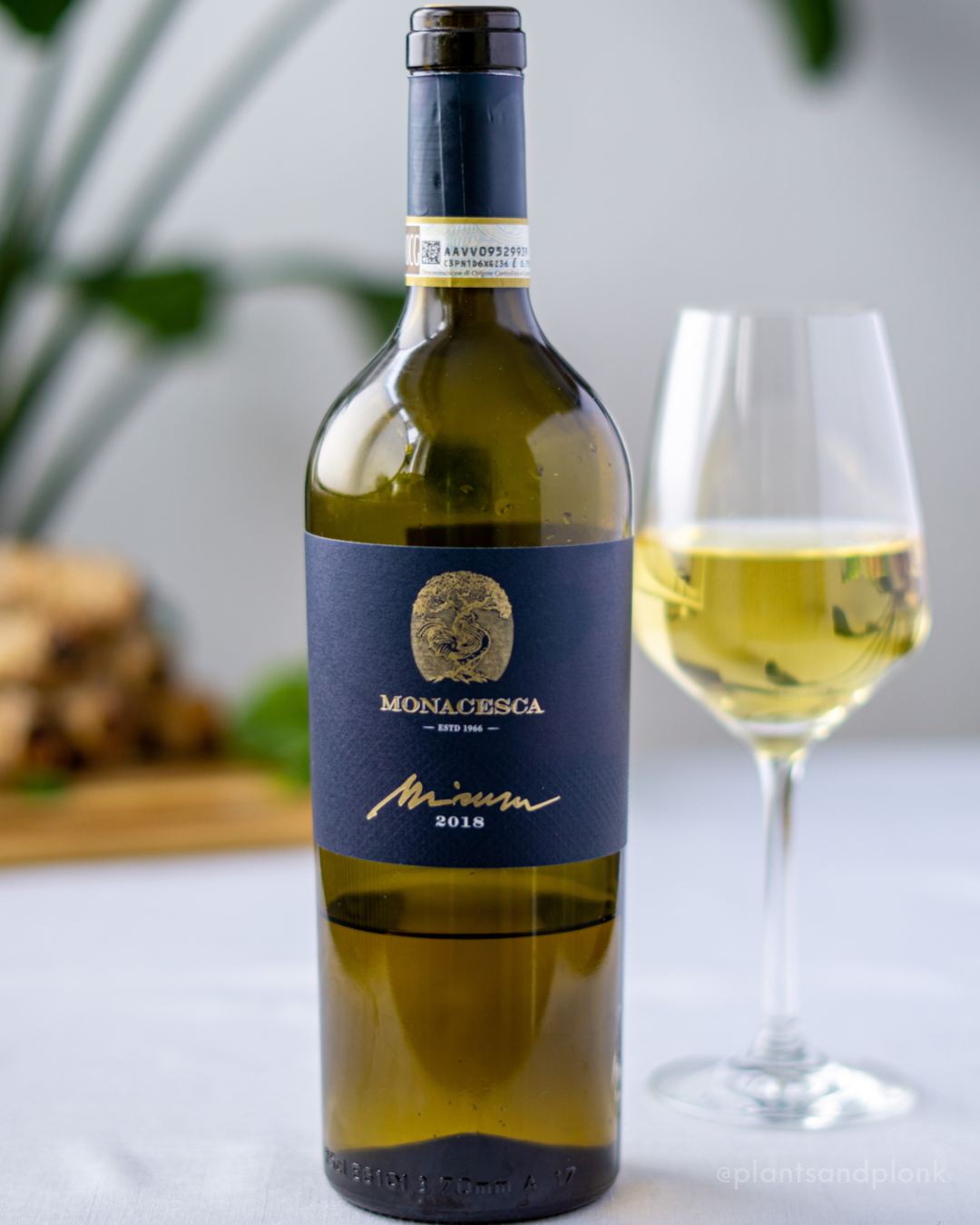
White wines aren’t the first thing that come to mind when we think of warming up in the winter. They are perhaps better known for their cooling characteristics: palate-refreshing flavors, mouth-watering acidity, and a bit lower alcohol than reds and fortifieds.
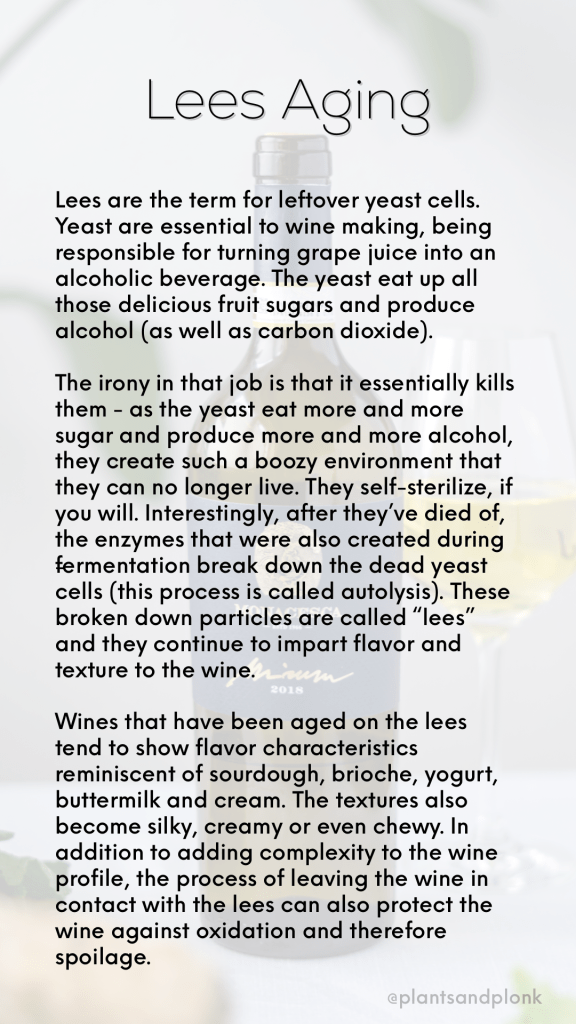
But there are more than a handful of whites that jive well with winter vibes, and not just because everyone should drink what they like year round. In addition to oaked whites (a common go-to in colder months), white wines are more likely to show lees aging, which imparts all kinds of warming flavors and comforting textures to a wine (read more about lees aging in the info box below.) And (shocker), this week’s Verdicchio di Matelica is a perfect example.
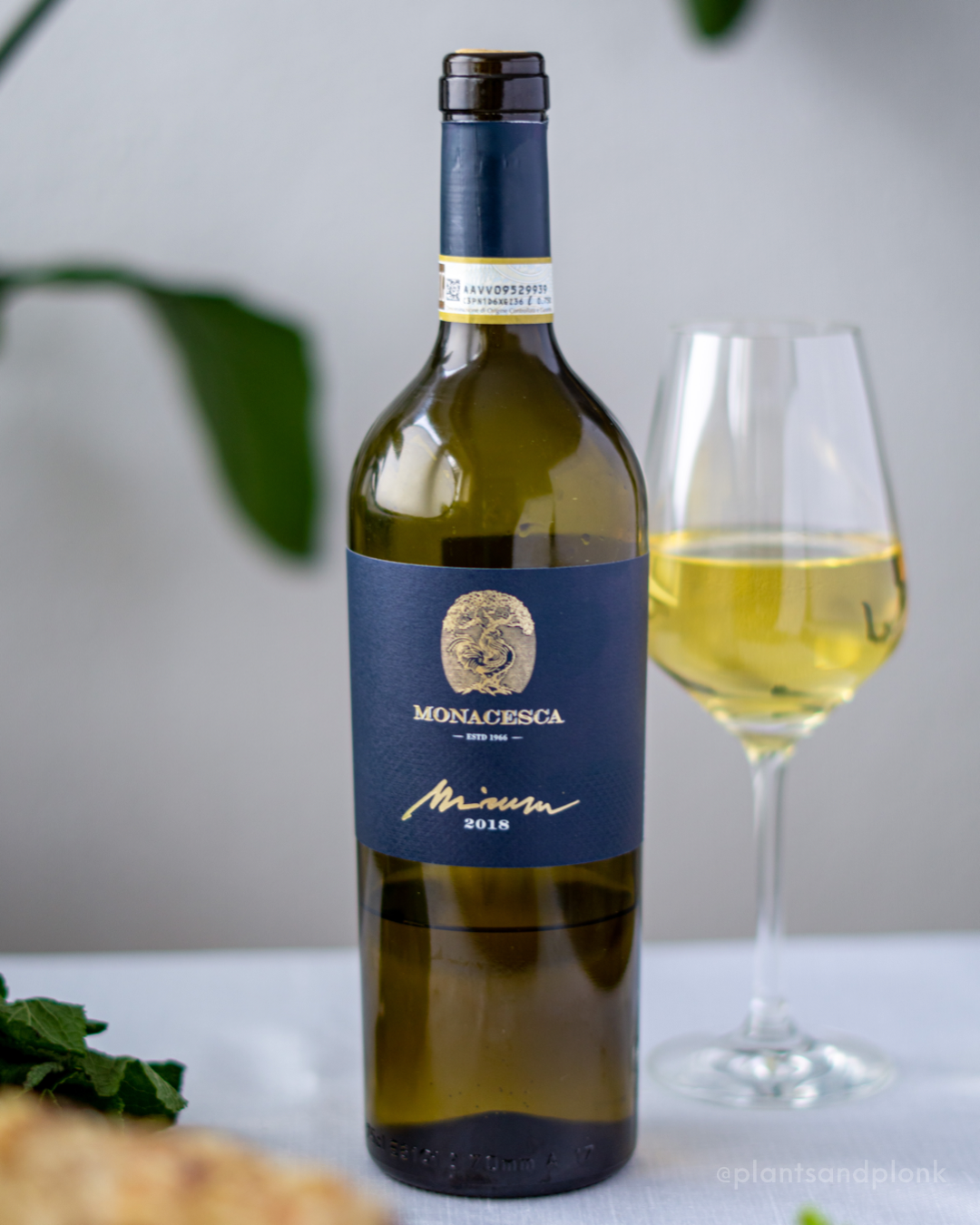
Verdicchio might not be as well known as Pinot Grigio, but it’s widely grown in Italy (moreso than you might think, since the grape is actually identical to Trebbiano di Soave and Trebbiano di Lugana). The grape is known for having naturally high acidity and a crisp, clean profile. But, Verdicchio is also known to show nutty, almond flavors, which open it up for more wintery pairings.
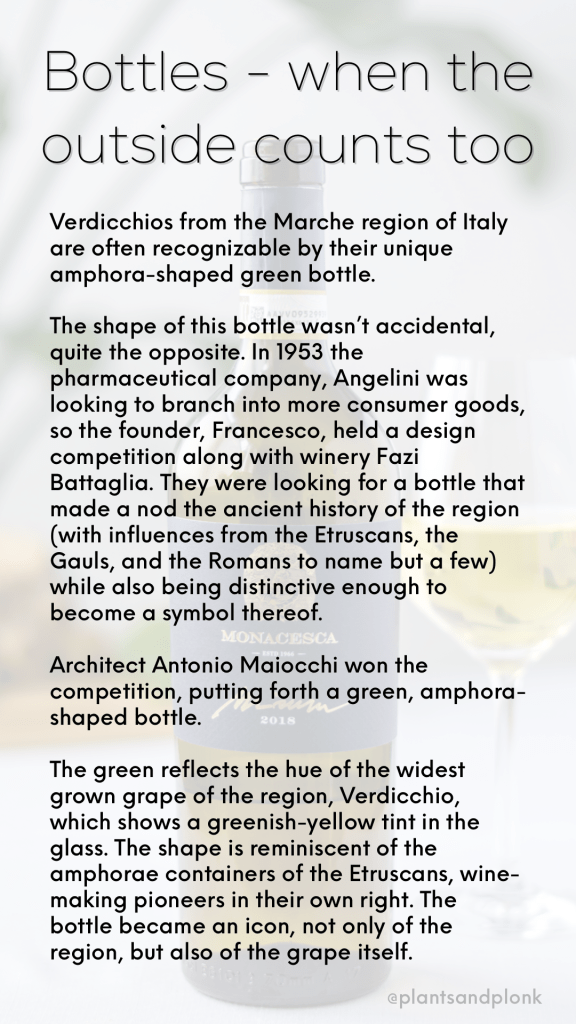
For decades now, Verdicchios from the Marche region have been steadily making a name for themselves with their quality and finesse. The region even developed a unique bottle shape to help Marchese Verdicchios stand out on the shelf (it’s a great story – check it out below).
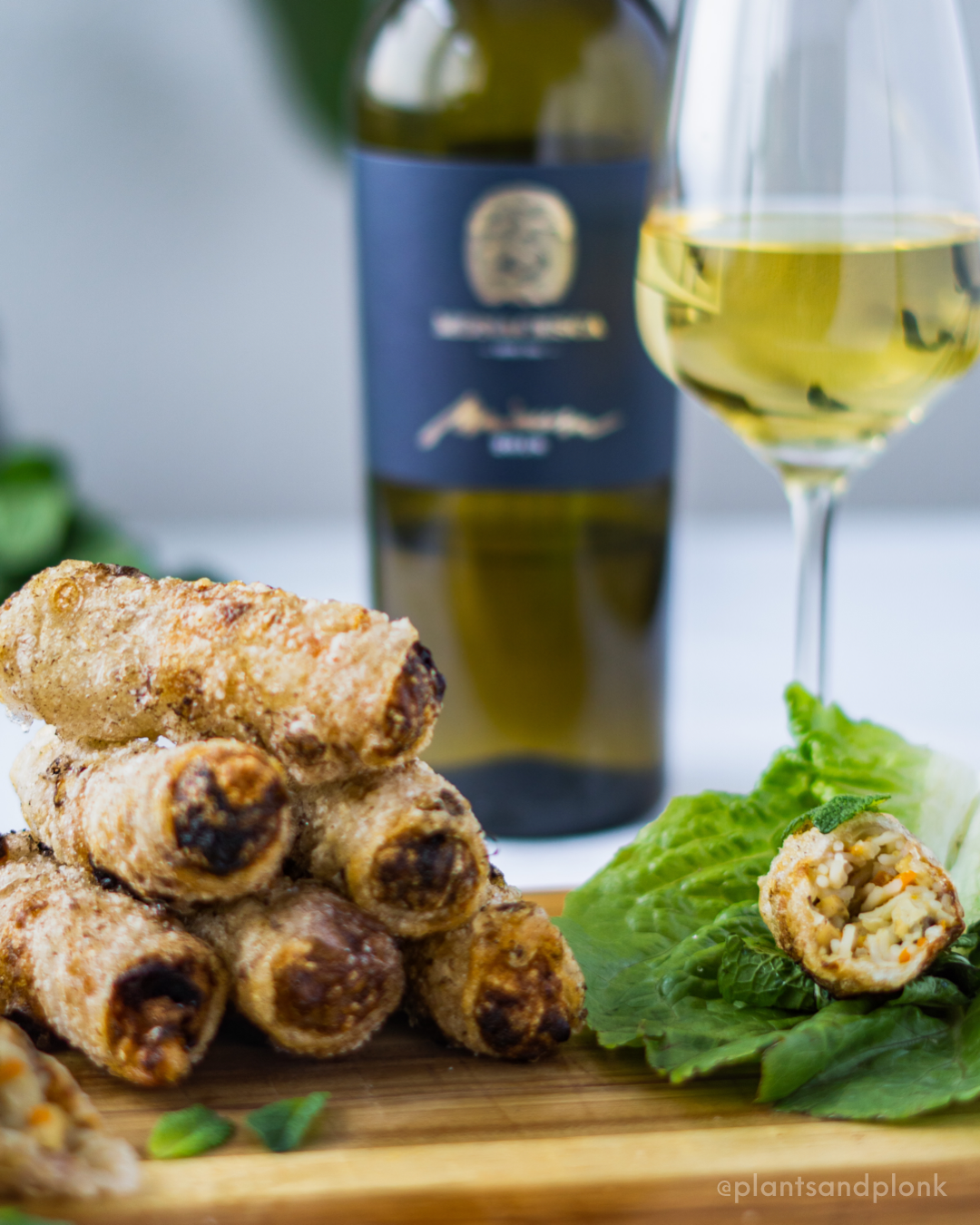
2018 La Monacesca Verdicchio di Matelica Riserva “Mirum”
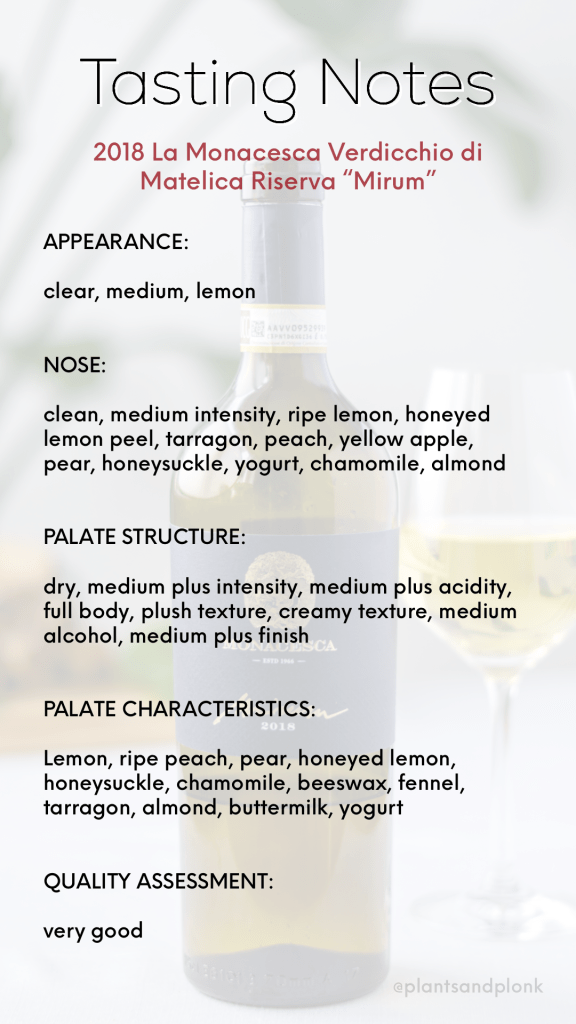
The wonderful thing about this particular winter white is that it hasn’t been aged in oak. So its winter pair-ability (is that a word?) doesn’t stem from the warming flavors oak imparts. Instead, this wine has textures and flavors from lees aging and other winemaking techniques. In the glass, you’ll find a full bodied wine with a creamy, plush texture. Flavors of buttermilk and yogurt add depth to the almond and fruit flavors typical of the grape (you can find my full tasting notes below). This round mouthfeel and comforting palate suit cold weather imbibing in a way that fresher, brighter versions just can’t manage.
Jump to section: the wine || the pairing || the recipe
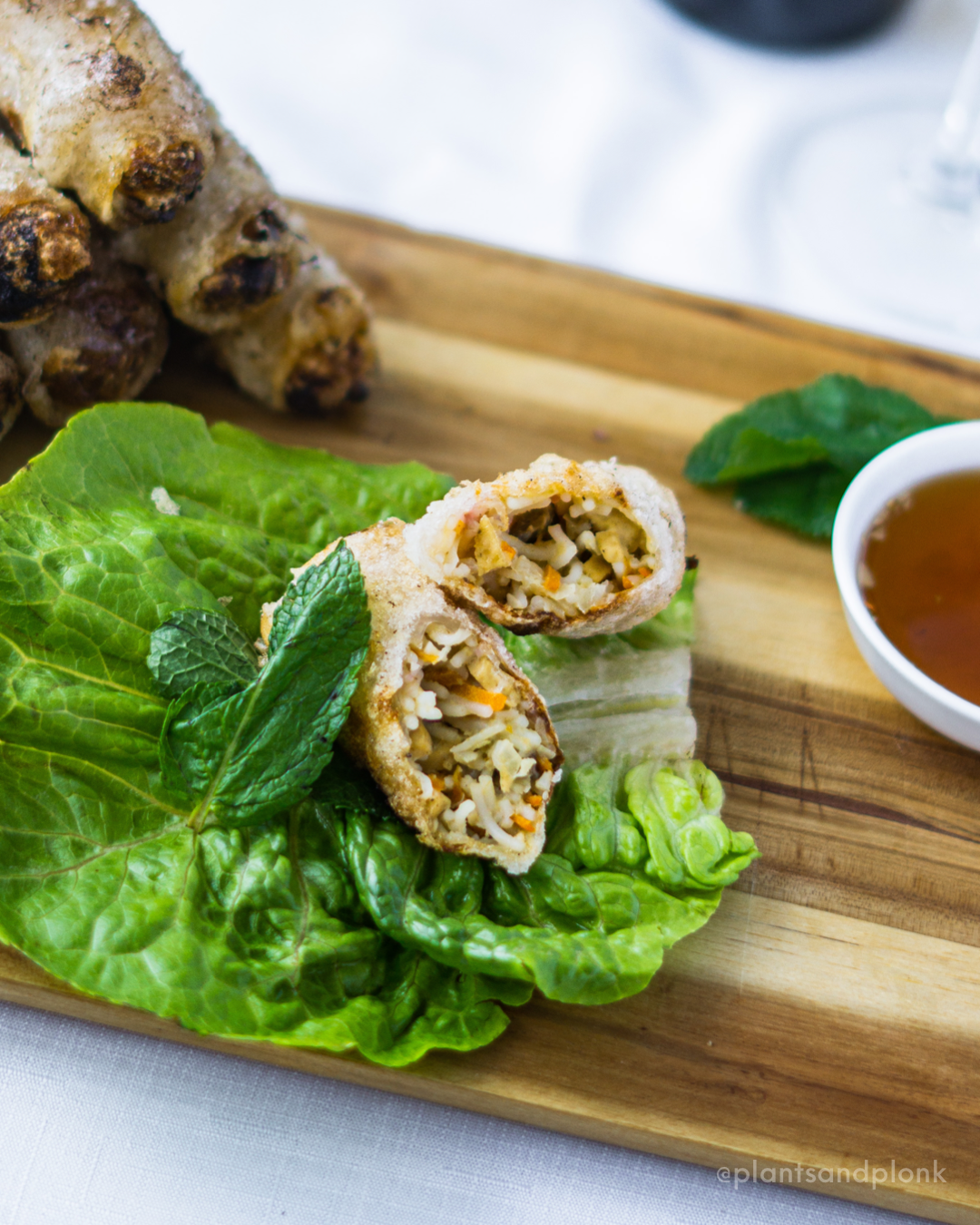
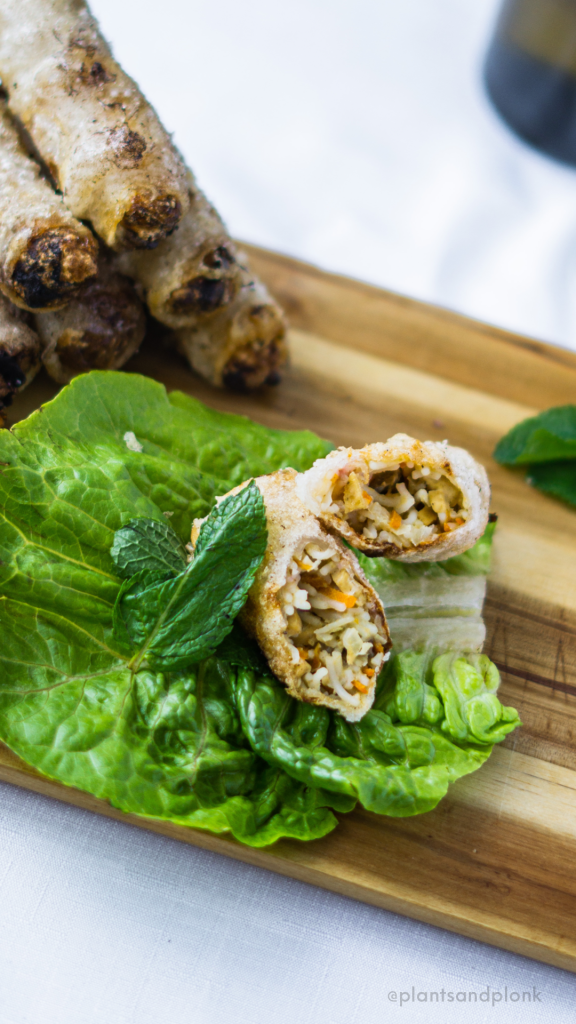
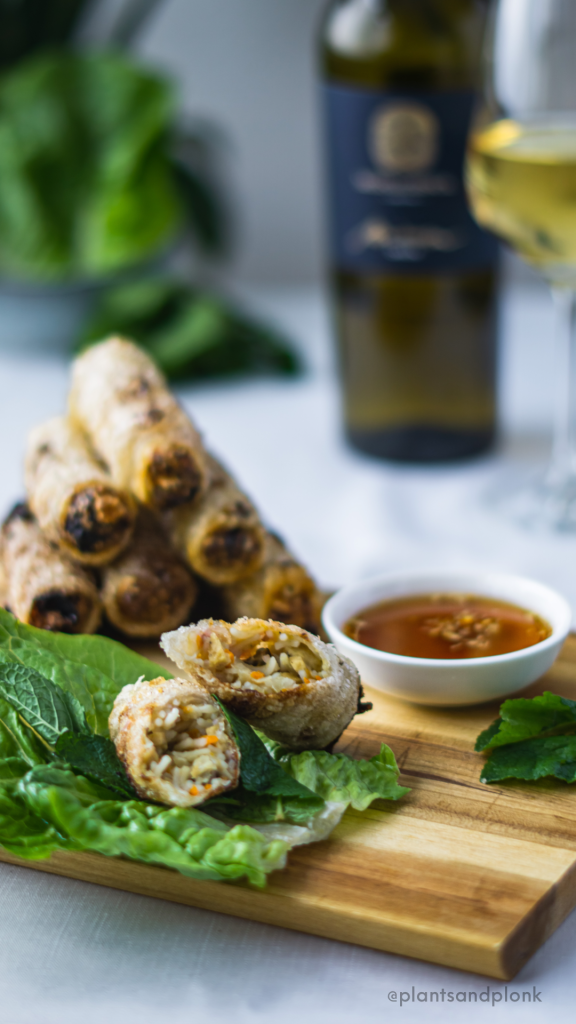
Verdicchio with Vietnamese Chả Giò
Our household isn’t the only one craving comforting fried food on a chilly night…is it? That craving may have clouded my judgement, making this pairing one of my more experimental.
I knew the wine had a good enough acidity to stand up to rich, fried foods, and I thought the green and fruit notes might work well with fresh lettuce and mint. But, both the wine and the food are quite complex, in flavor as well as in texture. So, there were plenty of opportunities for this pairing to go awry.
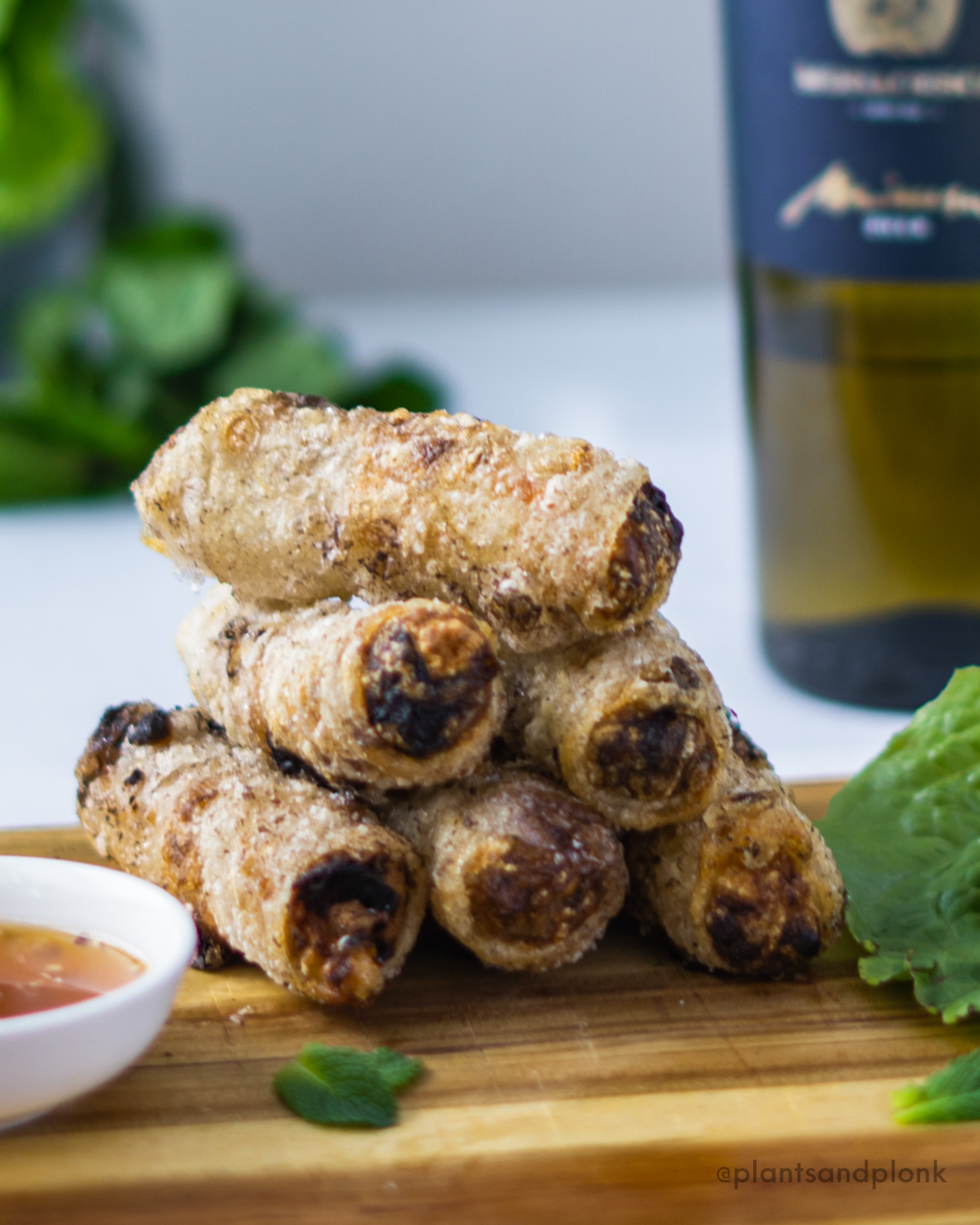
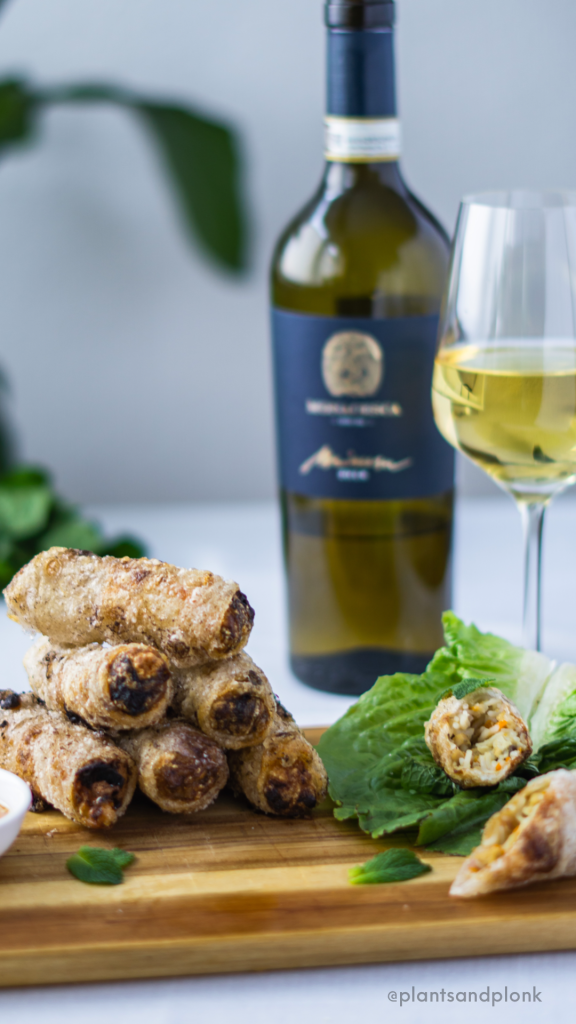
It turns out, it was pretty good! In fact, better that I imagined. Not only did the fresh aspects play nicely together, but the fried rolls brought out a perception of oaky sweetness (read: vanilla-y) in a wine that has never seen any oak. (Things like that still amaze me!)
The combination of textures was the real home run, though. The Verdicchio’s plush, creamy texture contrasted beautifully with the crunch and chew of these Vietnamese rolls. And definitely don’t forget the dipping sauce. It adds a layer of sweet sourness that dovetails perfectly with the lees aspects in the wine.
I’ve included my recipe for these addictive rolls below, but if you’ve got access to vegan Vietnamese food (or even Chinese spring rolls) near you, please, indulge in a little takeout!
Jump to section: the wine || the pairing || the recipe
Tasting and Other Notes
Ingredients
2 portions vermicelli rice noodles (about 100g / 4 oz)
1 carrot, julienned or grated
¾ cup cabbage (red or white), grated
4-5 cremini mushrooms, julienned
4 small vegan sausages, julienned
1 tbsp sesame oil
1 tbsp tamari
4 tbsp chickpea flour
3 tbsp water
8-10 rice paper wraps
about .5 L (a little more than 2 cups) oil for deep frying (I use peanut oil)
for serving
mint
baby romaine or other lettuce
Woon Heng’s vegan Nước mắm Chay
Directions
Make the rice noodles to package directions, then strain
Place the noodles in a clean tea towel and squeeze out as much excess water as possible
Lay the noodles out on a plate and place in the fridge for about 30 minutes to dry
Meanwhile, prep the vegetables and add to a mixing bowl
Slice the sausages in half lengthwise and then again crosswise. Then, slice into very thin strips. Add them to the vegetable bowl and toss to mix
In a small bowl, combine chickpea flour, tamari and water and whisk to make a thick, smooth batter
Remove the noodles from the fridge and roughly chop them before adding them to the vegetable and sausage mixture
Drizzle the mixture with sesame oil and stir to coat
Pour the chickpea batter over the mixture and stir to make a homogenous mixture
Prepare a large bowl, pot or pan with room temperature water to soften the rice paper wraps.
Lay down a clean tea towel for rolling
Gently and quickly, dip the wraps into the water (my pot isn’t big enough to immerse mine, so I rotate the wrap until it has all been dipped in water)
Place the moist wrap (it’s ok if it’s still a little stiff, it will become pliable very quickly) on the tea towel
Working quickly, add two to three tablespoons of the vegetable mixture to the wrap, (about the length and width of two fingers) about an inch away from the edge closest to you
Fold the bottom edge (the one closest to you) over the mixture, making sure to keep the roll tight as possible.
Continue wrapping the roll like a mini-burrito, folding in the sides as you roll forward and ensuring no air bubbles form (these are dangerous for frying!)
Place the finished roll on a parchment paper-lined plate and repeat with he remaining wraps (any leftover filling will keep in the fridge for a couple of days).
When finished, place all rolls in the fridge for 30 minutes to dry
About 10-15 minutes before the rolls have finishing drying, prepare a medium stockpot about ⅓ of the way full with the frying oil and heat to about 325F / 165C.
Prepare a draining rack for the finished rolls
To fry: these rolls *love* to stick together. So I add them 1 minute apart and never keep more than 3 in the pan at a time (1 minute is about enough time for a roll to develop enough of a crust so as not to stick to the others)
Fry each roll for about 3 minutes, turning gently to brown on all sides
Continue working in batches and adjusting the heat to maintain a constant temperature
Remove finished rolls to the draining rack and let rest until about 15 minutes before serving
Prepare the lettuce leaves, mint and Nước mắm Chay sauce for serving
For the best results, fry the rolls again for 1-2 minutes each
Let rest for 2 minutes, and serve with lettuce leaves, mint and Nước mắm Chay sauce
Enjoy alongside a glass of Verddicchio from the Marche!

 celeste radosevich
Haha, it’s a struggle to find any leftovers in this house, but I’ll see what I can find for you 🙂
LikeLike
Those rolls look so delicious. Longing for a box of your leftovers!
LikeLike