5 minute read
Jump to section: about the wine || about the pairing || recipe
Skin-contact wine can be incredibly confusing. Beyond being mistaken for wine made from oranges, orange wine is also often conflated with natural wine. That is, consumers assume that all natural winemakers produce skin-contact whites and that all skin-contact wines are natural wines. (If you want a refresher on natural wine, I’ve repeated the info box from a previous post below.)
Austrian winemaking (and this week’s wine) sits at the nexus of both.
Natural wine, Skin-contact wine, and Austria
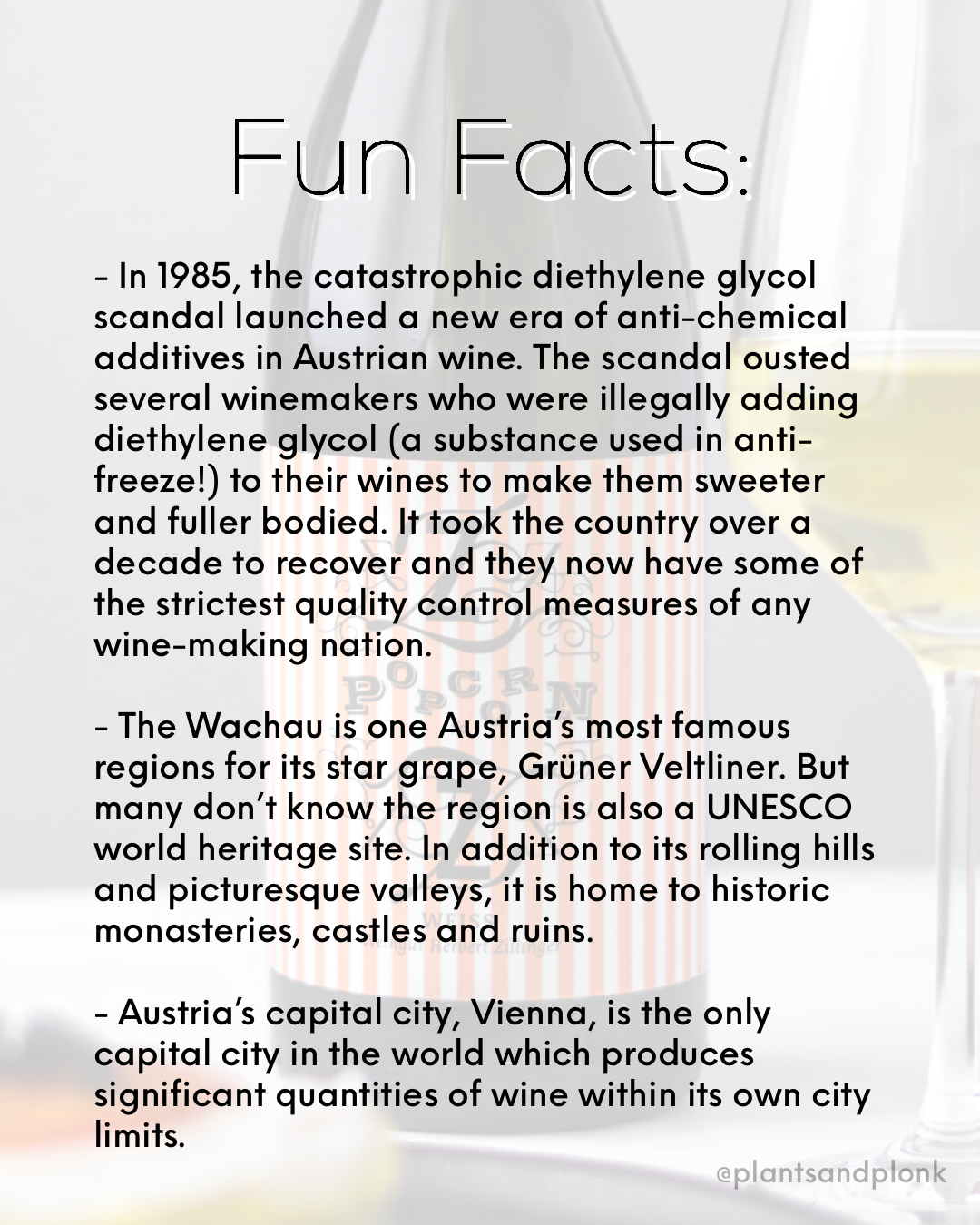
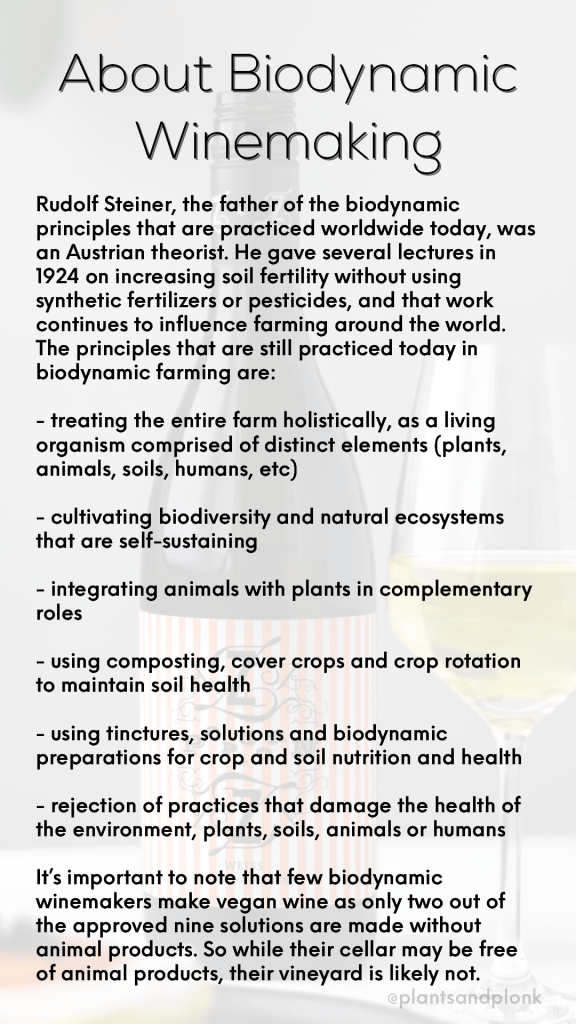
Austrian farmers and vitners have been tending their crops organically and biodynamically for nearly a century. (See below for more info on biodynamic farming.) A fact that was hard to believe in 1985, when the catastrophic diethylene glycol scandal decimated the Austrian wine industry. The scandal ousted several winemakers who were illegally adding diethylene glycol (a substance used in anti-freeze!) to their wines to make them sweeter and fuller bodied. The international reputation of Austrian wine promptly tanked.
It took the country over a decade to recover, but they now have some of the strictest quality control measures of any wine-making nation. What’s more, during the rebuilding years, modern Austrian producers found their way to their own winemaking styles and methods for. Many took a leaf out of their biodynamic history (and likely neighboring Slovenia), settling on low-intervention and chemical-free techniques and practices. Perhaps that’s why Austria now stands at the forefront of both natural wine and skin-contact wine production.
See, orange wines easily cross the boundary into natural wines due to the innate preservative properties in grape skins. We already know that the skins contain loads of phenols and tannins. Accordingly, when skins stay in contact with the juice, more of these compounds are infused into the final wine. What we haven’t covered are the anti-microbial and anti-oxidative properties inherent to tannins and phenols. That means that traditional white wines – the ones separated from their skins as soon as possible – are more vulnerable to oxidation and microbial growth. To fight this (and to make sure the stuff in your glass is safe for consumption), conventional winemaking practices encourage using chemical additives to prevent spoilage. Orange wines, then, require far less additives. And many don’t use any at all.
Jump to section: about the wine || about the pairing || recipe
Some natural winemakers turned to skin-contact wines as a way of limiting the amount of additives their wines needed. That’s likely why orange wines are often lumped in with natural wines. But it’s important to note that skin-contact whites can be made without adhering to any natural winemaking practices. Similarly, natural winemakers don’t all have interest in leaving their white wines in contact with their skins.
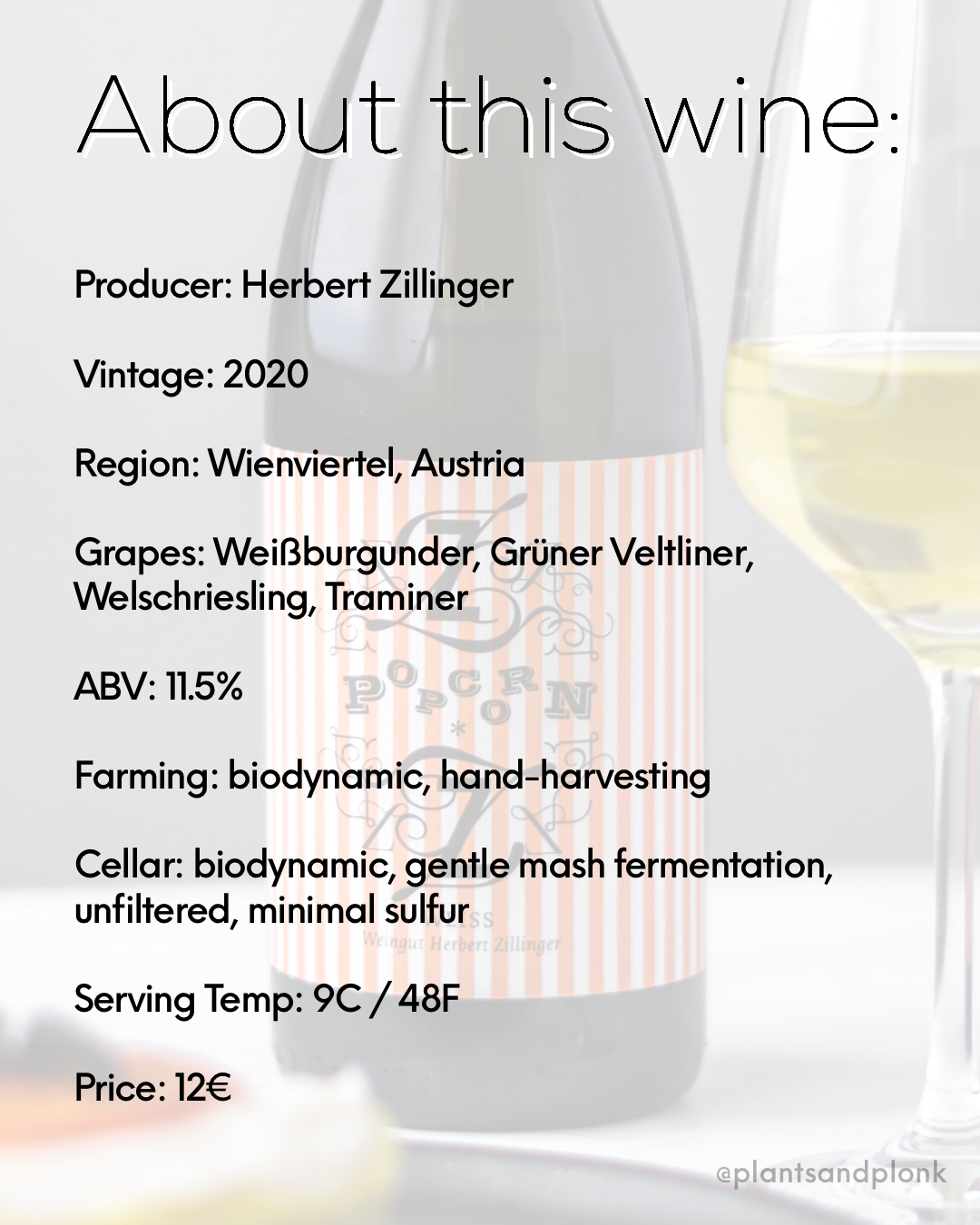
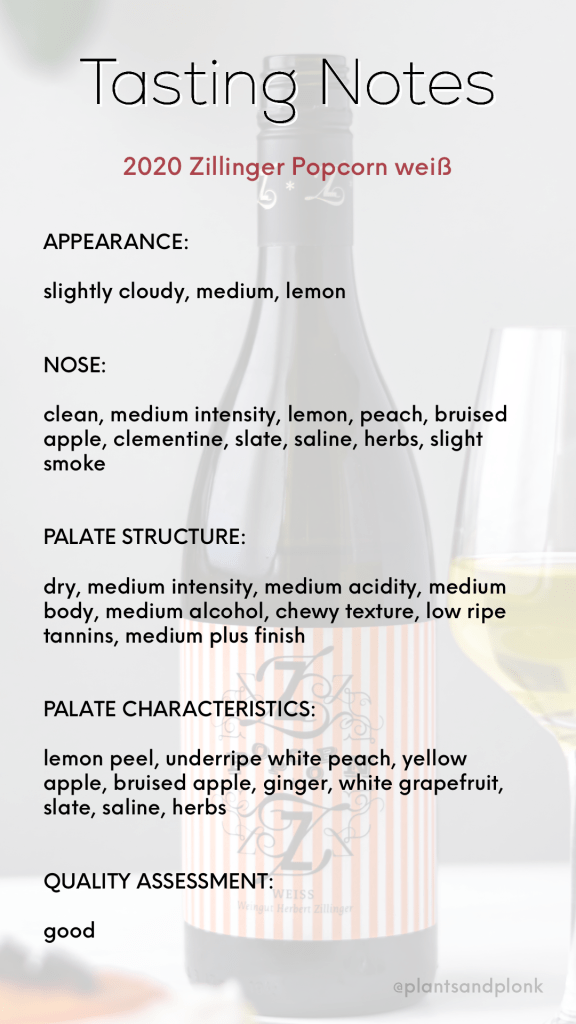
The producer of this week’s wine, Herbert Zillinger, does both. More accurately, he makes white wines that have different levels of skin-contact. The one I’m featuring today is his entry level amber wine. And it’s delicious.
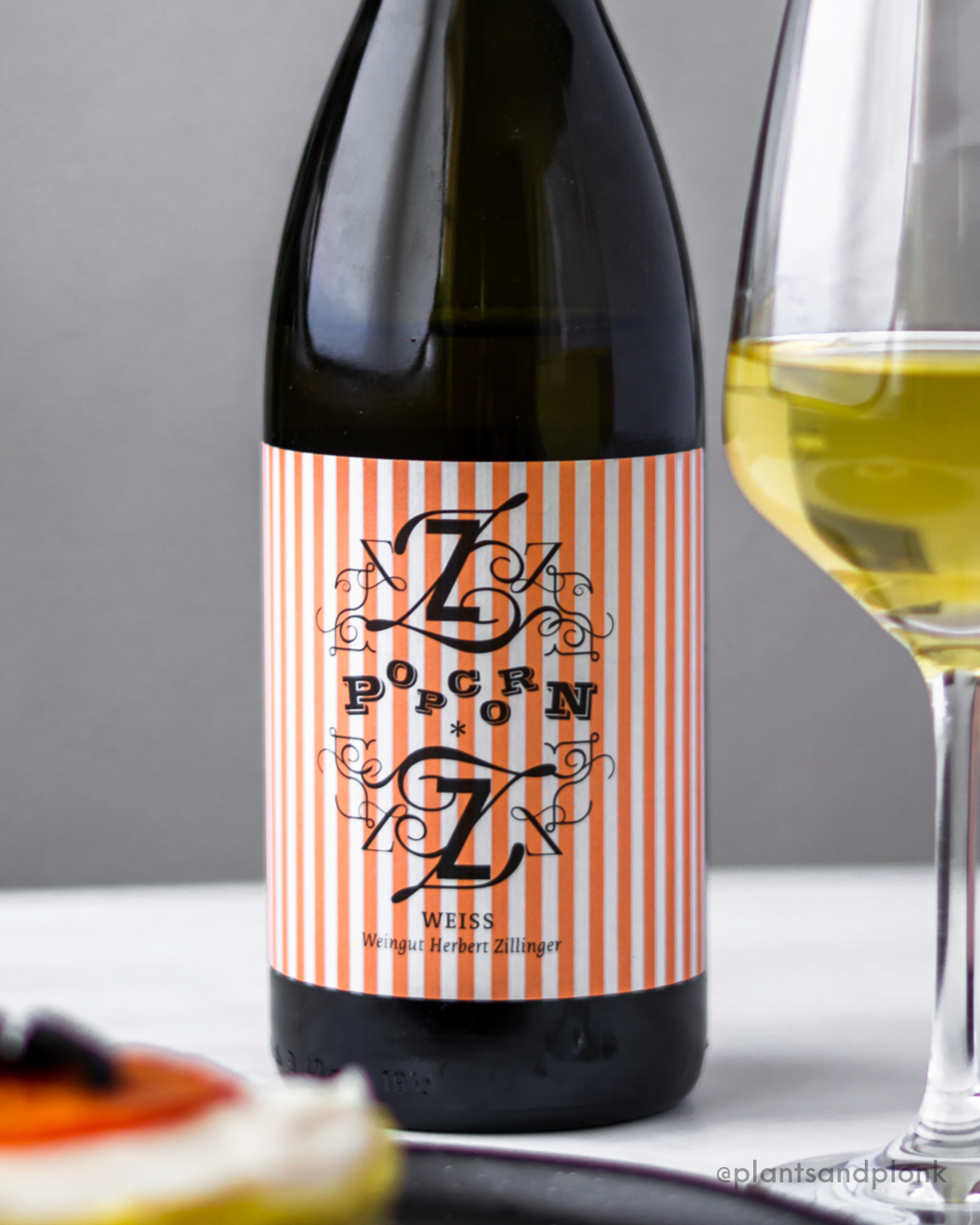
2020 Zillinger Popcorn Weiß
You know how they tell you, don’t judge a book by its cover – or a wine by its label? Even after 10 years of working with wine, I couldn’t hold to that basic tenet. This label is so cool!
To be fair, I wasn’t choosing this wine totally blind. I’ve enjoyed all the wines I’ve tried by Herbert Zillinger, whose family has been practicing organic (and subsequently biodynamic) viticulture since the early 1980s. So I wasn’t surprised when this skin-contact blend turned out just as lip-smackingly delicious as the others.
This may be the perfect entrée to skin-contact wines. It’s cost (12€) keeps the stakes pretty low, and it’s approachability extends far beyond that price. The wine shows juicy citrus, apple and peach fruits as well as a bit of ginger spice and a hint of fresh herbs. The tannins add a gentle bite to the wine and hint at its food-friendliness. The name implies that this wine may be as addictive has a bowl of buttery popcorn – but it also foreshadows that tiny bit of smoke you might get from freshly popped corn (check out my full tasting notes below).
Jump to section: about the wine || about the pairing || recipe
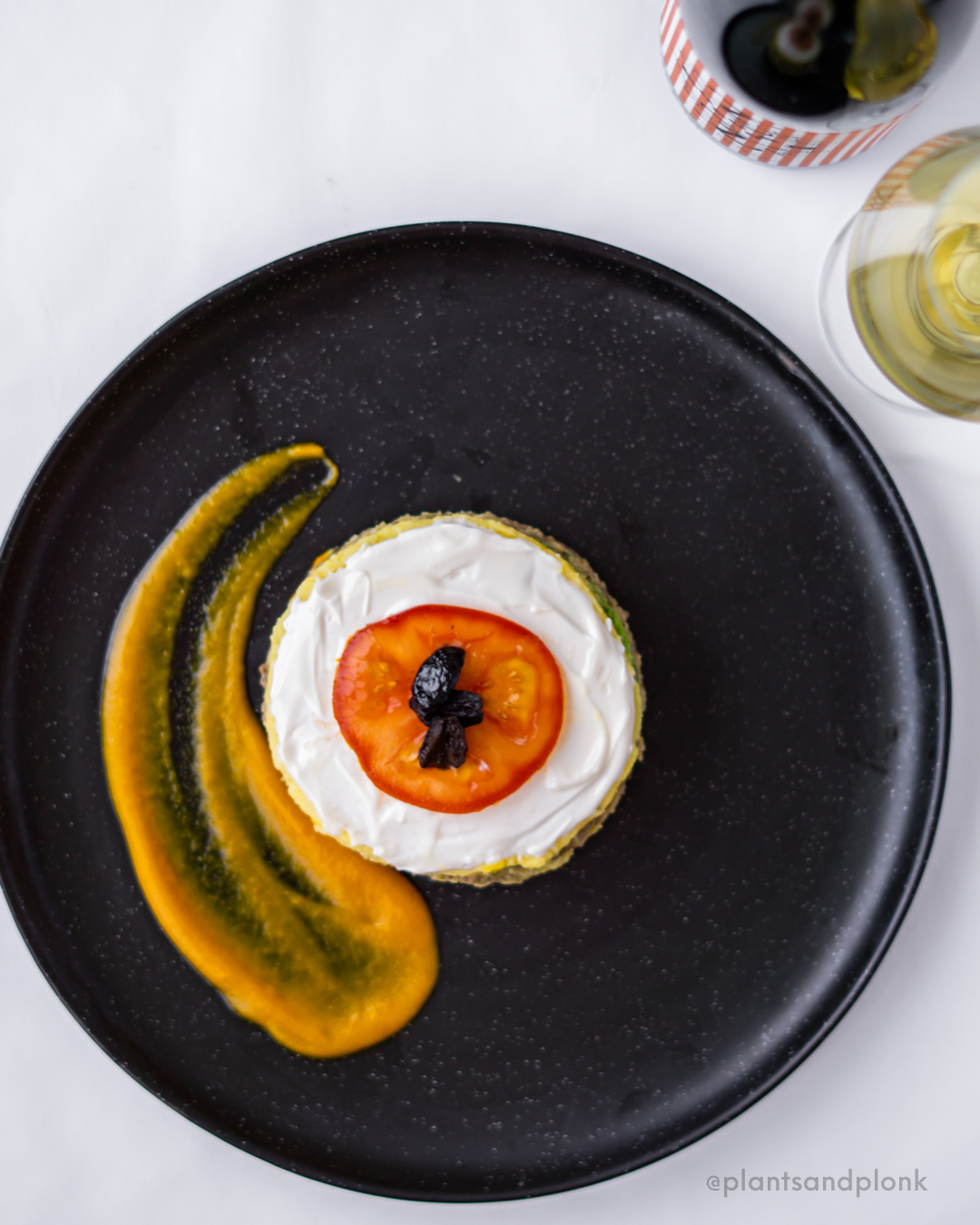
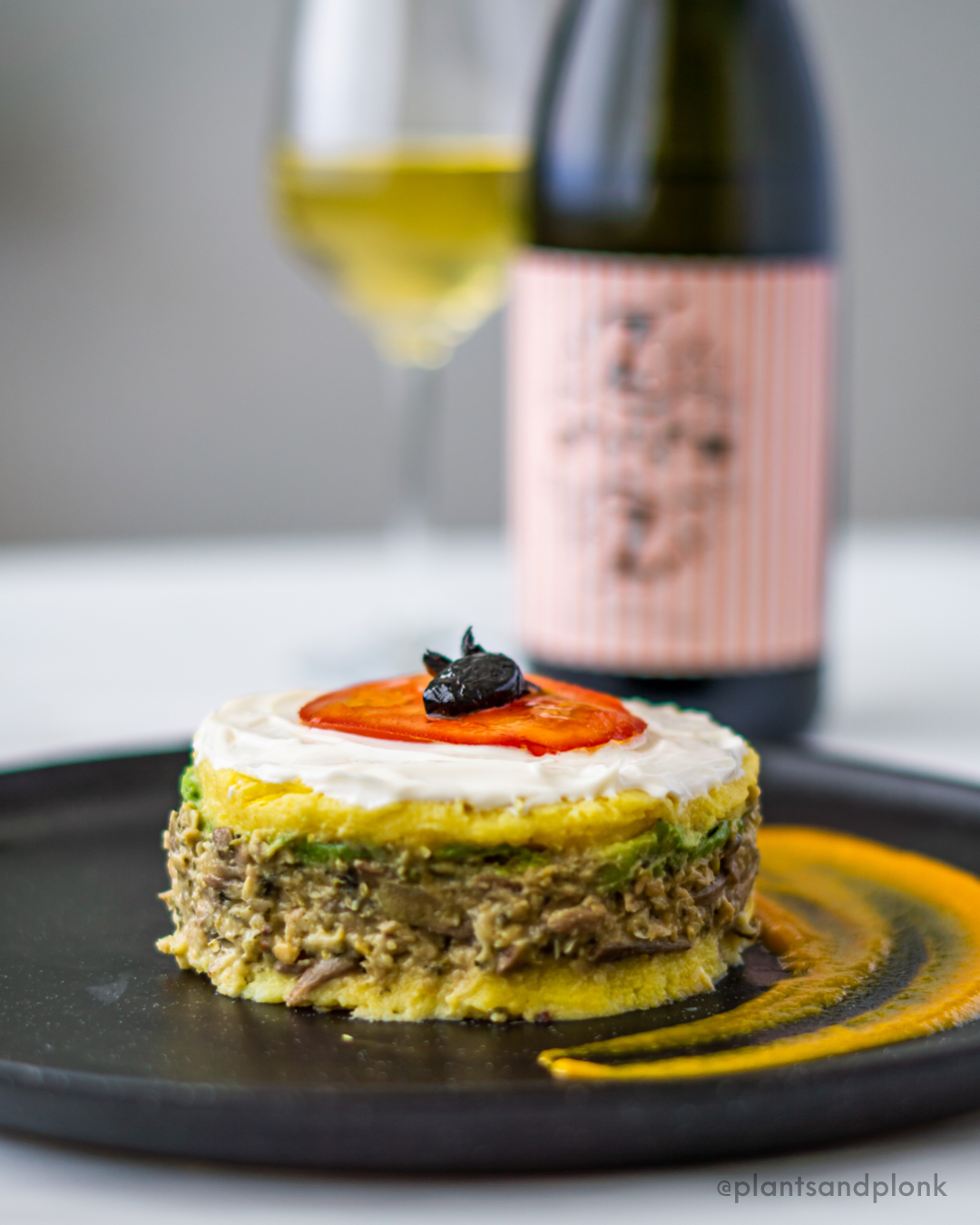
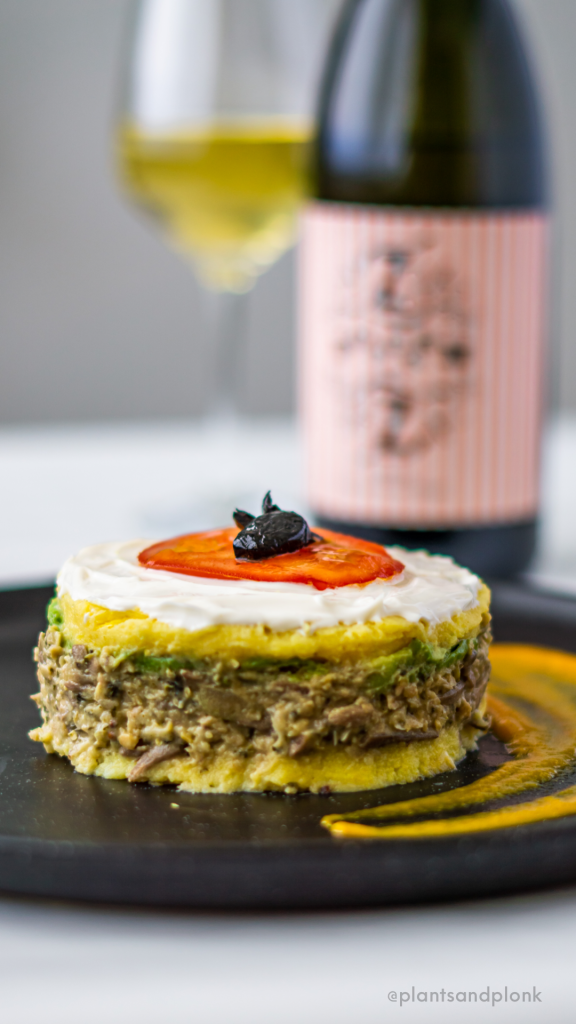
Zillinger Popcorn Wine with Causa Limeña
The weather was warm(ish) when I popped this bottle and I knew I wanted some warm-weather-adjacent food to go with it – maybe something with a bit of a bite itself. After the aji de gallina I made recently, I had Peru on the mind. So, I decided to try my hand at Causa Limeña.
Traditionally made in large casserole dishes, Causa is classic Peruvian comfort food. At its most basic, it’s tuna salad and avocado sandwiched between layers of lightly spiced mashed potato and served chilled. (You can check out my veganized recipe below.) If it wasn’t so filling, it’d definitely be popcorn-addictive.
The pairing itself went swimmingly. The combination of spice and earthiness in this dish made it an ideal candidate for orange wine-pairing. Plus, Causa has so much texture, it definitely needed a textured wine. And Zillinger’s popcorn wine delivered!
The tannins from the wine worked well with the Causa, and its acidity was a perfect match for the dish’s creamy richness. The flavors also melded nicely together, with the warming notes of ginger and aji amarillo dovetailing as the citrus contrasted with the “tuna”’s earthiness. I definitely recommend trying this if you can – if not together, then both of these elements are also amazing on their own!
Tasting and Other Notes

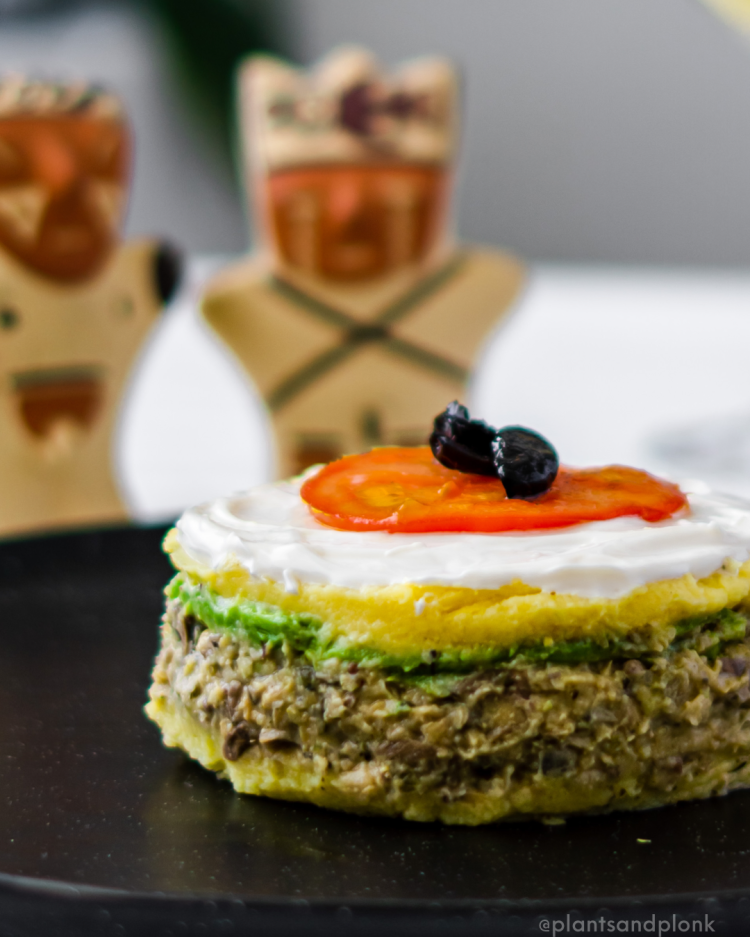
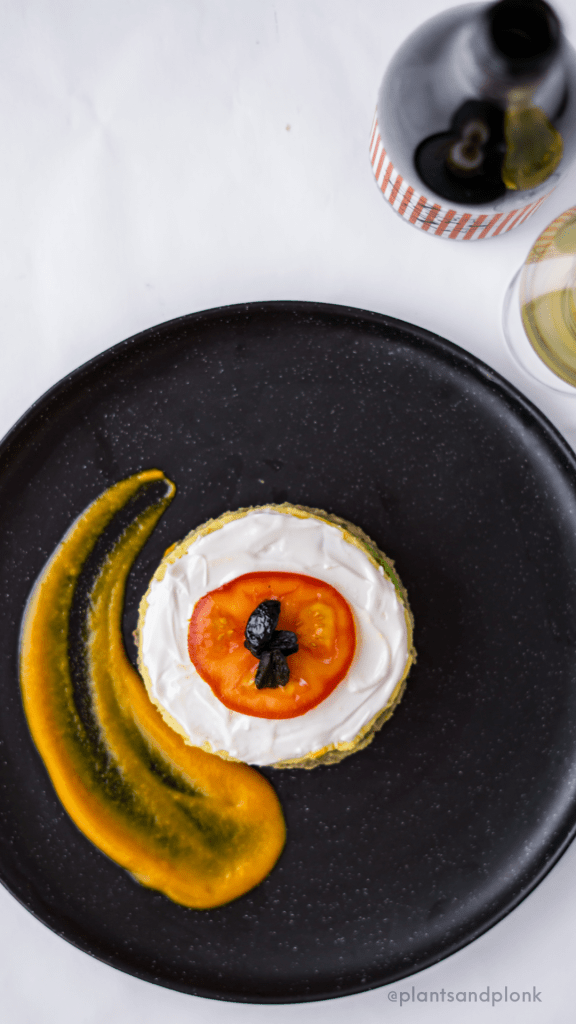
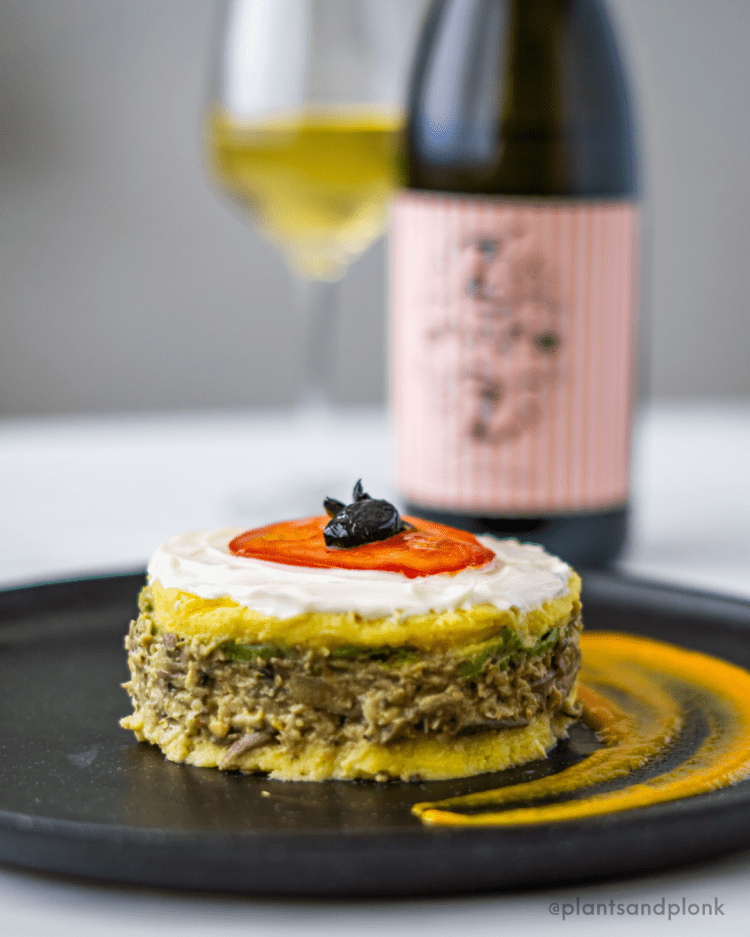
Ingredients
for the vegan “tuna” salad
4-5 fresh button mushroom stems (brown or white), shredded with a fork
1 tbs minced onions
1 tsp minced capers
1 tsp minced cornichons
½ tsp nutritional yeast
3 sheets roasted, lightly salted seaweed snacks
3-4 tbs vegan mayonnaise
lemon juice to taste
for the mashed potatoes
1 ½ cups chilled leftover mashed potatoes (ideally thick and stiff)
1-2 tsp aji amarillo paste
½ tbs extra virgin olive oil
juice of ½ a small lime (or to taste)
salt to taste
for layering the Causa
¼-½ ripe avocado, cut in slices
1-2 thin whole tomato slices
1 tbs vegan mayonnaise
Directions
Tear the seaweed snacks into pieces and grind in a mortar and pestle until a fine powder forms
Combine the seaweed snacks with the other ingredients for the “tuna” salad and mix thoroughly
To the mashed potatoes, add the aji amarillo paste (do this gradually, as some pastes are quite powerful).
Then add the olive oil and salt, mixing to create a uniform consistency.
Add the lime juice a squeeze at a time until the mixture tastes bright, but not acidic.
In a small container with a flat bottom (I used a small bowl, but could have used a coffee mug), add a tsp or so of olive oil and coat all surfaces with a pastry brush.
Add half the mashed potatoes in an even layer in the bottom of the container
Then layer in the avocado, from the outer circle towards the inside
Add the “tuna” mixture on top of the avocado, tapping it lightly with the back of a spoon to make sure there aren’t any gaps
Finally layer the rest of the mashed potatoes on top, packing them in firmly
Refrigerate, covered for at least 30 minutes
Invert the container on a plate, tapping lightly on the container if the causa isn’t immediately released
Top with a layer of vegan mayonnaise and tomato slices.
Garnish with kalamata olives and serve with a light, fresh skin-contact wine!
Jump to section: about the wine || about the pairing || recipe


Too pretty to eat! And sounds delicious.
Thanks for this informative and interesting
post!
LikeLike
Thank you! That is indeed the aji paste. The paste is pretty concentrated, so it’s quite spicy on its own (depending on what your tolerance is). The smear is for those who’d like to add a kick to each bite. I’ve found it at boutique or international stores in the US and in Oslo (when we lived in Norway), but in Germany, I just order it online. It’s used in a lot of Peruvian cooking. And it’s delicious!
LikeLike
Love everything about this! What’s the orange smear on the plate? Perhaps the aji amarillo paste… I haven’t worked with it.
LikeLike