4 minute read
Jump to section: about the wine || about the pairing || recipe
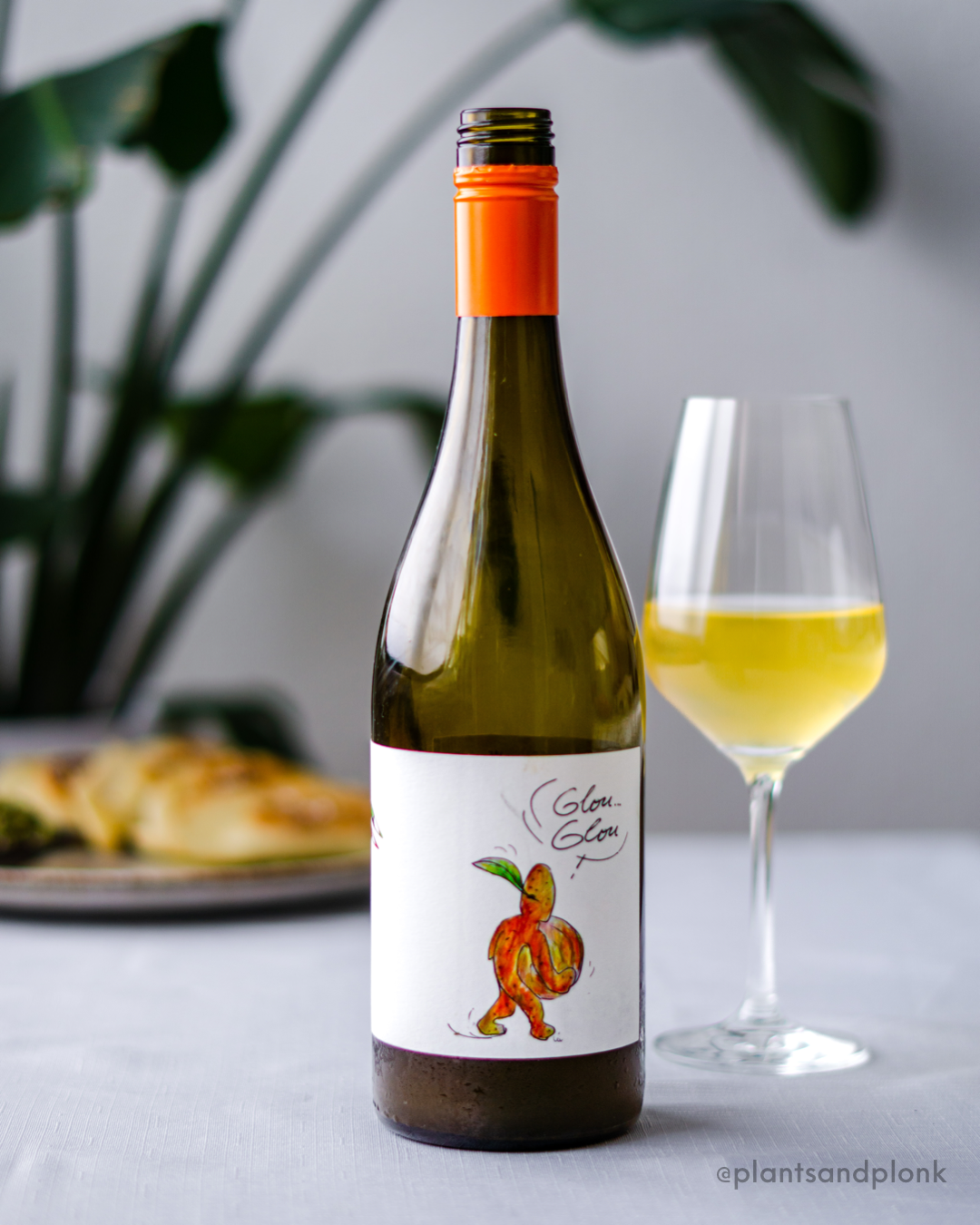
This is the 20th pairing post! That makes the halfway mark for the Plants and Plonk year of pairings. Whoo hoo!
To celebrate the halfway point, I thought I’d bring things back to my (expat) home country: Germany.
When we think orange wine, Germany is likely not the first country that comes to mind. Indeed, it’s likely not on the list of top ten countries that come to mind. With its strait-laced regulations and doctor-laden labels, it comes as a bit of a surprise to find any wines outside the box here, much less orange wines. But, as we learned with Ziereisen, the Baden revolutionary, there is an underbelly a-rumbling in Germany. And it’s coming out with some great stuff.
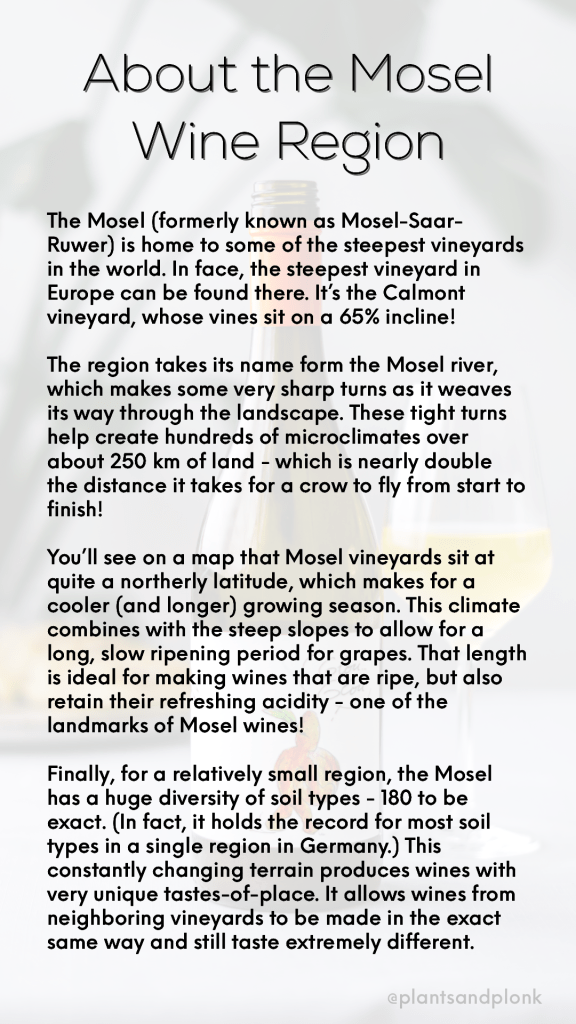
This week’s wine is particularly exciting since it’s from the Mosel – the land that in many ways set the mold for elegant, aromatic, acid-driven German rieslings. This skin-contact wine comprised of two lesser-valued grapes eeks a few cracks into that mold (if it doesn’t break it completely). Check out the info box below for what makes this Mosel region of Germany so special.
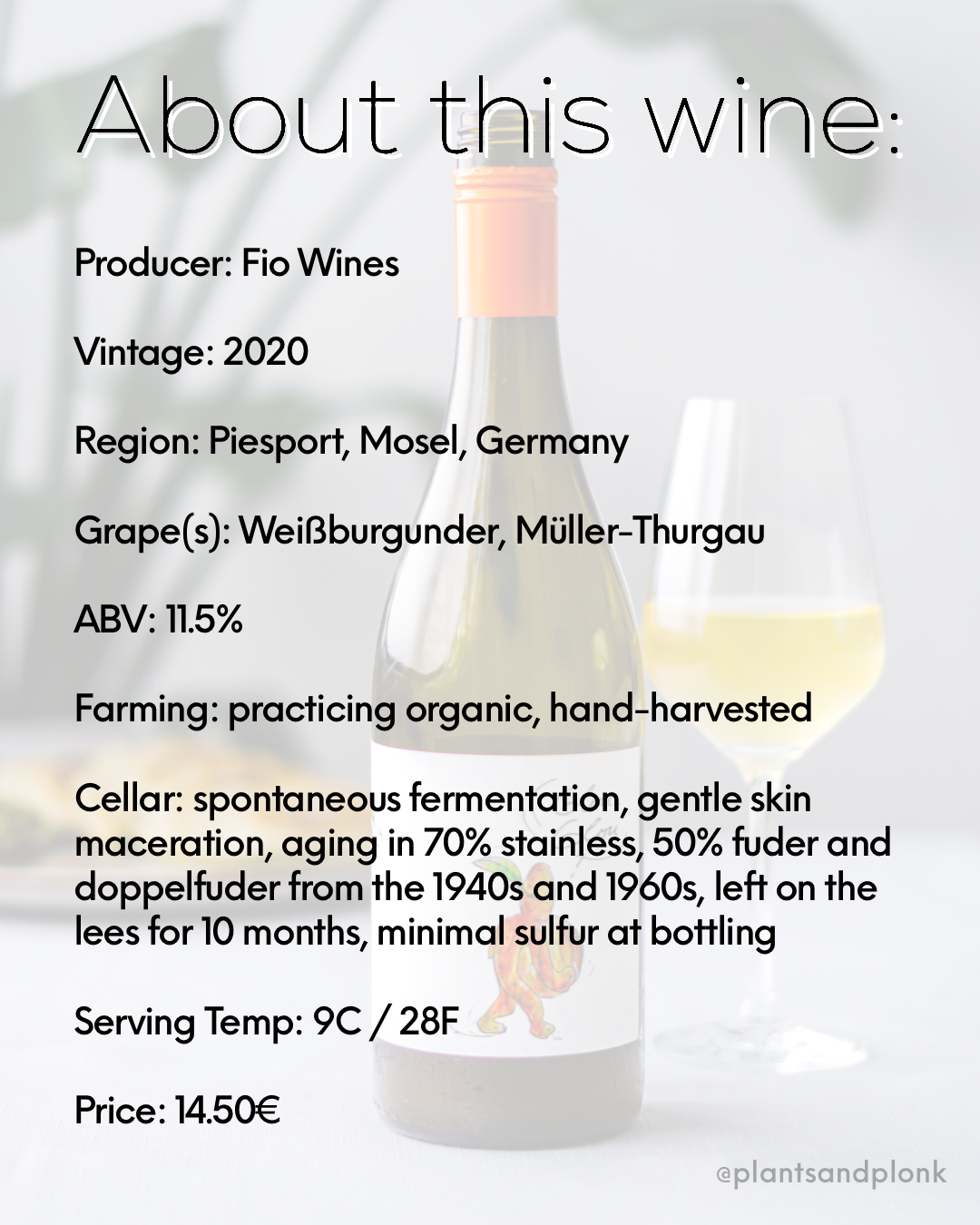
2020 Fio “Glou Glou” Orange Wine
This blend of Weißburgunder (pinot blanc) and Müller-Thurgau shows Mosel characteristics loud and proud with its aromatics and stony minerality. It then adds some funky notes of its own due to the gentle skin maceration and ten months time on the lees. This wine is part of a larger project that only came together in the last decade between established Mosel winemaker, Philipp Kettern and, strangely enough, renown Portugese winemaker Dirk van der Niepoort.
The two met at a tasting in the Caribbean (who wouldn’t want to go to that?), where they started hatching ideas that could combine their mutual love for Mosel wines and desire to make something new. In the end, Dirk’s son, Daniel, moved to Germany to run the Mittel-Mosel winery with Kettern.
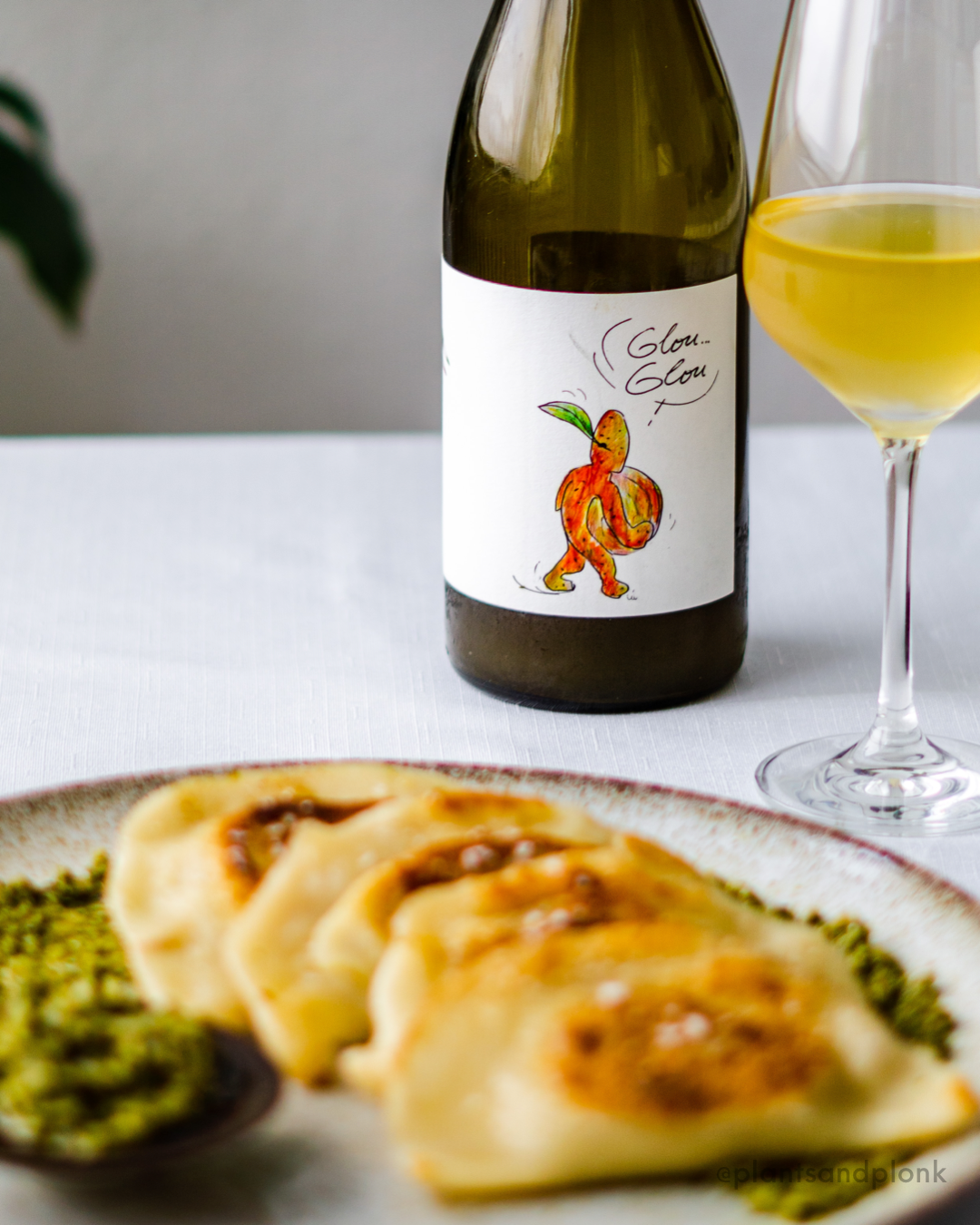
They named their enterprise “Fio,” the Portugese word for “thread.” It represents their approach: weaving regional winemaking traditions with low-interventionist (read: mostly natural) methods and careful, slow élevage in the cellar. Even this entry-level skin-contact wine shows their attention to detail.
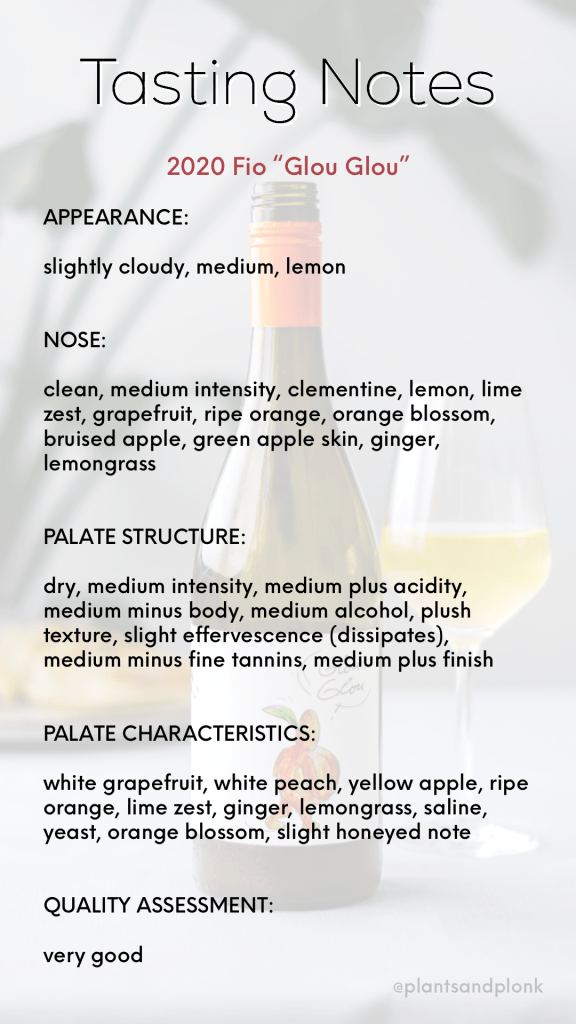
For a wine named “Glou glou” (meaning “glug glug” – the European equivalent of a chuggable patio crusher), it’s brimming with complexity. One after another, the wine presents fruit, floral, herbal, yeast and saline flavors, hinting all the while at an umami undertone I can’t quite place. (Find my full tasting notes below.) Structurally, this is a very well integrated wine – sometimes a wine’s acidity, tannins or alcohol feel out of sync with its flavors. Not true for this one, whose notes combine in near perfect harmony. Plus those juicy flavors linger on the palate as if suspended in the air in your mouth. No wonder it was dubbed “glou glou”!
Jump to section: about the wine || about the pairing || recipe
Pairing Fio Orange Wine with Pierogies
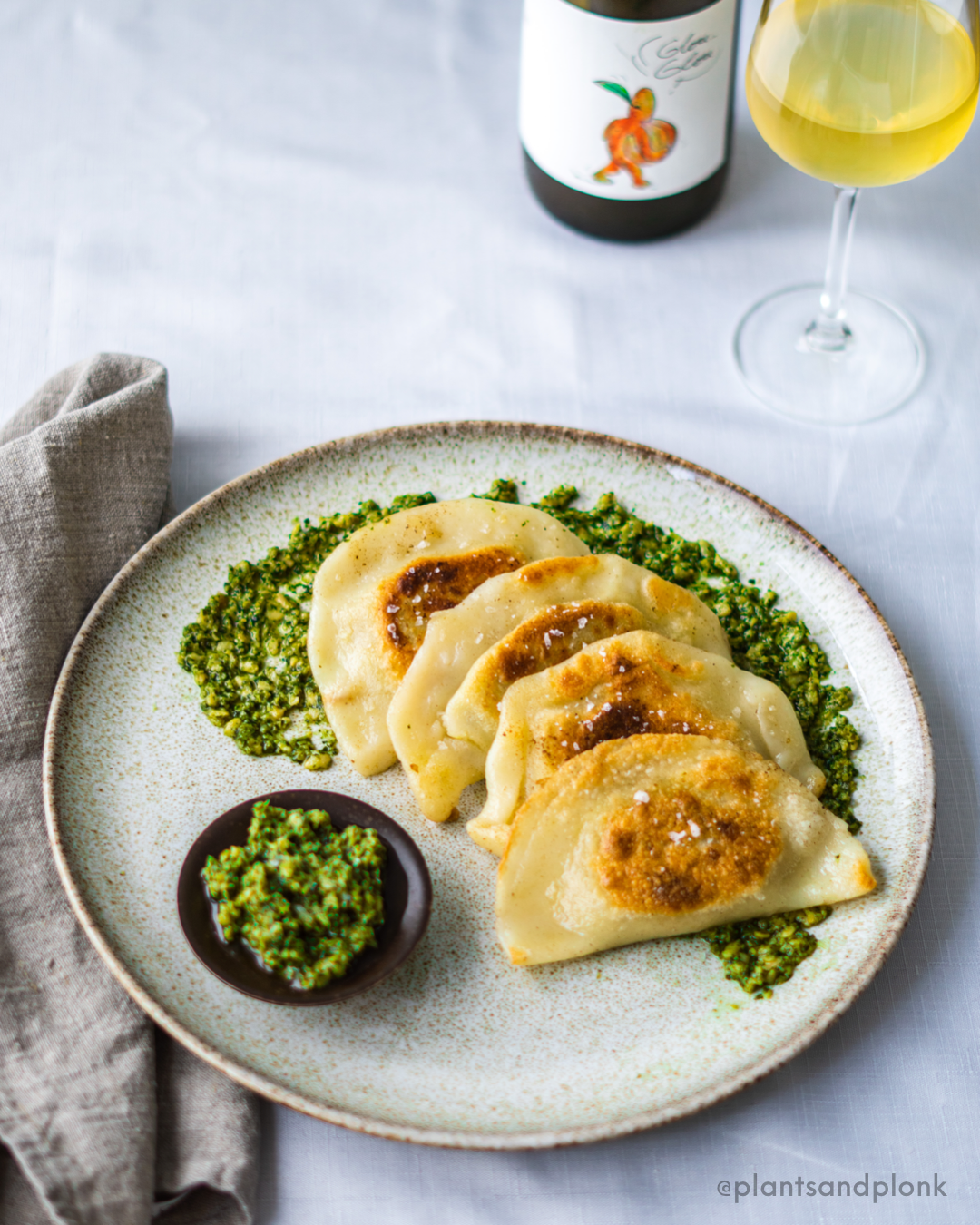
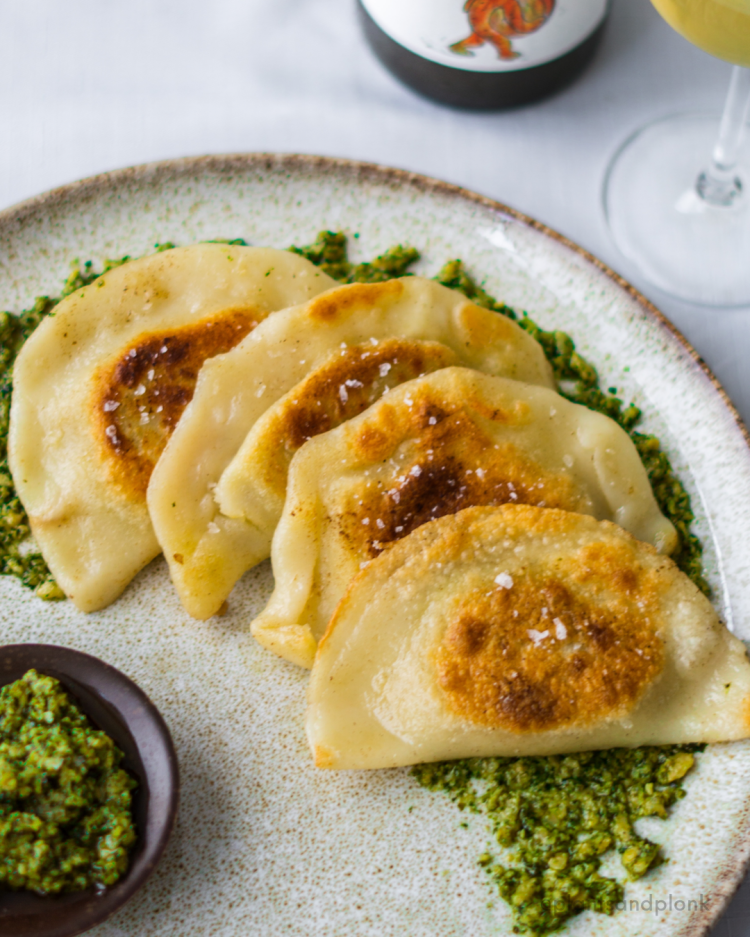
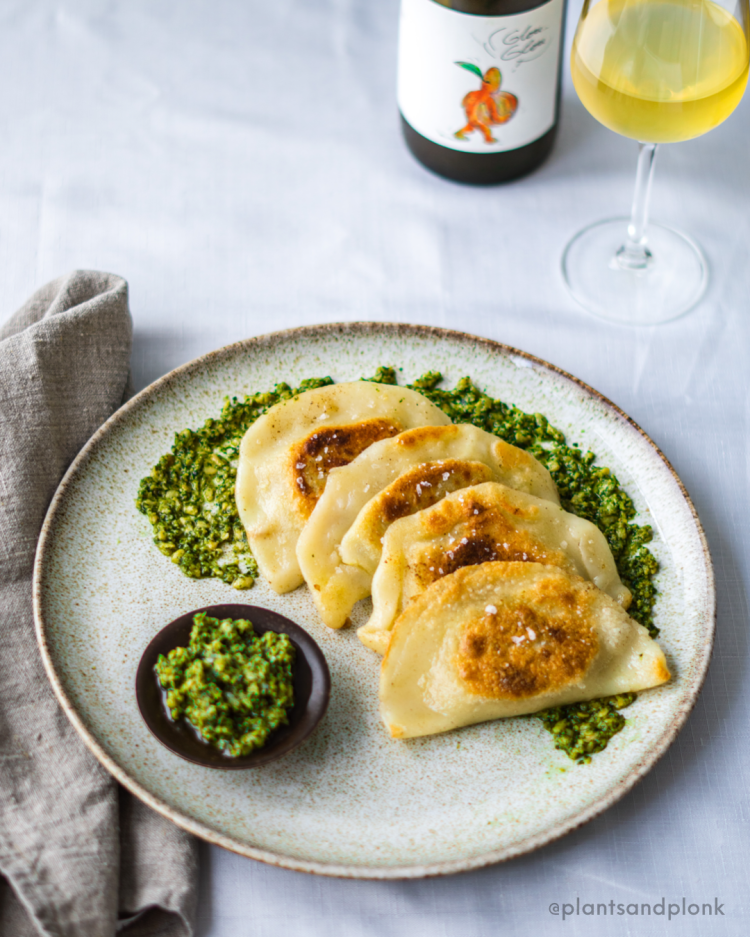
I’d seen Sophia Roe’s pesto baked cabbage on Instagram and it was the first thing that popped in my mind when I sipped this liquid treasure. I wanted to make a more substantial meal, so I went trolling through all the socials and all the webs until I somehow landed on pierogis (don’t ask me how I got there).
For this wine, I wanted a fresh herb flavor to dovetail with the wine’s fruit. At the same time, I new this wine’s acidity and tannins were craving a rich, textural dish to chew on. These pesto pierogis fit the bill!
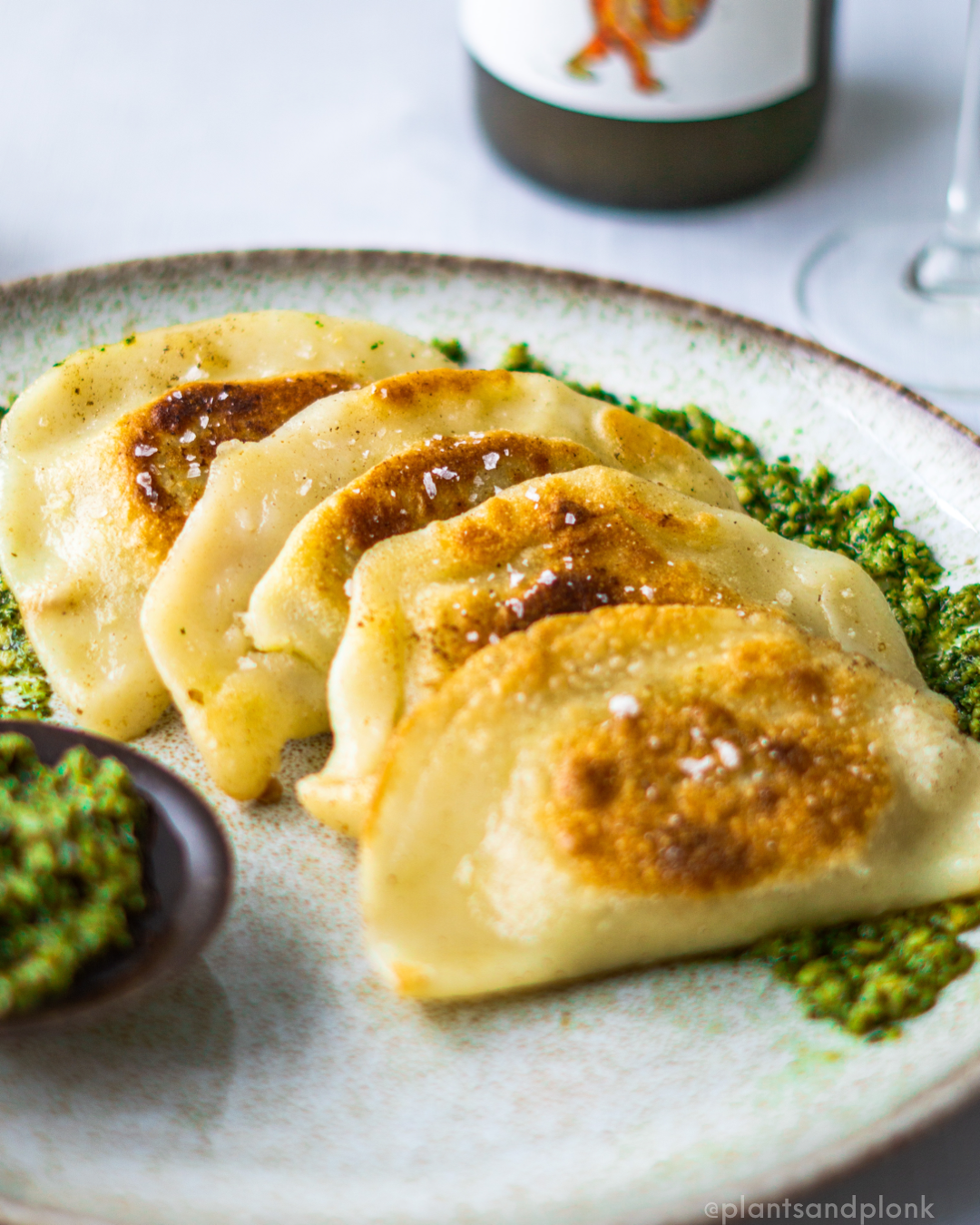
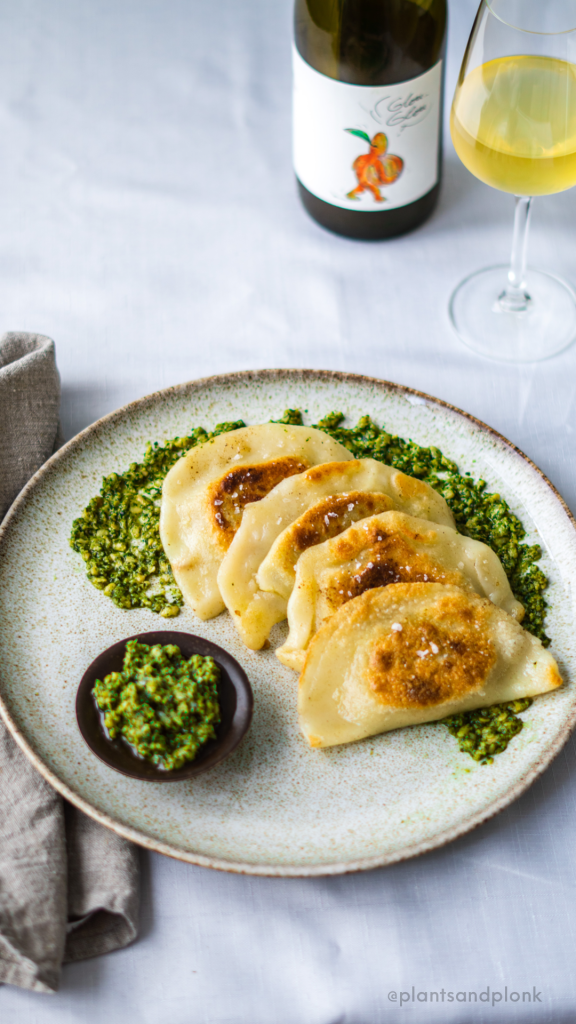
But there’s a salty squeeze of citrus missing from the dish. Before you douse it with lemon, though, pop a bottle of Fio Glou Glou! The grapefruit notes that dominated the wine on its own turn to a meyer lemon, cutting through the richness of these buttery dumplings. I think of this pairing as compelmentary, but there are congruent aspects to it as well – embodied best in the wine’s extended lees contact.
The texture from ten months on the lees brings a yeasty flavor that echoes the nutty cheese components of the pierogis. But it also adds a plush texture that, together with the tannins, stands up to the doughy bite of this dish. Both of these are delicious separately, but combined, they really shine. A true Ratatouille moment.
Tasting and Other Notes

Ingredients
For the dough
- 1/2 cup vegan coconut yogurt mixed with 2 tbs lemon
- ⅔ cup coconut milk
- 3 tbs aquafaba mixed with 1tbs chickpea flour
- ½ tsp ground psyllium husk
- ⅛ teaspoon kosher salt
- 1 ½ cups gluten free flour blend
- 1 cup tapioca flour
For the pesto (adapted from Sophia Roe)
- 1 small bunch cilantro
- 1 small bunch mint, destemmed
- 1 tbs white miso
- 1 tbs nutritional yeast
- 1 tbs coriander powder
- 1 tbs lemon juice
- 1 tsp salt
- zest 1 lemon
- ¼ cup sunflower seeds
- ¼ cup pine nuts
- ¾ cup extra virgin olive oil
For the filling
- 2 cups mashed potatoes
- 2 small onions, caramelized
- ¾ vegan cheese shreds
- 2 cups finely grated white cabbage
- 1 tbs olive oil with 1 tbs vegan butter
- 1 tsp salt + more to taste
- ½ cup pesto (above)
For serving
- pesto (above)
- vegan sour cream
- vegan butter
- finishing salt
Method
For the dough
Whisk the aquafaba and the chickpea flour to form a uniform mixture. Separately, thoroughly incorporate the lemon juice into the coconut yogurt.
Combine all the dry ingredients in a medium sized bowl and whisk to combine
In a large bowl, mix all the wet ingredients together.
Then gradually add the dry ingredients to the wet, stirring to combine
On a clean, floured surface, knead the dough with floured hands. This will make it easier to handle, though not completely smooth.
Place the dough back in the bowl and cover with a damp towel.
For the pesto (this will keep for about a week in the refrigerator)
Combine all ingredients except the olive oil in a food processor and blend on medium while slowly drizzling in the olive oil.
Periodically stop to push ingredients down and ensure a uniform consistency.
For the filling (can be made the day before and refrigerated)
Slow braise the cabbage by heating the olive oil over medium heat in a medium stock pot.
Add the cabbage and stir to coat. Continue stirring as the cabbage cooks down. After 5-7 minutes, add the butter and 1 tsp salt and cover.
Cook for another 15-20 minutes, or until very soft and tender to the bite.
Add 1 cup of the braised cabbage to a large mixing bowl with the mashed potatoes, caramelized onions, vegan cheese shreds, and pesto. Mix thoroughly
To make the pierogis
Dust a bit of flour on a clean, dry surface to roll out the dough with a floured rolling pin into a sheet approximately ¼ inch thick. I flip and dust the dough regularly at the beginning to prevent it from sticking.
Cut the dough into rounds about 4 inches in diameter (I just used a jam jar). For each of these, you’ll then roll them individually to about ⅛ inch thick. Gather any scraps and re-roll them until there are minimal scraps leftover.
Set up your assembly line with the rounds, filling with a regular table spoon, a small bowl of water, and a parchment paper-lined cookie or oven sheet covered with a damp towel.
Working in batches, roll out the rounds to their final thickness, then hold them in the palm of your hand and add a tablespoon of filling to the center with your free hand. Wet the edges with some water and fold the pierogi in half, making sure to pinch the dough together so it forms a tight seal. Place finished pierogis on the cookie sheet and cover with the towel.
Once I’ve made about 6 pierogis, I bring a large pot of water to boil and boil them for 3-4 minutes, or until they float to the top. While they’re cooking, I continue making the rest of the pierogis. Place the cooked pierogis on a cooling rack to drain.
At this point, you can freeze any of the pierogis for a future date or sauté them immediately in a skillet with a little vegan butter. Finish them off with some flaked finishing salt and eat as is or serve with some more of the pesto, some vegan sour cream and/or a glass of German orange wine!
Jump to section: about the wine || about the pairing || recipe

 celeste radosevich