5 minute read
Jump to section: about the wine || about the pairing || recipe
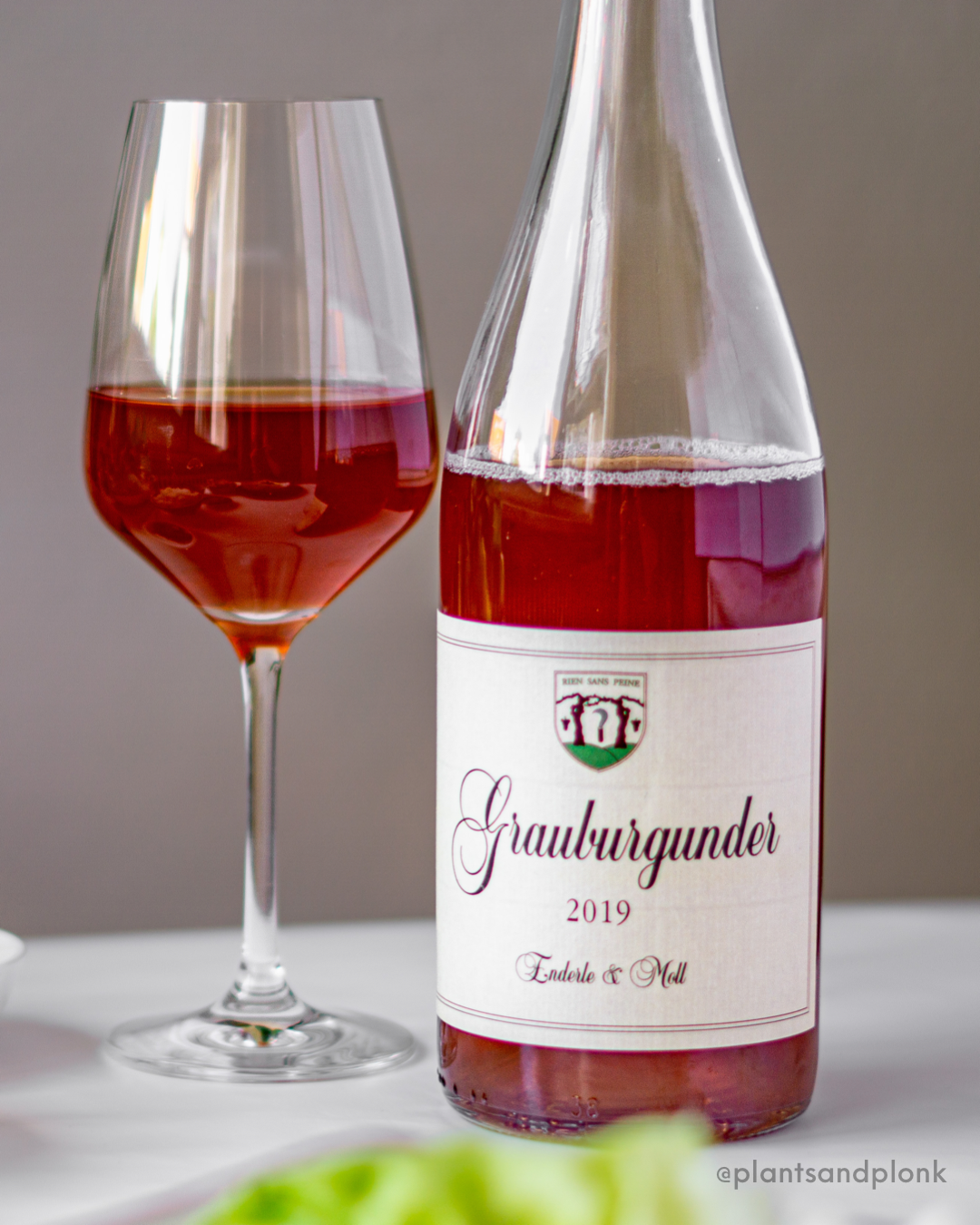
I know what you’re thinking. Germany? Again? There are so many skin contact wines to choose from – why stay in Germany?
Well, I just couldn’t pass up the opportunity to feature Enderle & Moll. Plus, I have ulterior motives: I want to use this wine to talk about our “taste” in wine – that is, our aesthetic preference for certain aromas, flavors, and textures in wine. What distinguishes wines with characteristics we don’t like from wines that are bad or flawed?
But first, let’s back up a little.
This week’s wine is the last of the skin-contact wines series. It’s made by Sven Enderle and Florian Moll, friends who met at the Freiburg oenology school in the Baden region of Germany. A few years after leaving school, they bought a couple of hectares of vineyard land and started making wine together. Their method is some of the lowest-intervention of all the wines I’ve featured yet on Plants and Plonk. They use a very hands-off approach to viti- and viniculture, letting nature take its course with grape development and wine élevage. Their Spätburgunders rose to prominence (dare I say even cult status) quickly. In fact, that’s how I first learned of them. But their whites and skin-contacts have also gained a fair amount of recognition.
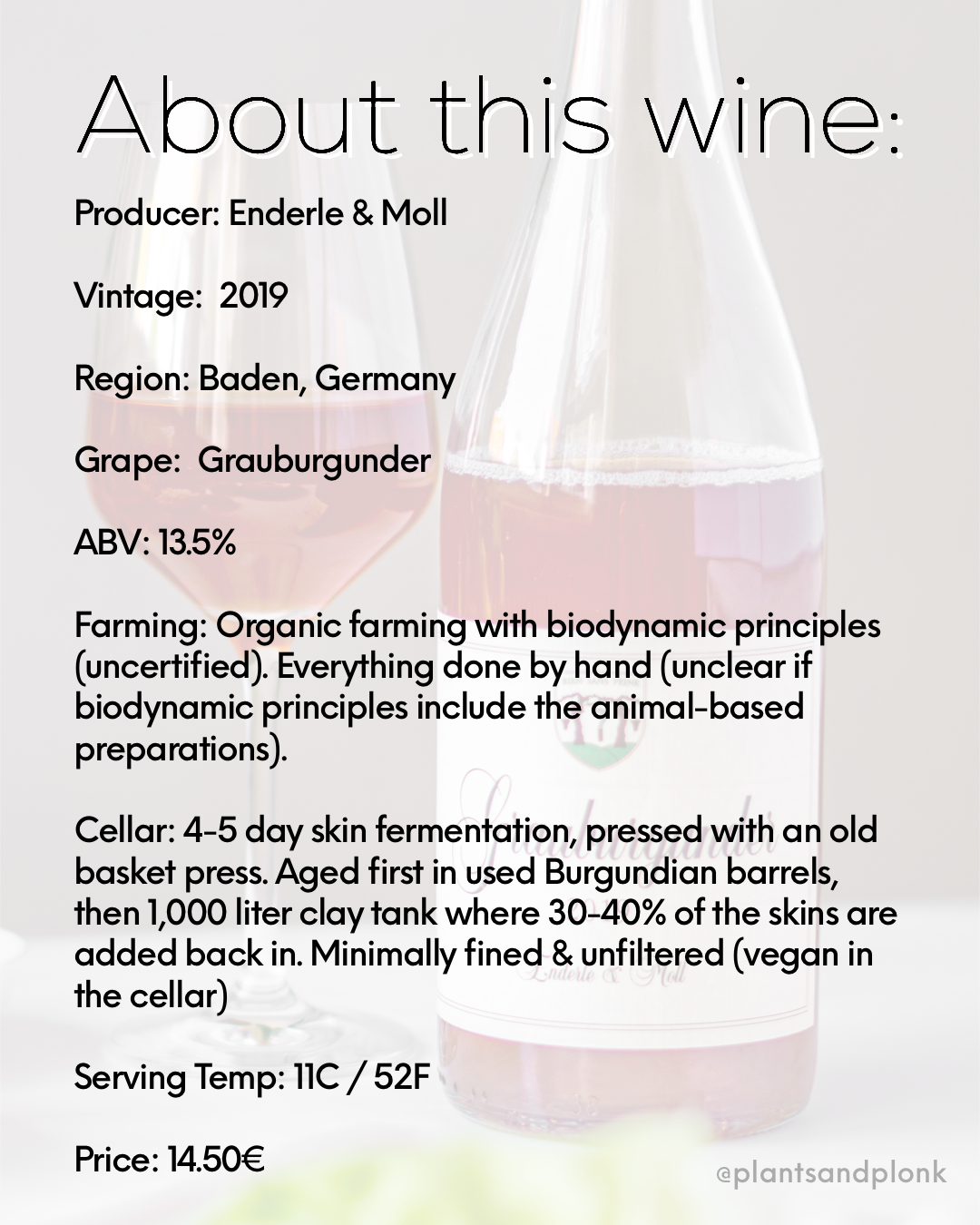
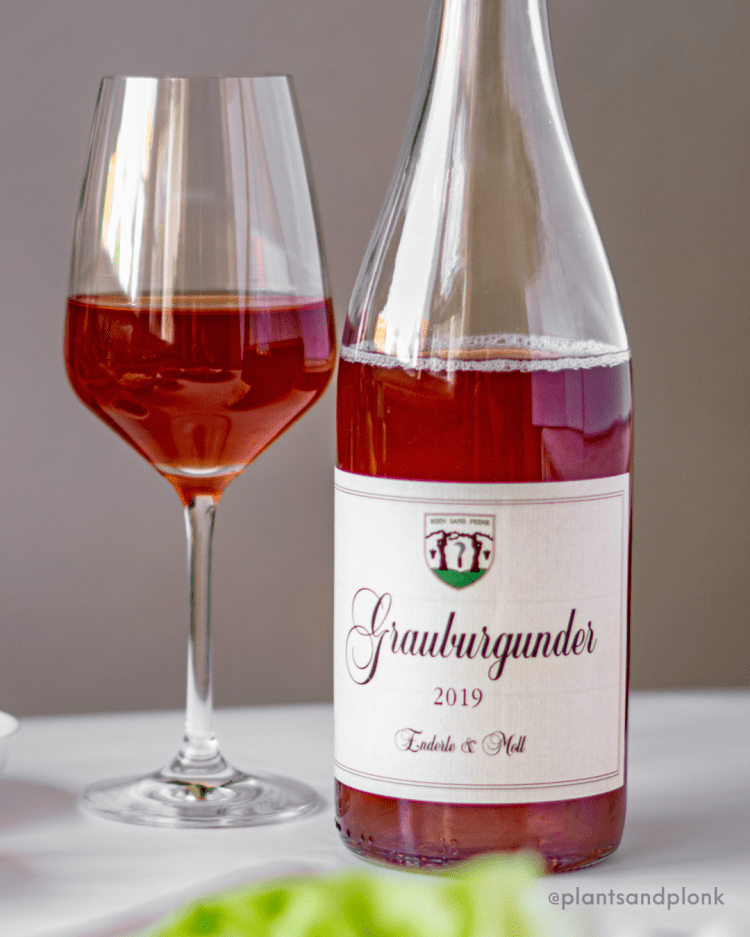
2020 Enderle & Moll Grauburgunder
This particular wine is a great example of their approach; it has several of the typical markers of a natural wine. There’s a slight flinty aroma at first (which wine pros will recognize as a bit of reduction), a sour note reminiscent of yeasty cider or kombucha, a hint of vinegar, and a sherry-like, bruised apple note (you can find my full tasting notes below).
At first glance, these don’t sound like the most appetizing characteristics, do they? In fact they almost make the wine sound unpleasant. But the reverse is true. They actually provide character and depth to the wine’s dominant flavors of grapefruit and lime zest, red apple skin and quince.
Those “funky” notes add interest and specificity to the wine in the same way balsamic vinegar might add life to roasted vegetables, or pickled carrots add the missing touch to a bánh mì. If we dig a bit further, we can see that there are many divisive, “funky” foods that many of us swear by in our cooking or consumption: kimchi, marmite, huitlacoche, or miso. Heck, even the most vanilla of households have normalized foods like sauerkraut, probiotic yogurt and sourdough bread.
Jump to section: about the wine || about the pairing || recipe
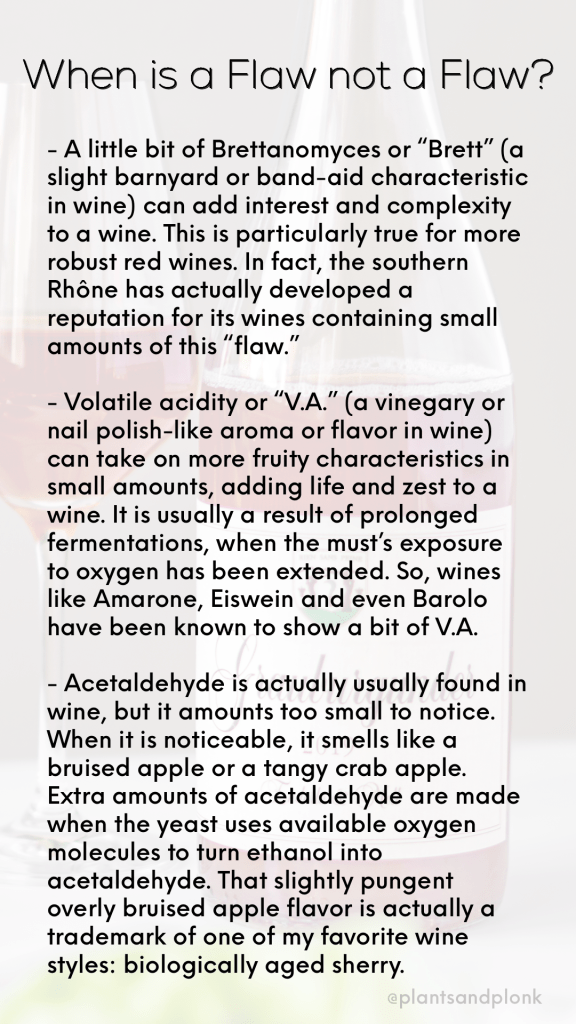
Wine isn’t quite there yet. In fact, these flavors are often still considered flaws, as they result from the activities of external yeast or bacteria, low nitrogen levels in the soil, exposure to oxygen at certain points in the winemaking process, or even extended fermentation or lees aging times. (You can learn more about flaws below.) To banish these flavors from wine, producers use synthetic fertilizers, designer yeast strains and chemical sanitizers in the cellar.
Natural wine proponents (including Enderle & Moll) argue that these practices strip individual wines of their taste of place and individual characteristics. Instead, they result in wines that taste mostly the same regardless of their origins. As the natural wine movement has shifted these values away from laboratories and synthetic anything, these previously undesired flavors are cropping up again. Except now, not only do we understand why they’re there, but we see them within high quality wines. And, as this Grauburgunder demonstrates, they can accompany a wine’s flavors without overpowering it. So, is the presence of these “funky” characteristics really a flaw?
I don’t think so. At least not all of the time. Sure, as is true for anything, there are sloppy or lazy producers who hide their ineptitudes behind an argument of “natural” practices. But there are also some amazing artisan winemakers bottling beautiful juice laced with these flavors. And I’ll gladly enjoy a glass of it any time.
But how do you pair food with these wines?
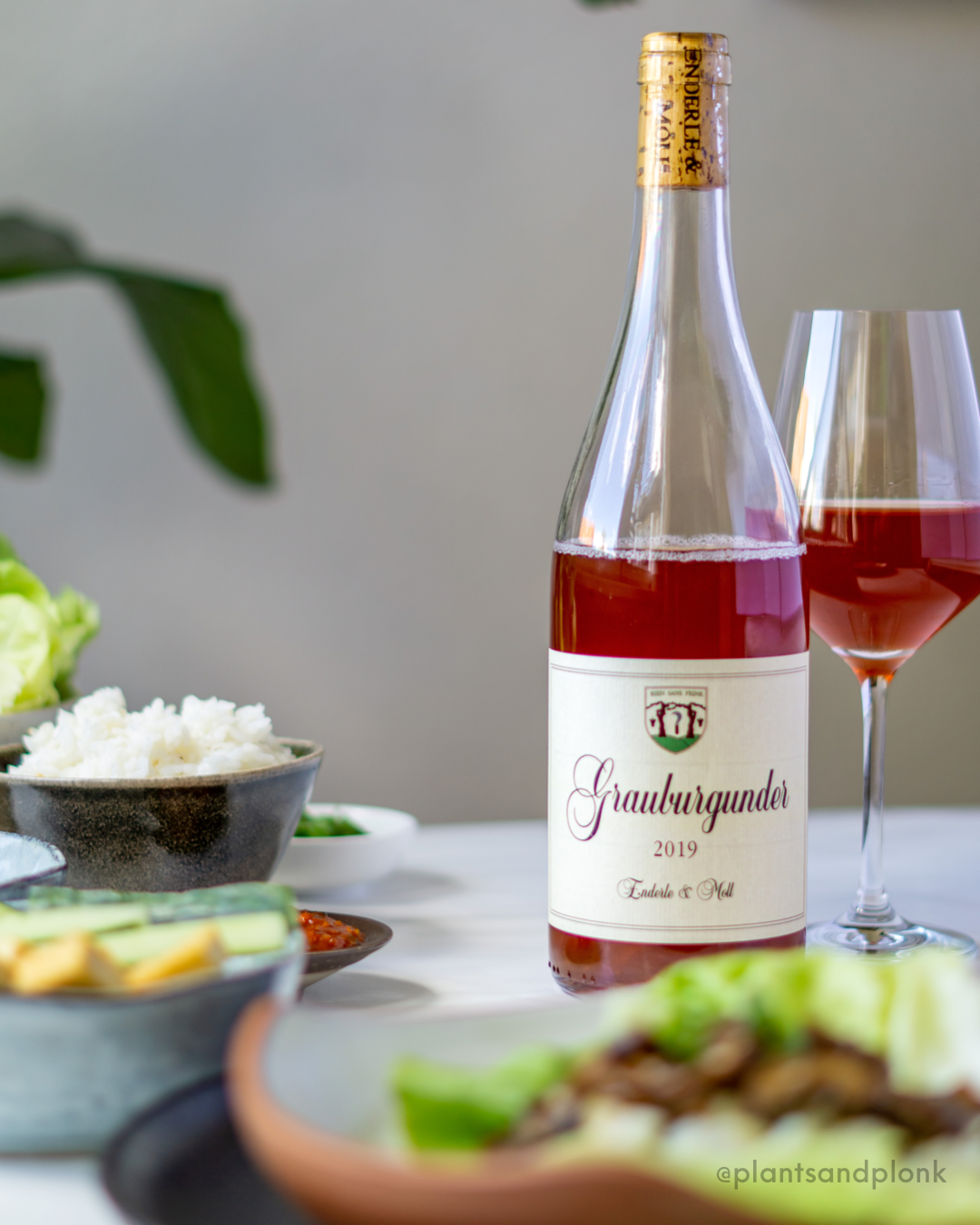
For a wine with a tart acidity verging on sour, I wanted to make something with a little umami and plenty of saltiness as a counterweight to the delicious, mouth-puckering wine. I also wanted a hint of freshness and maybe some element of fermentation to mimic the wine’s characteristics. And I thought there could be no better answer than the ultimate Korean barbecue classic, Bulgogi.
Jump to section: about the wine || about the pairing || recipe
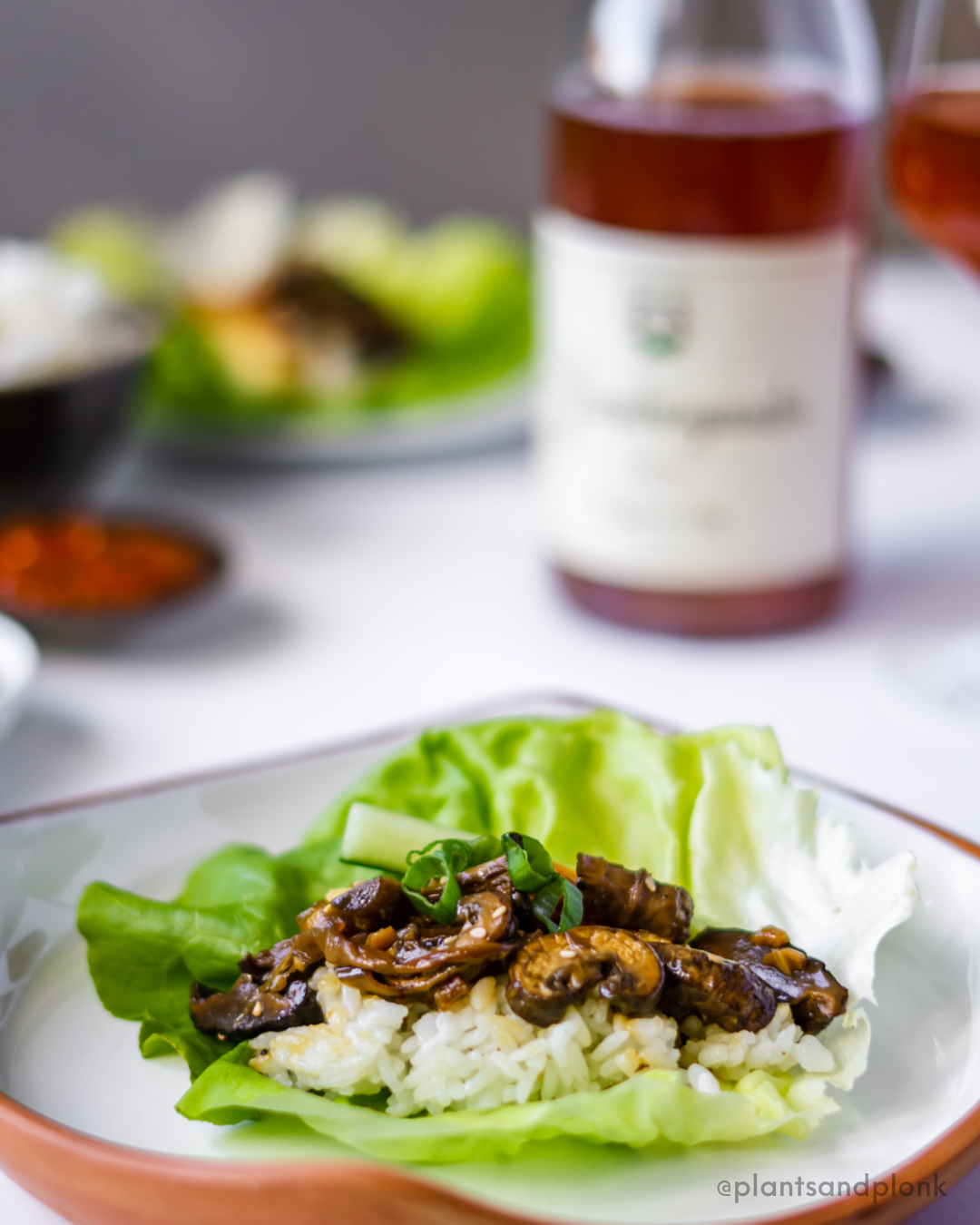
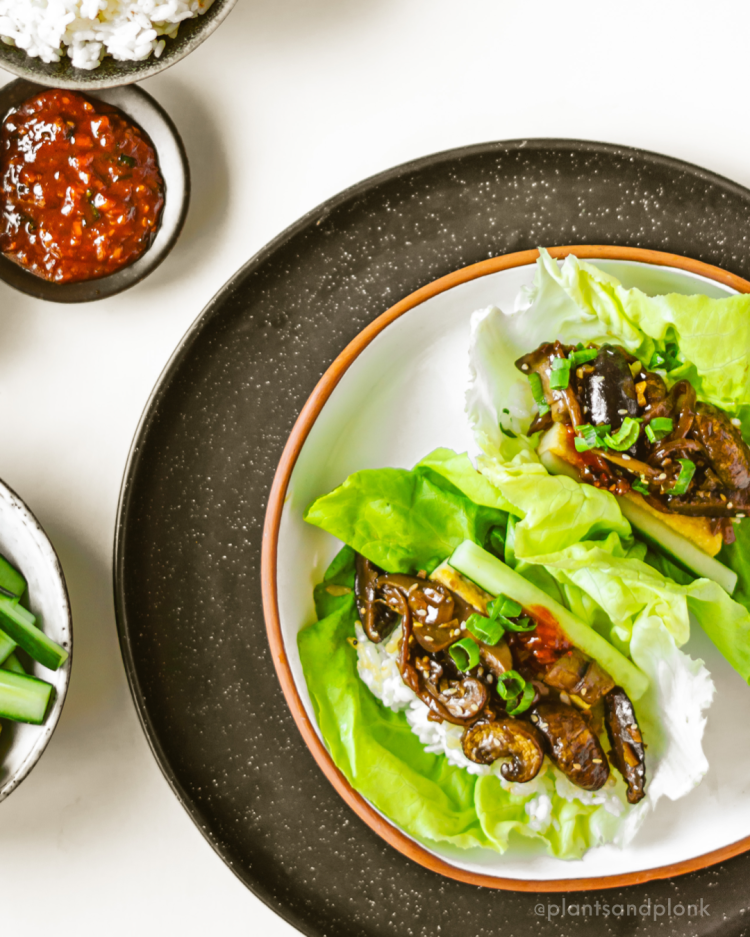
Enderle & Moll Grauburgunder with Korean Bulgogi Ssam
With this barbecue recipe, I suppose I’m trying to manifest a quick transition to warmer weather (not totally convinced it will work, though). Fortunately it’s just as easy to make this on your stovetop (which is the recipe I’ve included below).
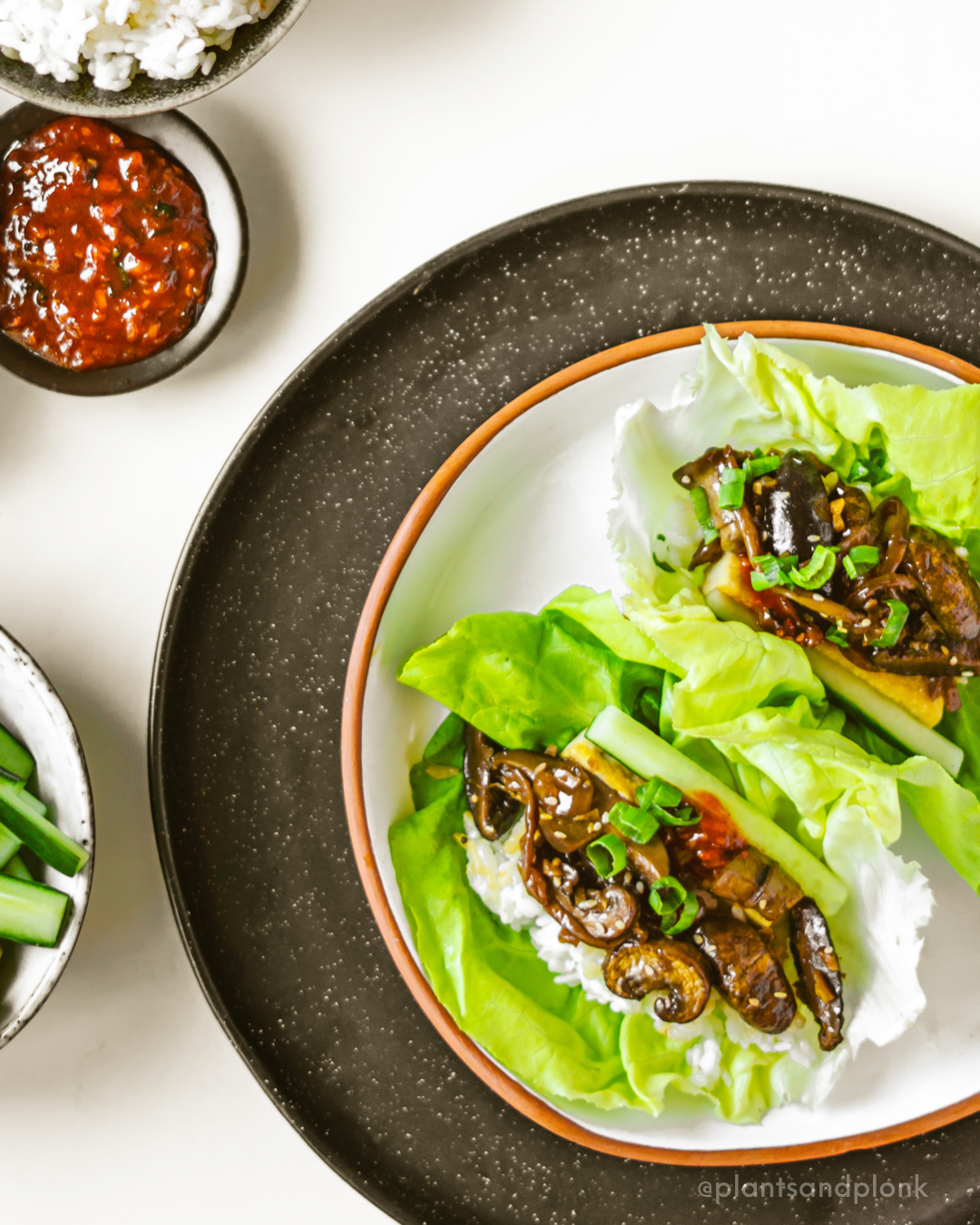
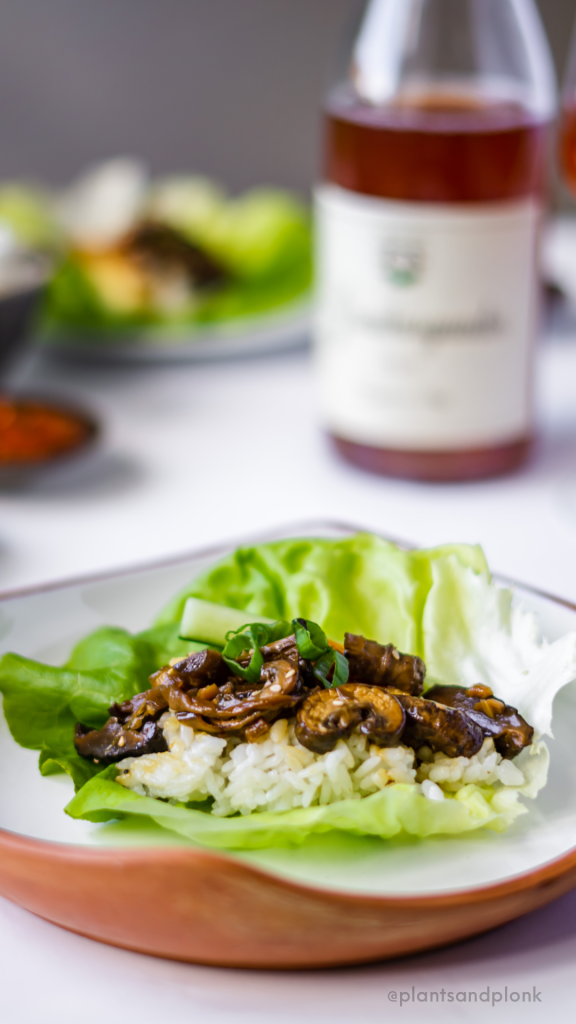
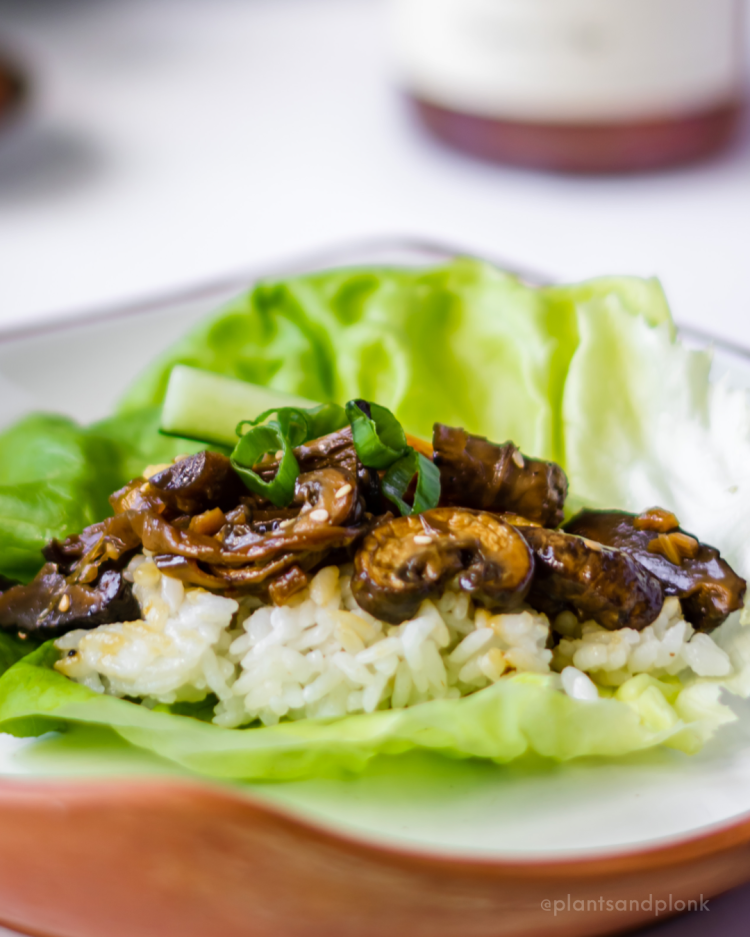
Traditionally, Bulgogi is made with marinated paper-thin slices of beef, but I used shiitake and cremini mushrooms in the same marinade. And they provided the pop of umami I was craving. Most of the time, Bulgogi is served with rice and some ban chan (side dishes), but this version is a “ssam,” meaning “wrapped.” The crunchy lettuce (as well as the cucumber batons) add a fresh lift to the dish and the ssamjang (”wrap sauce”), a spicy, salty, fermented note. I mean really, how could I go wrong?
Well…
It was pretty good…but I’m not gonna lie, it wasn’t the best pairing I’ve tried. While the wine’s bright apple and citrus notes provided a lovely counterbalance to the savory, spicy, umami mushrooms, the slight sweetness in the marinade and the barely-there acetic note from the wine were just enough to tilt this pairing off-kilter. That said, the wine matched the food’s flavor intensity and spice well and it was a great palate cleanser. But I think something with a little more fruit or even some slight residual sugar might have turned this “acceptable” pairing into a great one.
Oh well, you can’t win them all! And I’m still really glad I tried it. I got a lot of enjoyment out of both the wine and the food. So it just goes to show: you don’t need to have the perfect match to have fun with wine and food pairings.
Tasting and Other Notes

Ingredients
450g (16oz) cremini mushrooms (or mushrooms of your choosing)
1 large onion, sliced
1 full head garlic, minced
5 tbs tamari soy sauce
3.5 tbs water
4 tbs maple syrup
1 tbs sesame oil
4 tbs peanut oil (for sautéing)
for serving
lettuce cups (I used baby romaine)
short grained rice, prepared to package directions
gluten free Korean ssamjang paste (optional, but strongly recommended)
half a cucumber, sliced in batons (optional)
tofu cut in batons and sautéed (optional)
Directions
Slice all mushrooms, into about thick slices.
Toss mushrooms with onions and garlic to make a uniform mixture
Make the marinade by combining soy sauce, water, maple syrup and sesame oil
Marinade for at least 30 minutes or up to 2 hours
Before cooking the mushrooms, prepare the rice, lettuce cups and any optional garnishes
Warm 2 tbs peanut oil in a pan over medium-high heat
When the oil shimmers, transfer ⅓ to ½ the mushroom mixture to the pan with a couple tablespoons of the marinade (be careful not to splash yourself!)
Cook until the marinade has reduced and the onions and mushrooms have caramelized a little
Transfer cooked mushrooms to a clean bowl
Continue working in batches until all of the mushrooms have been cooked (you’ll need to add new oil each time)
Serve immediately – use a mushroom cup to hold rice, bulgogi mushroom mixture and any garnishes. Enjoy them folded into wraps for larger lettuces or like tacos for smaller ones
Try them with a (fruity) skin-contact wine!

 celeste radosevich
Fair warning: bulgogi ssam are addictive! I’ll put them on the list of things to make when you’re here 🙂
LikeLike
Another enticing dish here Celeste. Likely to
be my new favorite taco recipe!
LikeLike